
For today’s home bathrooms, commercial bathrooms, and public sanitation units, countertop messes and contamination problems are still major concerns. Not only do conventional hand soaps in bottles occupy much-needed counter space, but they often contain bases which have standing water in which bacteria can thrive. In order to address both these daily hygiene problems and space problems, better alternatives are sought out. And hence, how does one benefit from a Wall Mounted Hand Soap Dispenser? This write-up discusses the primary factors that motivate such a decision from four perspectives.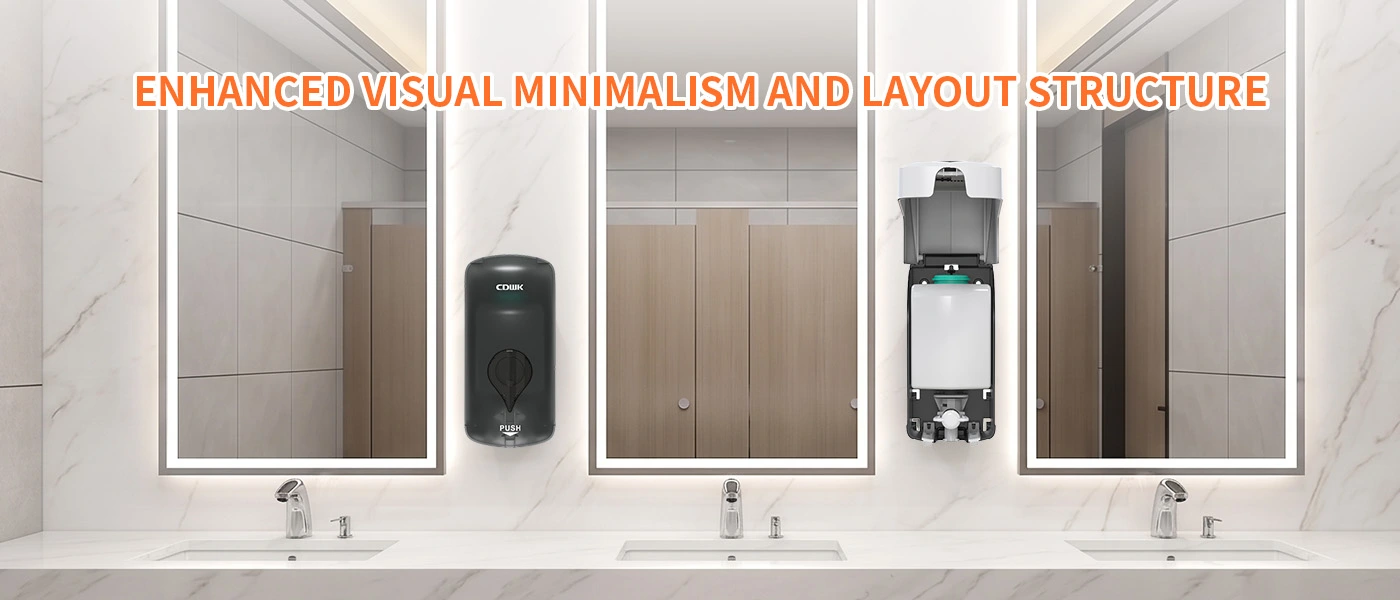
1. Space-Saving Design of a Wall Mounted Hand Soap Dispenser
Every inch counts when it comes to a small bathroom design. The transition from storing liquid soap on flat surfaces to walls is an example of a basic change in favor of maximizing room circulation and facilitating everyday maintenance.
Complete Countertop Clearance
The size of the standard soap container is about 80 to 120 cm² of usable area near the sink basin. Together with other items such as toothpaste dispensers, skincare products, and faucet fixtures, the vanity top becomes too cluttered and hard to clean. Installing the Wall Mounted Hand Soap Dispenser at the proper height (about 20-25 cm above the sink basin) creates a clear space for the entire countertop.
Enhanced Visual Minimalism and Layout Structure
Consistent wall fittings reduce visual noise from different containers and their paper labels. For high-traffic commercial environments, compact push-button units offer a clean, reliable example of this design philosophy—such as the CDWK Soap Dispenser CD-1388-1488, which features a high-capacity reservoir and an engineered casing; this model maximizes vertical wall space while reducing refill intervals for maintenance staff in schools, offices, and transit hubs.
2. Superior Hygiene with a Wall Mounted Hand Soap Dispenser
Hygiene control is the crux of all facilities planning, and the dispensing units offer definite biological benefits in the form of bacteria elimination and moisture regulation.
2.1 Eliminating Counter Mold and Soap Scum
Placing soap dispensers on the damp edge of sinks leads to accumulation of water beneath them, allowing for the development of yellow scaly mold, dirt, and black mold. Mounting the Wall Mounted Hand Soap Dispenser keeps the device dry and distanced from the wet surfaces, disrupting the cycle that permits bacterial proliferation in moist environments.
2.2 Reducing Cross-Contamination through Touchless Tech
Touch pumps in any family or public setting will come into contact with hundreds of hands on a daily basis and, thus, become conduits for infection spread. Automatic touchless dispensers use high-precision infrared sensors to dispense precise amounts without touching.
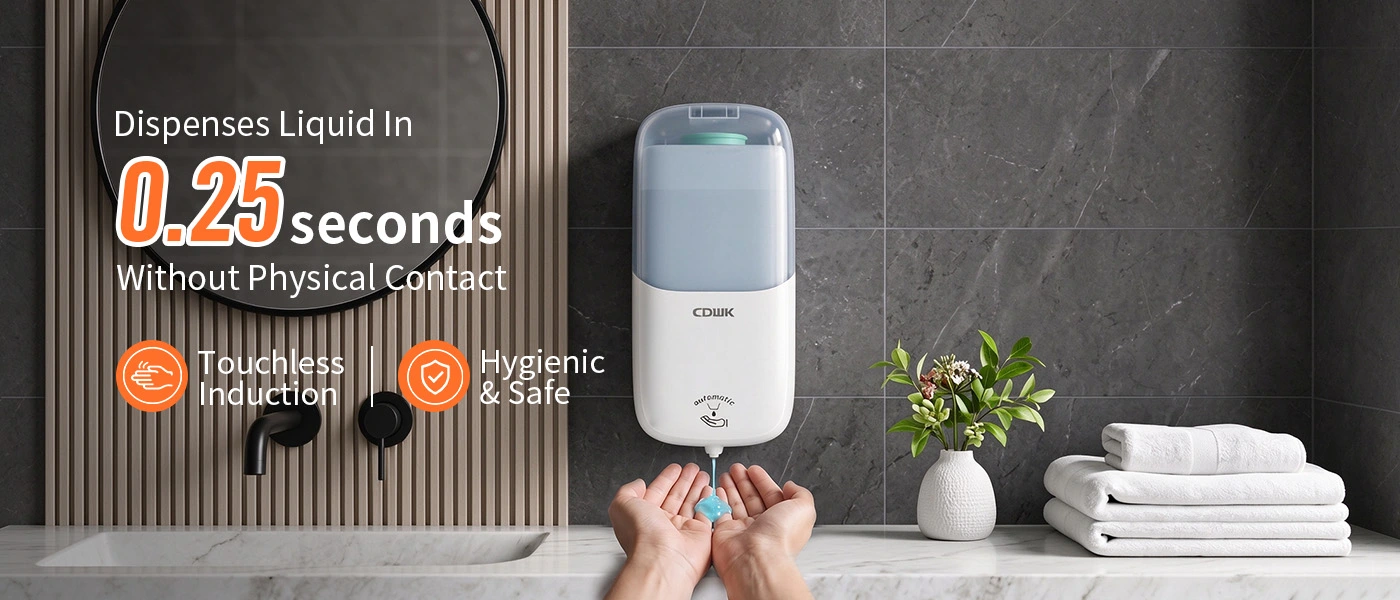
For instance, the CDWK Automatic Soap Dispenser-5508 demonstrates high sanitary performance. Equipped with a sensitive infrared sensor and intelligent dosing circuitry, it dispenses liquid in 0.25 seconds without physical contact. This design protects hand hygiene while blending seamlessly into modern hotel rooms, clinics, and executive washrooms.
3. Long-Term Cost Savings of a Wall-Mounted Hand Soap Dispenser
From an operational standpoint, a wall-mounted hand soap dispenser involves a one-time investment in hardware that provides a high ROI in terms of savings and discounts on raw supplies.
3.1 Economics of Soap Refill in Bulk Amounts
A significant part of the cost of bottled soap is spent on individual packages and individual pumps used once. Through the use of a wall-mounted hand soap dispenser, one can buy 5-litre or 10-litre bulk refills. According to statistics, bulk amounts of liquid soap are 40% to 60% cheaper than constantly purchasing 300 ml bottles.
3.2 Controlled Dosing and Maintenance Comparison
The table below describes the operational differences between ordinary disposable bottles and fixed wall dispensers:
| Operational Metric | Standard Bottled Soap | Wall Mounted Hand Soap Dispenser |
| Dispensing Volume | Uncontrolled (2.0–3.0 ml per pump) | Measured dose (0.8–1.2 ml per drop) |
| Product Waste Rate | ~15% left at bottle bottom | Below 3% via gravity feeding |
| Refill Frequency | High (200–300 ml capacity) | Low (800–1200 ml bulk reservoir) |
| Hardware Lifespan | 1–3 months (flimsy plastic pumps) | 3–5 years (heavy-duty housing) |
4. High Durability and Versatility of a Wall Mounted Hand Soap Dispenser
Materials chosen and the level of functional adaptability will influence how efficient the dispenser is during prolonged periods of use and exposure to difficult conditions.
4.1 Impact-Resistant Construction
Professional dispensers feature 304 stainless steel and engineering ABS plastic that can tolerate continual pressure. In contrast with vulnerable glass pumps or fragile disposable bottles, a Wall Mounted Hand Soap Dispenser is firmly fixed on studs or tiles through the use of expansion bolts or adhesives, ensuring it is protected from being accidentally dropped, cracked, and creating a spill on the floor.
4.2 Multi-Fluid Compatibility and Flow Control
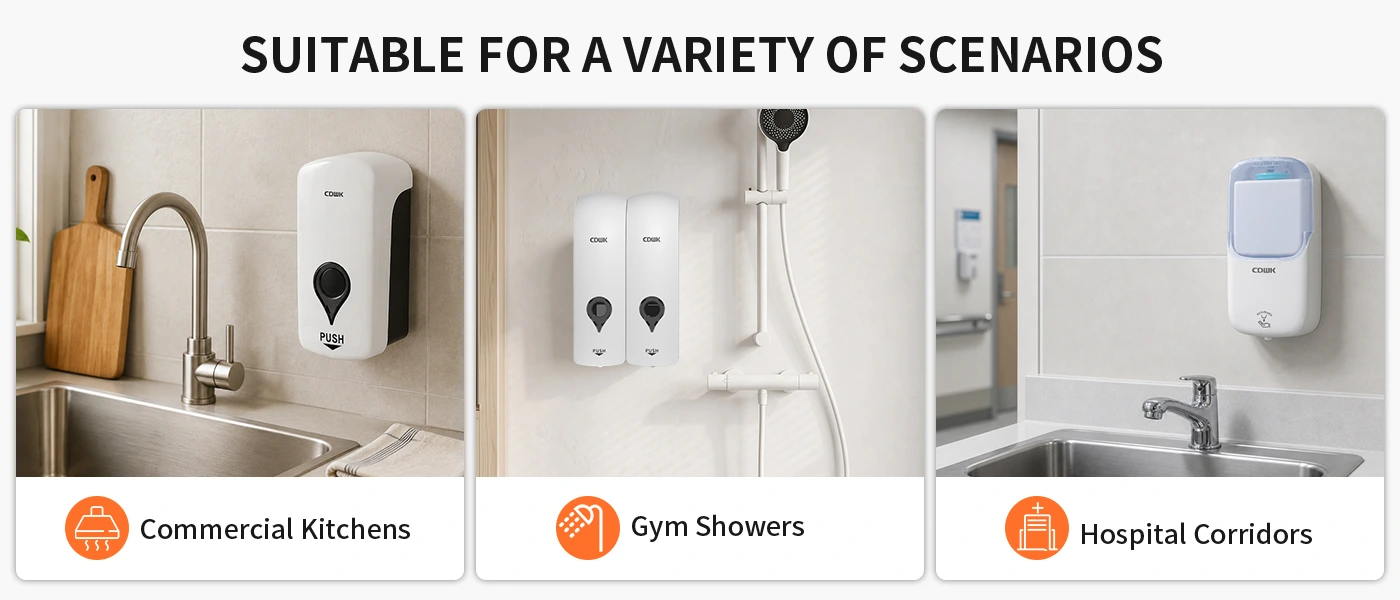
Whatever product it is — dish soap in commercial kitchens, body wash in gym showers, or alcohol sanitizing gel in the hospital corridors — a Wall Mounted Hand Soap Dispenser adjusts quickly. Swappable inner pumps (liquid, foam, or spray valves) ensure that one hardware design serves all sanitation needs in a particular building without changing the dispenser.
5. Conclusion
Using a Wall Mounted Hand Soap Dispenser will be much more than just changing the aesthetics; it will be an economically sound choice as it will enhance the hygiene of the facilities, will make optimal use of counter space, and will reduce the cost of the supplies used.
If you have any concerns regarding washroom design planning, selection of the fixtures, and sourcing of the supplies in bulk quantities, do not hesitate to reach out to CDWK. We are always here to assist!