
The global automatic paper dispenser industry is set for vigorous expansion over the coming years, with industry research forecasting a 14.1-percent compound annual growth rate (CAGR) between 2026 and 2033. Rising public hygiene awareness, cost-saving operational needs and growing demand for eco-friendly facility hardware are three primary catalysts reshaping the whole marketplace. As commercial premises and household consumers gradually phase out manual paper-taking methods, sensor-activated dispensers are turning into essential facility equipment worldwide.

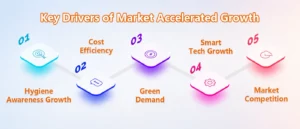
1. Key Drivers of Market Accelerated Growth
Rising Public Hygiene Awareness
Multiple core factors fuel the global automatic paper dispenser market’s 14.1% CAGR growth from 2026 to 2033. Sustained high hygiene awareness is the primary growth driver. WHO data records a 30% rise in global public focus on restroom sanitation. High-traffic venues like hospitals, restaurants and offices widely replace manual dispensers with sensor-activated, hands-free models to avoid cross-infection. Global health guidelines advocate contact-free sanitary facilities, with over 68% of newly renovated public restrooms adopting automatic dispensers, steadily driving market expansion.
Superior Cost–Effectiveness
Cost advantages boost commercial adoption, with the commercial segment dominating 73% of the global market. Intelligent automatic paper dispensers dispensing cuts paper waste by 29% and reduces janitorial labor and restocking workload by 33%. Around 76% of medical institutions and 61% of chain restaurants have upgraded to automatic dispensers. These measurable operational‑saving perks encourage business operators to update their washroom fixtures, fuelling ongoing market expansion.
Sustainability Policies & Green Demand
Global environmental policies and growing green consumption further propel industry development. Over 83% of global buyers prioritize brands with mature sustainable layouts. Modern automatic dispensers feature refillable structures and biodegradable materials to reduce resource waste. Strict sustainability regulations in Europe and North America mandate eco-friendly sanitary equipment for public buildings, driving manufacturers to upgrade products and generate massive market demand.
Smart Tech & Emerging Market Expansion
Technological upgrades and emerging market development broaden industry boundaries. IoT-enabled smart automatic paper dispensers support real-time stock monitoring and predictive maintenance, improving operational efficiency. Rapid urbanization in Asia-Pacific, Latin America and the Middle East boosts construction of commercial and public facilities. Emerging markets including India, Indonesia and Thailand achieve a 6% regional CAGR, delivering stable incremental demand and strong growth momentum globally.
Diversified Market Competition
Vigorous market competition accelerates industry popularization. Global leading brands and emerging manufacturers continuously upgrade sensor technology, optimize product durability and provide customized OEM/ODM services. Product lines cover high-end commercial, cost-effective and household niche scenarios to meet diverse user needs. Comprehensive product coverage and targeted solutions effectively drive the overall growth of the automatic paper dispenser market.
2. Two Primary Product Segments Drive Product-Level Market Demand
The market is mainly classified into countertop and wall-mounted product categories.
Countertop-style automatic paper dispensers occupy around 31% of the whole product-type share. These compact units suit small-scale spaces such as offices and meeting rooms, delivering quick paper access for daily office workers. Its market gain is fueled by small-office demands for neat, sanitary supplies. Still, units placed on work surfaces need 35% more frequent upkeep and suffer from limited usable countertop space.
Wall-mounted dispensers hold the dominant 69-percent segment share and serve restrooms, kitchens and high-traffic public zones including hospitals and restaurants. Their large-capacity design helps property managers cut restock frequency by nearly 40%. Ongoing public washroom renovation projects and stricter shared-space sanitation standards continue to fuel its sales growth. Industry data forecasts that over 82% of newly manufactured dispensers of both styles will adopt upgraded touch-free sensor technology before 2030 to remove physical-contact risks and broaden market acceptance.
3. Household and Commercial End-Users Shape Market Consumption
When sorted by end-use, automatic paper dispensers cover household and commercial-use segments. The residential segment currently accounts for 27% of overall market revenue and keeps steady-state growth. Improved consumer knowledge of home sanitation and sustainable-living habits drives stable household-segment demand.
The commercial sector holds the leading 73-percent market share, covering dining venues, medical centres and corporate workspaces. Around 76% of healthcare institutions and 61% of chain restaurants have finished upgrading their manual paper fixtures. Businesses prioritise automatic paper dispensers to lift restroom hygiene, streamline janitor workflows and lower long-term paper-consumption costs. Growing investment in smart-building infrastructure keeps pushing the adoption rate of intelligent non-contact dispensers upwards at an annual rate of 18%.
4. Regional Variation Shapes Global Market Expansion Pace
Distinct regional-growth statistics appear across major global markets.
North America commands 34% of global market revenue and achieves a 5% five-year CAGR, supported by well-known sanitary-product giants and strict local public-health codes.
lEuropean markets, which take 26% market share, thrive under environmental-protection regulations pushing recyclable and low-waste hardware.
The Asia-Pacific region boasts the fastest-growing emerging-market sectors with a 6-percent regional CAGR, where urbanisation fuels public-facility construction across India, Indonesia and Thailand.
lLatin-American market demand expands alongside local infrastructure projects and reaches a 4.3% yearly growth rate.
lMiddle-Eastern commercial constructions maintain stable purchasing needs with 4.8% CAGR.
All territories confront supply-chain obstacles, local environmental-compliance standards and varied consumer tastes, compelling manufacturers to carry out constant product optimisation.
5. Diverse Key Players Compete With Unique Competitive Strategies
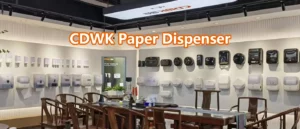
The competitive landscape gathers many established international suppliers and rising domestic manufacturers. Top-three industry competitors occupy approximately 22% of the global combined market share. Market leaders including Kimberly-Clark invest heavily in sustainable dispenser designs. Guangdong Chuangdian Intelligent Technology supplies durable automatic paper dispensers and OEM services for more than 3000+ well-known overseas brands. European manufacturers deliver custom-made premium dispensers, while emerging-market suppliers provide budget-friendly selections for cost-sensitive buyers. Rivals compete through sensor-technology upgrades, eco-friendly raw materials, tailor-made solutions and long-term facility-service partnerships.
6. What Defines the Market’s Future
Industry evolution now centres on smart upgrades. IoT-enabled automatic paper dispensers support real-time paper-level monitoring and scheduled maintenance, cutting washroom-labour waste by roughly 33%. Even though 16-percent growth in raw-material costs and competing substitute products bring pressure to manufacturers, eco-friendly refillable structures and touch-free functions remain reliable selling points. Moving forward, brands that adapt quickly to hygiene trends, satisfy commercial and residential buyers and prioritise eco conscious innovation will capture lucrative opportunities within this fast-expanding marketplace with a 14.1% CAGR.