
Public bathrooms have some distinctive features compared to bathrooms used by people in homes. A single dispenser should be able to handle a lot of users, daily operation, frequent refills, and regular cleaning. An Automatic Hand Soap Dispenser provides sensor-controlled dispensing of soap, thus offering a convenient option for a large number of people to get soap.
1. What is an Automatic Hand Soap Dispenser?
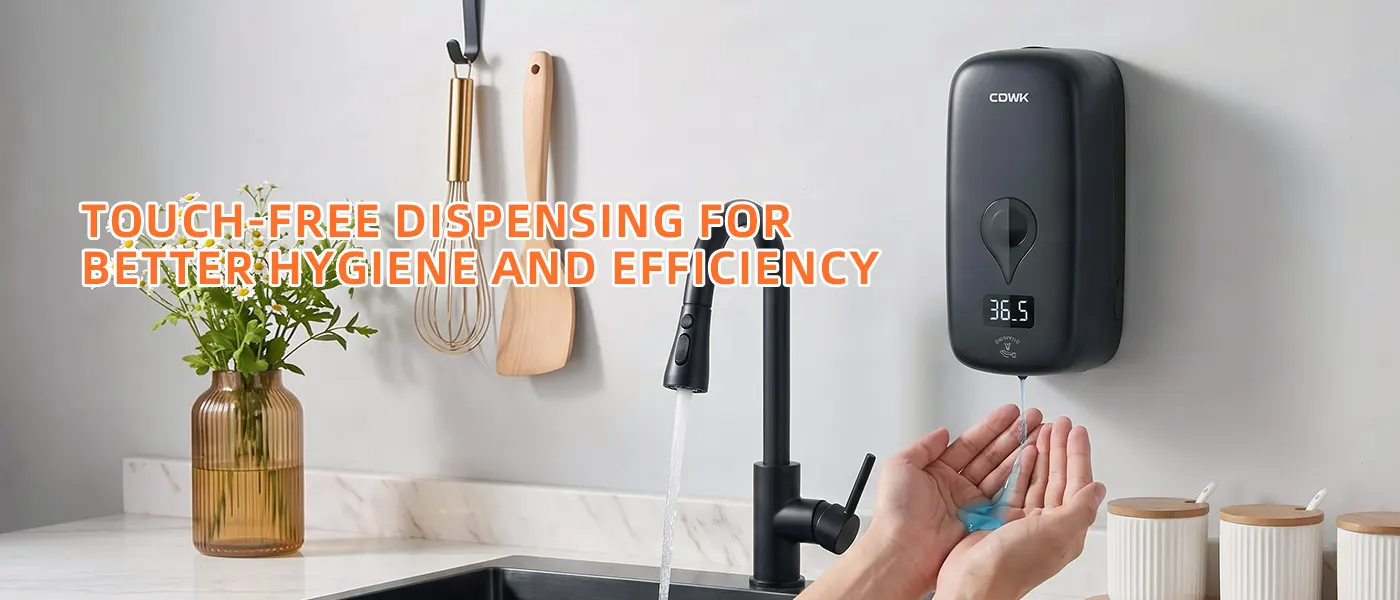
An Automatic Hand Soap Dispenser is a sanitary device that detects a person’s hand using a sensor and dispenses soap automatically. Unlike dispensers that use a pressing button or pumping, the user can place his/her hand into the detection zone to get soap in accordance with the pre-established dispensing schedule.
A typical unit consists of several main components:
- Sensor
- Soap container
- Electric pump
- Dispensing nozzle
- Control system
- Battery or external power supply
The operating process is relatively simple. When the sensor detects a hand, it sends a signal to the control system. The pump then starts and transfers soap from the container through the nozzle. After completing the preset dispensing cycle, the pump stops.
For public restrooms, this automated process reduces the number of steps required from users and provides a basis for more consistent daily restroom management.
2. What Features Does an Automatic Hand Soap Dispenser Have?
Different Automatic Hand Soap Dispenser models vary in capacity, sensing method, and dispensing control. Understanding these features can help determine whether a particular unit matches the installation environment.
Sensor Detection
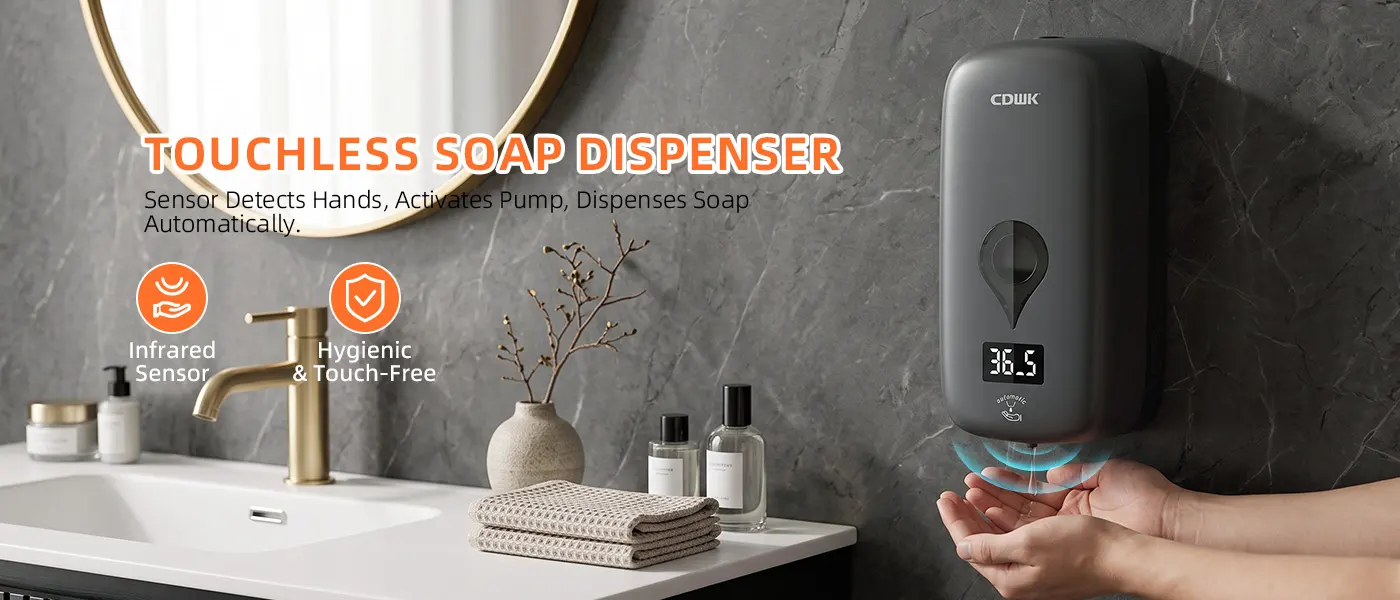
The sensor is a key component that enables touchless operation. Many models use infrared sensing to detect the user’s hand. Depending on the sensor type and product design, the effective detection distance may be around 3–8 cm.
Reliable sensing requires a balance between response speed and false activation control. If the detection range is too short, users may need to adjust their hand position repeatedly. If it is too long, the dispenser may activate unintentionally.
Adjustable Dispensing Volume
Some Automatic Hand Soap Dispenser models allow the dispensing volume to be adjusted. Depending on the pump design, a unit may deliver approximately 0.5–1.5 mL of soap per activation.
A larger dispensing volume is not necessarily better. The setting should match the soap type, expected number of users, and actual requirements of the restroom.
Different Capacity Options
The soap container is another important specification. Common capacities may include 500 mL, 800 mL, and 1,000 mL.
A larger container can reduce refill frequency, but its size should also match the available installation space and expected daily soap consumption.
Power Supply and Installation
Depending on the model, the dispenser may use batteries, a rechargeable power system, or an external power source. Installation options generally include wall-mounted and countertop designs.
When selecting a model, several specifications should therefore be considered:
| Item | Key Consideration |
| Sensor | Detection distance and response speed |
| Capacity | Options such as 500–1,000 mL |
| Dispensing | About 0.5–1.5 mL per use, depending on the model |
| Power | Battery, rechargeable, or external power |
| Installation | Wall-mounted or countertop |
These are the basic technical and structural features of the equipment. Whether the dispenser is suitable for a public restroom, however, depends on how these features perform in actual use.
 3. Why Are Automatic Hand Soap Dispensers Suitable for Public Restrooms?
 3. Why Are Automatic Hand Soap Dispensers Suitable for Public Restrooms?
Public restrooms are shared by many different users, so their equipment needs to handle frequent use while supporting hygiene, soap management, and convenient operation. This is where an Automatic Hand Soap Dispenser can provide practical value.
More Hygienic
Traditional dispensers require users to press a button or pump head, while an automatic model can dispense soap without direct contact with the dispenser. This reduces one unnecessary contact point on a shared restroom fixture.
However, touchless operation does not mean that the dispenser itself remains completely free from contamination. The nozzle, housing, and surrounding sink area still require regular cleaning according to the restroom’s maintenance schedule. The main benefit of touchless dispensing is therefore to reduce direct contact rather than eliminate hygiene risks.
Reduce Soap Waste
Soap consumption can be significant in a public restroom. If each user takes a different amount of soap, unnecessary consumption may occur.
The Automated Hand Soap Dispenser could deliver a similar volume of soap every time if it has a fixed volume. For instance, if it dispenses 1 mL at once and works 300 times daily, the theoretical amount of usage daily will be:
300 × 1 mL = 300 mL
Thus, with the capacity of 1,000 mL, it will theoretically last about three days. The actual amount of usage may vary because of repeated activations and changing numbers of visitors.
Convenience for the User
Since different people with different heights, ages, and behaviors visit public restrooms, automation in the soap dispensing allows eliminating the need to press the device.
For instance, the CDWK Automated Sensor Hand Wash Dispenser CD-5168 can be utilized for touch-free dispensing of soap in restrooms. As its name indicates, the sensor operation makes it possible to receive soap just by positioning hands within the sensor range. Thus, the touch-free soap dispenser is very convenient for commercial restroom equipment that should be activated multiple times during the day.
In the case of airports, hotels, shopping centers, restaurants, office buildings, and other public places, such operation could simplify the handwashing process.
Support Daily Restroom Management
Restroom staff need to check soap levels, power supply, and equipment condition regularly. With a more consistent dispensing process, an Automatic Hand Soap Dispenser can make soap consumption easier to estimate and help staff arrange refills according to actual usage.
Its value therefore extends beyond the user experience to the daily management of public restroom facilities.
4. Conclusion
Public restrooms must handle shared use, frequent operation, and ongoing maintenance. A suitable soap dispenser therefore needs to balance operation, dispensing control, capacity, and daily management requirements. An Automatic Hand Soap Dispenser can address these needs through sensor-based dispensing, controlled soap delivery, and different capacity and installation options.
However, the right model should be selected according to actual visitor volume, installation conditions, container capacity, and maintenance requirements rather than simply choosing the model with the most features. If you would like to learn more about automatic hand soap dispensers, feel free to contact CDWK.