
Hand hygiene is an important consideration in offices, restaurants, healthcare facilities, schools, hotels, and other high-traffic environments. Traditional manual dispensers require users to press or pull a surface before receiving soap or sanitizer, creating another shared contact point. An Automatic Hand Dispenser uses a sensor to detect the user’s hand and release a controlled amount of product without direct contact.
Beyond touch-free operation, automatic dispensing can improve dosage consistency, reduce unnecessary product use, and make handwashing stations easier to operate. However, the actual benefits depend on the dispenser’s sensor, pump, capacity, refill system, and compatibility with the selected product.
What Is an Automatic Hand Dispenser and How Does It Work?
An Automatic Hand Dispenser combines a sensor, pump, reservoir or refill cartridge, and control system to deliver soap, sanitizer, or another compatible hand-care product. When a user’s hand enters the detection area, the sensor activates the pump and releases a preset dose. Commercial models can vary considerably in capacity and dispensing configuration. For example, available systems range from approximately 800 mL to 1,200 mL, while some commercial units use an 8 cm detection distance.
What Types of Products Can It Dispense?
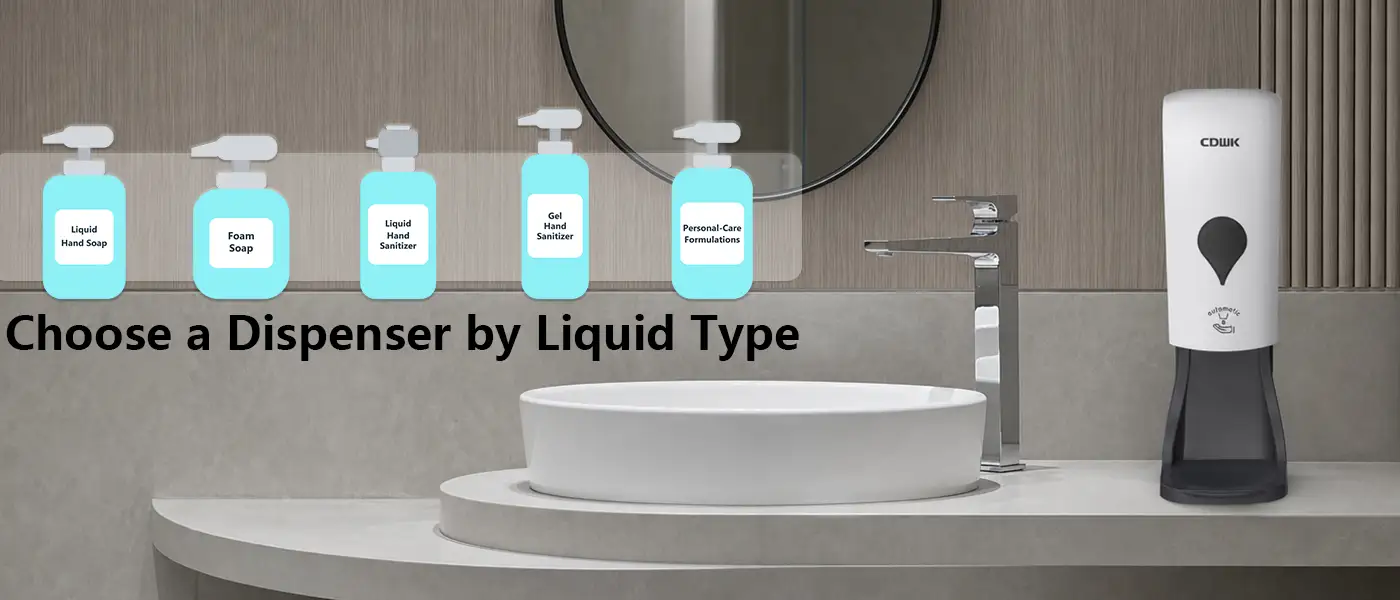
The product compatibility of an Automatic Hand Dispenser depends on the pump design, viscosity range, and dispensing mechanism. Common applications include:
- Liquid hand soap
- Foam soap
- Liquid or gel hand sanitizer
- Other compatible personal-care formulations
Some dispensers are designed for only one product type, while others support both soap and sanitizer. For example, commercial models may specify viscosity ranges because overly thick or unsuitable formulations can affect pump performance.
What Are the Main Benefits of an Automatic Hand Dispenser?
The main advantage of an Automatic Hand Dispenser is that it combines hands-free operation with controlled product delivery. This can make a hygiene station more convenient while also supporting more consistent daily use.
Provides Touch-Free Dispensing
Traditional soap pumps require users to press or touch the dispenser before washing their hands, creating a frequently contacted surface in busy environments. A sensor-activated Automatic Hand Dispenser removes this step by detecting the user’s hand and releasing the product automatically. This reduces direct contact with shared surfaces and makes dispensing more hygienic and convenient in offices, restaurants, schools, and public washrooms.
The hands-free mechanism is particularly useful where the same dispenser may be used dozens or hundreds of times each day. Users only need to place their hands beneath the sensor, which also helps make the dispenser easier to operate when their hands are wet or when direct contact is inconvenient.
Supports Better Hand Hygiene
An Automatic Hand Dispenser can make soap or sanitizer easier to access at the point of use. When dispensing requires less physical interaction, users can obtain the product quickly and continue with the handwashing process without touching a shared pump. This can be especially useful in high-traffic facilities where hygiene stations need to remain convenient throughout the day.
Consistent access to the right amount of product can also support more practical hand hygiene routines. Some commercial systems are designed around measured doses rather than unrestricted pumping. For example, a dispenser delivering approximately 0.75 mL per activation can help provide a controlled amount while reducing unnecessary product use.
Provides Consistent Dispensing
Manual pumps may dispense different amounts each time, especially when users press with different force. This can lead to excessive soap consumption, frequent refills, and an inconsistent user experience. An Automatic Hand Dispenser solves this issue by delivering a controlled amount with each sensor activation.
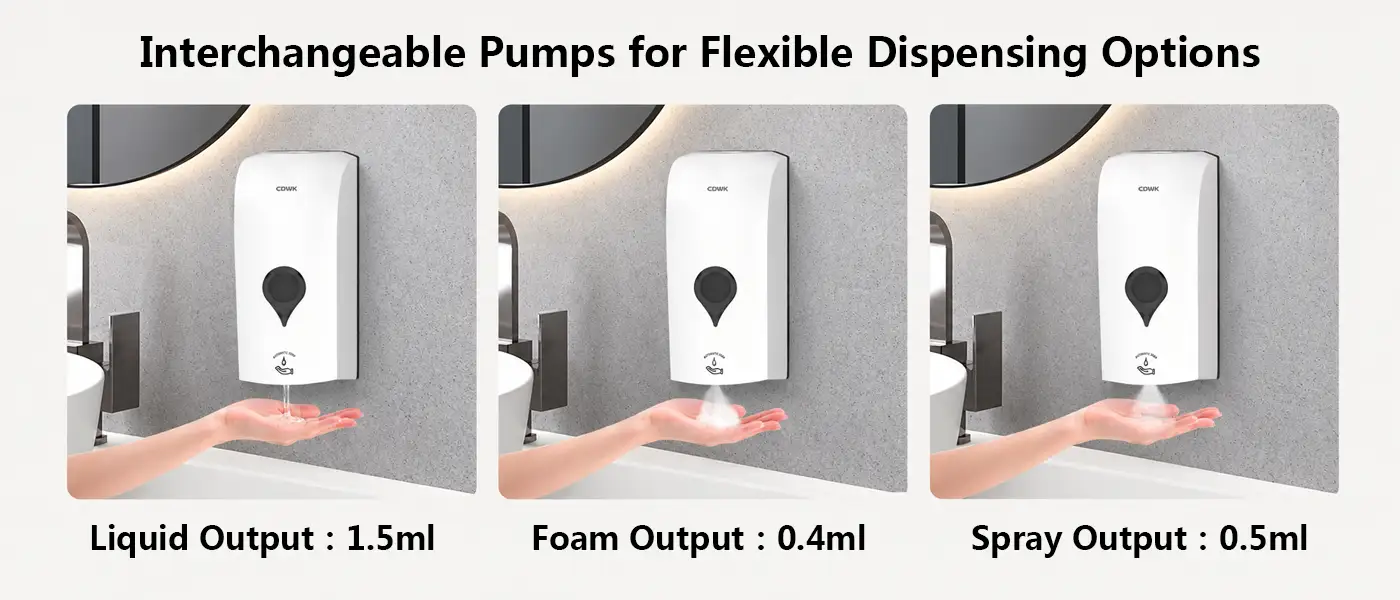
For facilities that need flexible dispensing options, the CDWK Automatic Soap Dispenser Touchless CD-5128 provides a 1,000 mL capacity with interchangeable pumps for liquid, foam, or spray products. It dispenses approximately 1.5 mL of liquid, 0.5 mL of foam, or 0.4 mL of spray per activation, helping control product usage while adapting to different hygiene applications.
Improves User Convenience
Repeatedly pressing a manual pump can be inconvenient in busy washrooms, particularly when users have wet or soapy hands. An Automatic Hand Dispenser requires only hand positioning beneath the sensor, allowing users to receive soap or sanitizer without searching for or pressing a physical button. This simple operation can make hygiene stations easier to use for a wide range of users.
Capacity also affects everyday convenience. A 1,000 mL or larger reservoir can accommodate more dispensing cycles before requiring a refill, which can reduce maintenance frequency in high-traffic locations. For facility operators, easier operation combined with fewer refill interruptions can make daily restroom management more efficient.
How to Choose the Right Automatic Hand Dispenser?
Choosing an Automatic Hand Dispenser requires more than comparing appearance or purchase price. The dispenser should match the product being dispensed, expected usage frequency, installation environment, and maintenance requirements.
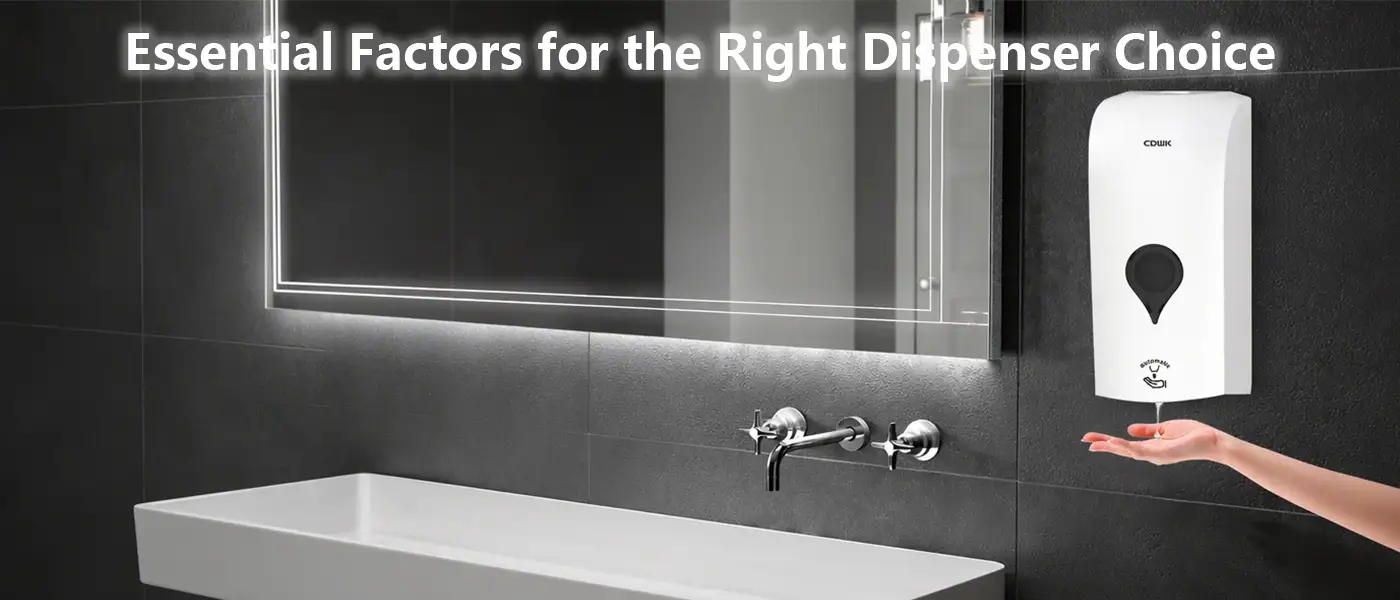
Match the Dispenser to the Product
First, check whether the dispenser is designed for liquid soap, foam, sanitizer, or multiple formulations. Viscosity is particularly important because pumps and valves are designed to work within specific ranges. Buyers should also consider refill format. Bulk-fill systems can offer flexible soap selection, while sealed cartridges may simplify product replacement and reduce handling. The right option depends on hygiene policies, labor requirements, and operating costs.
Consider Usage Frequency
The required capacity should correspond to the number of users and daily activations. A 1,000 mL dispenser may be suitable for many commercial applications, while larger or refillable systems can be considered for locations with especially high traffic. Battery life is another consideration for sensor-operated models. Some commercial systems advertise battery performance equivalent to tens of thousands of hand washes, while other designs use replaceable batteries or external power.
Evaluate Maintenance Requirements
Maintenance directly affects the long-term operating cost of an Automatic Hand Dispenser. Look for easy refill access, visible product levels, accessible battery compartments, and simple cleaning procedures. A practical dispenser should also provide clear indicators for low product or low battery where applicable. Easy service access can reduce downtime and make routine maintenance more efficient, particularly when dozens or hundreds of units are installed across a facility.
Conclusion
An Automatic Hand Dispenser can improve hygiene-station operation through touch-free activation, controlled dosing, convenient use, and easier product management. These benefits are especially valuable in busy environments, where reducing surface contact, maintaining consistent dispensing, and simplifying daily refilling can support better hygiene and operational efficiency.
For daily use, businesses only need to consider a few basic factors, such as capacity, dispensing volume, sensor performance, and installation requirements, to find a suitable model. If you have any questions about automatic dispensing solutions or product requirements, feel free to contact CDWK for further information and professional support.