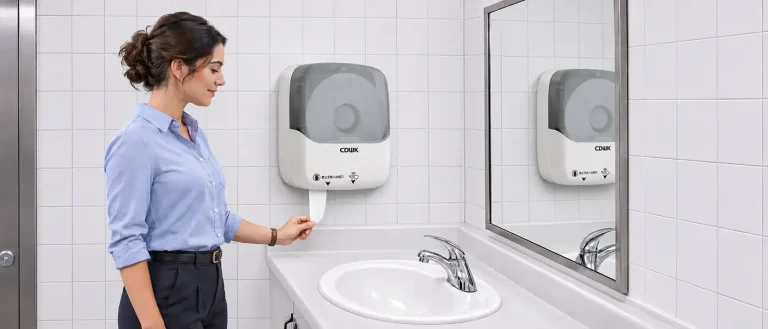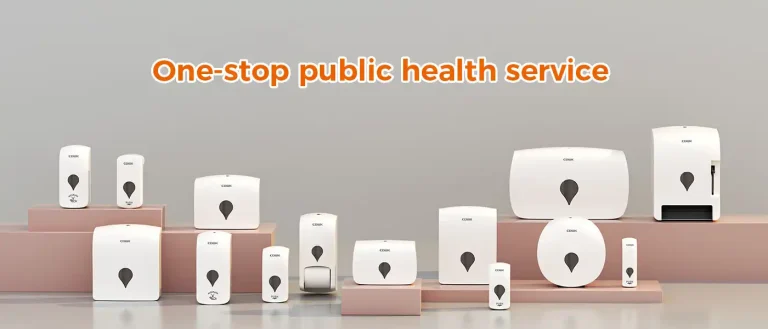

Choosing the right hand sanitiser for an Automatic Hand Sanitiser Dispenser involves more than checking its active ingredients. Its physical consistency, alcohol content, and dispensing requirements also affect how well it works with an automatic unit. Different products may require different pumps, reservoirs, and nozzles. Understanding these differences helps businesses select suitable sanitising products, avoid equipment problems, and maintain reliable hygiene facilities.
1. What Is an Automatic Hand Sanitiser Dispenser?
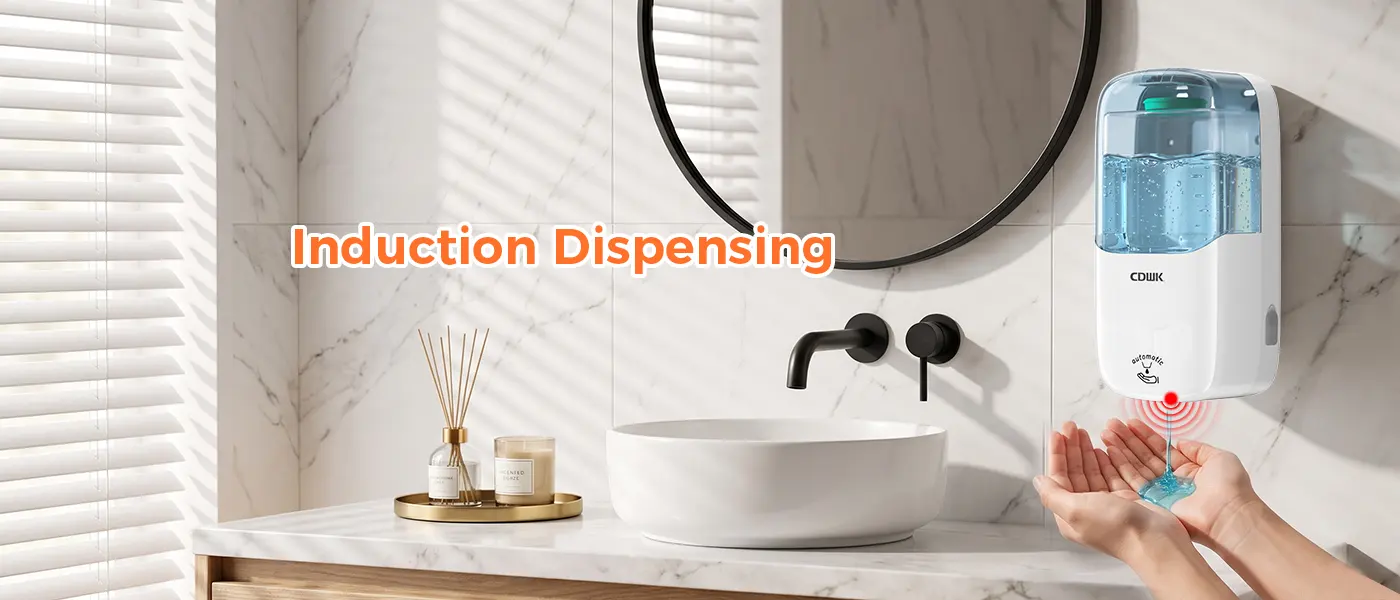
An automatic hand sanitiser dispenser is a touchless device that releases a measured amount of sanitiser when it detects a user’s hands. It is commonly installed in offices, hospitals, schools, shopping centres, restaurants, and other shared spaces where frequent hand hygiene is important.
Unlike manual pump bottles, this equipment reduces the need for users to touch a shared surface. Depending on the model, it may use a refillable reservoir or a replaceable cartridge. Models vary in their installation methods, including wall-mounted, countertop, and freestanding designs.
Why Is Sanitiser Compatibility Important?
Not every formulation works with every Automatic Hand Sanitiser Dispenser system. A product that is too thick may move slowly through narrow channels, while an unsuitable chemical composition may affect seals or internal components over time. Using an incompatible sanitiser can cause inconsistent output, leakage, nozzle blockage, or premature equipment wear. Checking the manufacturer’s approved product specifications before filling the reservoir is therefore essential.
2. What Types of Sanitiser Can an Automatic Hand Sanitiser Dispenser Use?
The suitable product depends on the dispenser’s pump, nozzle, and reservoir design. Some models support several formulations, while others are developed for one specific consistency. The following are common sanitiser types used in touchless dispensing systems.
Alcohol-Based Hand Sanitiser
Alcohol-based formulations commonly contain ethanol or isopropyl alcohol as their active ingredient. The CDC recommends choosing a hand sanitiser with at least 60% alcohol when soap and water are unavailable. The WHO’s recommended formulations include 80% ethanol or 75% isopropyl alcohol.
These products are available in liquid, gel, and foam forms. However, alcohol concentration alone does not determine equipment compatibility. The Automatic Hand Sanitiser Dispenser must also be suitable for the formulation’s viscosity and chemical composition. Since alcohol-based products are flammable, storage and installation should follow applicable fire-safety requirements.
Alcohol-Free Hand Sanitiser
Alcohol-free products may use alternative antimicrobial ingredients, such as benzalkonium chloride, depending on the formulation and local regulations. They are sometimes selected in environments where organisations prefer to avoid alcohol-based products.
Their performance and recommended uses can differ from alcohol-based formulations. Buyers should check the product label, active ingredients, and relevant regulatory requirements rather than assuming that all alcohol-free sanitisers provide equivalent protection. Before using one in an Automatic Hand Sanitiser Dispenser, confirm that the pump materials and dispensing mechanism are compatible with its ingredients.
Liquid Hand Sanitiser
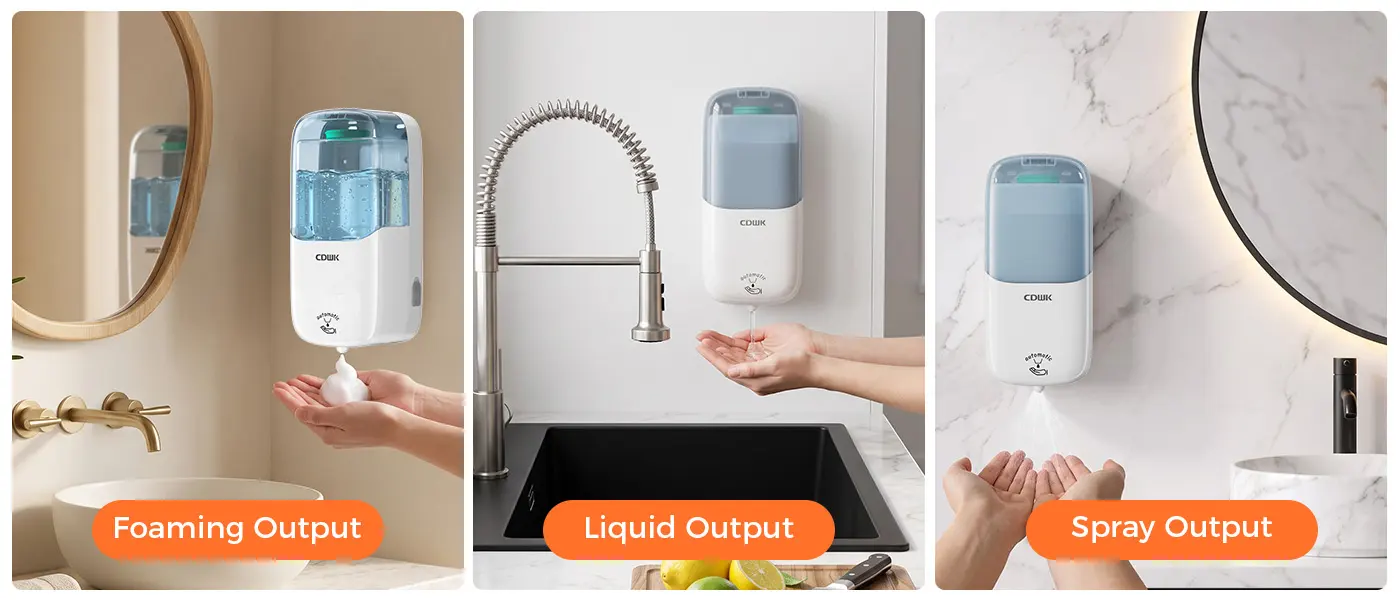
Liquid sanitiser has a relatively low viscosity and can flow through suitable dispensing channels with little resistance. It is often used in units equipped with liquid pumps or controlled-flow nozzles. However, a very thin formulation may drip from an outlet if the nozzle is not designed to prevent leakage. For this reason, buyers should check whether the Automatic Hand Sanitiser Dispenser has an appropriate valve or anti-drip structure.
Gel Hand Sanitiser
Gel formulations are thicker than many liquid products. Their consistency helps users apply the product to the hands without immediate runoff, but it also creates additional requirements for the dispensing mechanism.
A compatible unit needs a pump capable of handling the gel’s viscosity. Narrow tubes or small openings may restrict flow, particularly when the formulation contains thickening agents. Always check the permitted viscosity range before using gel products in an Automatic Hand Sanitiser Dispenser.
Foam Hand Sanitiser
Foam sanitiser is dispensed as a lightweight foam rather than a conventional liquid or gel. It typically requires a specialised foaming pump that mixes the formulation with air during dispensing.
A standard liquid pump may not produce the intended foam texture. Some systems also require a specific refill formulation or cartridge. If foam output matters, choose equipment designed for foaming applications rather than adapting a standard liquid dispenser.
3. What Factors Affect Sanitiser Compatibility with an Automatic Hand Sanitiser Dispenser?
Selecting a suitable formulation requires attention to more than its sanitising ingredients. The product’s physical properties and the equipment’s construction determine whether dispensing remains stable during regular use.
Sanitiser Viscosity and Consistency
Viscosity describes a liquid’s resistance to flow. Low-viscosity products generally move more easily through dispensing channels, while thicker gels require greater pumping force and appropriately sized internal passages.
Manufacturers may specify a compatible viscosity range in centipoise (cP) or millipascal-seconds (mPa·s). Since 1 cP equals 1 mPa·s, buyers can use these units to compare product specifications. If the sanitiser falls outside the recommended range, output may become irregular or the pump may become strained.
Alcohol Concentration and Chemical Ingredients
Alcohol concentration is important for sanitising performance, but other ingredients can also affect equipment compatibility. Humectants, fragrances, thickeners, and other additives may influence viscosity or interact with certain plastics, rubber seals, and tubing materials.
For an alcohol-based formulation, buyers should also consider material resistance and fire safety. Don’t assume a reservoir or seal suitable for water-based products will automatically withstand repeated exposure to alcohol.
Dispenser Pump and Nozzle Design
The pump determines how the product is drawn from the reservoir and delivered through the outlet. Different formulations may require different pump structures:
- Liquid pump: Designed to move relatively free-flowing products.
- Gel pump: Built to handle thicker formulations.
- Foaming pump: Combines sanitiser with air to generate foam.
- Anti-drip nozzle: Helps reduce residual liquid leaking after dispensing.
Sensor and Dispensing Mechanism
The sensor controls when dispensing begins, while the pump determines how much product is released. These systems should work together to provide a consistent dose without unnecessary activations.
Detection distance, response time, and dispensing volume vary by model. In busy locations, reliable sensing can reduce missed activations and repeated dispensing. When comparing equipment, check the detection range, dose per activation, power source, and whether the output can be adjusted.
Conclusion
An automatic hand sanitiser dispenser may support alcohol-based, alcohol-free, liquid, gel, or foam products, but compatibility depends on its pump design, nozzle structure, materials, and approved formulation range. Checking these specifications before installation or refilling helps prevent equipment issues and maintain consistent operation.
If you are comparing dispensing solutions for your facility or business, consider the sanitiser type, expected usage, and maintenance requirements together. For more information about suitable dispensing options, feel free to contact CDWK for assistance.