
A commercial washroom dispenser may look simple from the outside, but developing one for commercial use involves much more than creating an attractive design.
From understanding market requirements to developing tooling, testing samples, and preparing for mass production, every stage can influence the final product. This becomes even more important for OEM/ODM projects, where a product may need to meet specific requirements for a particular market, brand, or application.
So, what does the development process of commercial washroom products usually look like?

1. Start With the Market Requirement
Every successful product starts with a clear understanding of what the market needs.
For an OEM/ODM dispenser project, the initial requirement may come from a customer’s existing product, a new market opportunity, or an idea for a completely new product.
At this stage, manufacturers need to understand factors such as:
- Type and size of consumables
- Expected usage frequency
- Installation environment
- Refill capacity
- Target price
- Product dimensions
- Appearance and color
- Packaging requirements
- Local market requirements
For example, a paper dispenser designed for an office may have different requirements from one installed in an airport, shopping mall, school, or restaurant.
Understanding these differences at the beginning helps create a more practical product design.
2. Turn the Idea Into a Product Design
Once the requirements are clear, the next step is to turn the concept into an actual product.
Engineers need to consider the external appearance as well as the internal structure. For a commercial dispenser, details such as the mounting system, refill mechanism, locking structure, paper or liquid outlet, and access for maintenance all need to be considered.
Material selection is another important part of the process.
Depending on the application and design requirements, manufacturers may work with materials such as ABS, PP, PC, ABS+PC, or stainless steel. Each material has different characteristics in terms of strength, appearance, weight, processing, and cost.
For OEM/ODM dispenser projects, material selection also needs to balance the customer’s design expectations with the requirements of mass production.
3. Develop the Tooling
For injection-molded plastic products, product design and tooling development are closely connected.
Once the design is confirmed, the tooling needs to be developed according to the product structure and production requirements.
Engineers may need to consider wall thickness, draft angles, parting lines, injection points, assembly structure, and how different components will fit together.
This is an important difference between creating a prototype and developing a product for commercial production.
A design may look good in a 3D drawing, but it also needs to be suitable for stable and efficient mass production.
For an OEM/ODM manufacturer, experience in tooling development can therefore have a direct impact on the final product.
4. Produce Samples and Test the Function
After the tooling is completed, samples can be produced for testing.
This allows both the manufacturer and customer to evaluate the actual product and identify areas that may need improvement.
Depending on the type of product, testing may include:
- Refill and dispensing tests
- Installation tests
- Opening and closing tests
- Locking mechanism tests
- Button or sensor tests
- Battery or power tests
- Impact or load tests
- Consumable compatibility tests
- Long-term usage tests
For example, a paper dispenser needs to work with the paper it is designed for. Paper width, roll diameter, core size, folding method, and outlet design can all influence dispensing performance.
This is why testing the commercial washroom product together with its intended consumables is important.
5. Improve the Product Based on Testing
Testing is not only about checking whether a product works.
It can also reveal opportunities to improve the design.
A small change to the outlet size, spring position, internal structure, cover opening angle, or locking mechanism may improve the overall user experience.
For OEM/ODM projects, this stage often involves communication between the customer and the engineering team. Customer feedback, sample testing, and market requirements can all contribute to further improvements.
Several rounds of adjustment may be needed before the final design is confirmed.
The goal is to develop a product that is not only attractive, but also practical for everyday commercial use.
6. Quality Control Continues Throughout the Process
Quality control should not begin only when the finished products are ready for shipment.
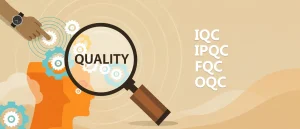
For commercial washroom products, quality can be managed at different stages, including incoming material inspection, in-process inspection, assembly checks, functional testing, and final inspection.
The purpose is not simply to find defective products at the end of production. Continuous quality control can help identify potential issues earlier and improve consistency throughout the manufacturing process.
For long-term OEM/ODM partnerships, this consistency is particularly important because the same product may be supplied to a market over many years.
From an Idea to a Market-Ready Product
Developing a commercial washroom product is a process of turning an idea into a product that can be manufactured consistently and used reliably every day.
From market research and product design to tooling, sampling, testing, improvement, and mass production, each stage plays a role in the final result.
For customers looking for OEM washroom products, custom dispensers, or ODM solutions, working with an experienced manufacturer can help connect product development with actual production requirements.
At CDWK, we have more than 23 years of experience in commercial washroom products and support customers with OEM/ODM development, tooling, manufacturing, testing, and quality control.
The final goal is not simply to create a product that looks good in a catalog. It is to develop a commercial dispenser that can perform reliably after it is installed, refilled, maintained, and used every day.