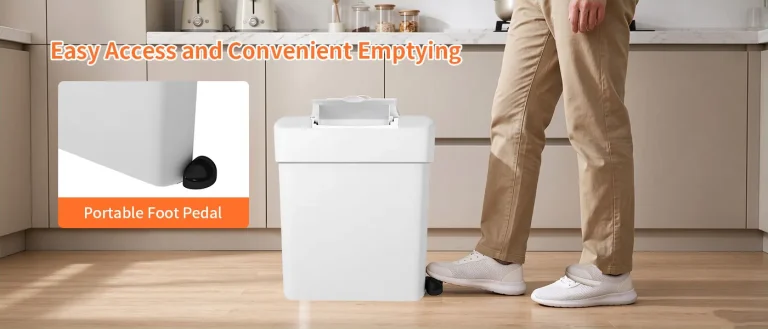

Choosing the right kitchen trash can affects daily convenience, cleanliness, and storage efficiency. A hanging garbage can keeps waste within easy reach without occupying floor space, while an under-sink trash can hides waste inside a cabinet for a tidier appearance. Both options can work well, but their suitability depends on kitchen size, cooking habits, waste volume, and available storage. Understanding their differences helps homeowners select a practical solution for their daily routines.
1. What Is a Hanging Garbage Can?
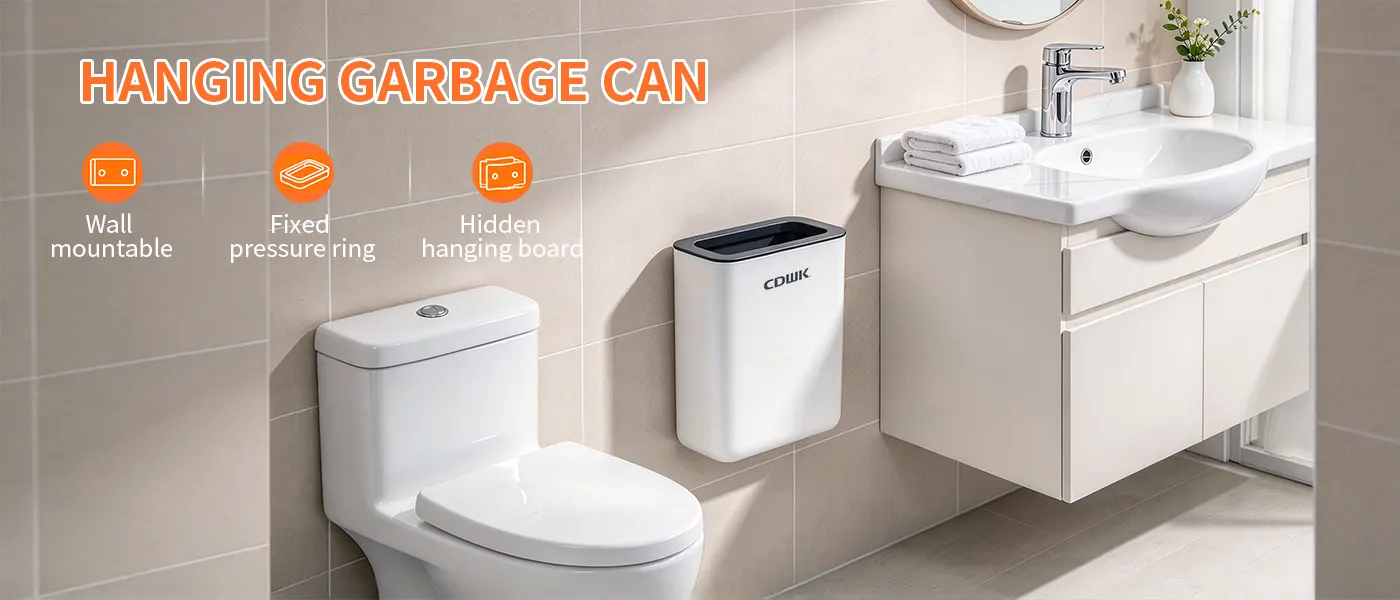
A Hanging Garbage Can is a waste container designed to hang from a suitable surface, such as a cabinet door, or attach to another compatible support. It keeps the bin close to the food preparation area, allowing users to dispose of vegetable peels, packaging, and other kitchen waste without repeatedly walking to a floor-standing bin.
Common Hanging Garbage Can Designs
Hanging garbage cans come in several designs to accommodate different kitchen layouts and disposal needs.
- Open-top bins: Allow quick disposal of food scraps during meal preparation and are easy to access.
- Lidded containers: Help conceal waste and reduce the exposure of food scraps to the surrounding area.
- Foldable or collapsible bins: Can be convenient in compact kitchens where storage space is limited.
- Compact plastic bins: Offer a lightweight option for everyday kitchen waste and are generally easy to wipe clean.
A hanging garbage can is particularly useful when users want to keep the floor clear and maintain quick access to a waste container. However, its overall practicality is determined by its size, storage capacity, and suitability for the surrounding kitchen space.
2. What Is an Under-Sink Trash Can?
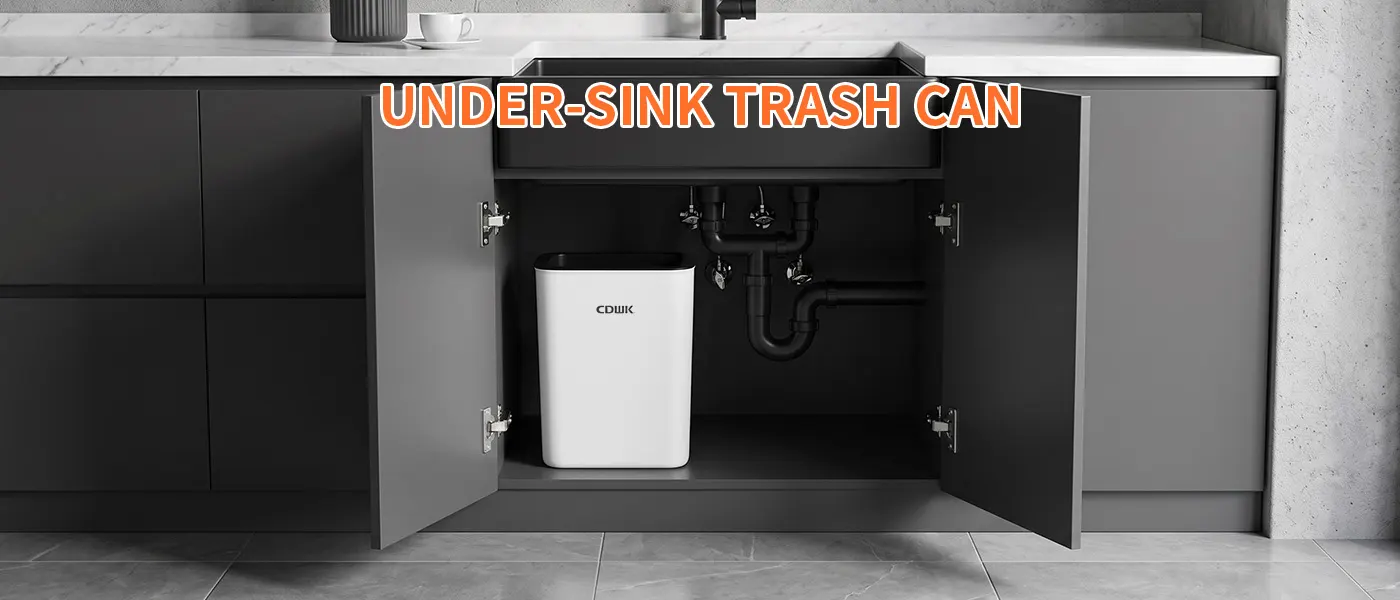
An under-sink trash can is a waste container placed inside the cabinet beneath a kitchen sink. This arrangement keeps the bin out of sight while making use of an area that might otherwise be underutilized. For households looking to maintain a clean, organized kitchen while keeping waste separate from the main food preparation zone, this can be a practical solution.
Common Types of Under-Sink Trash Cans
Under-sink trash cans are available in several configurations, each offering different advantages.
- Freestanding bins: Sit directly on the cabinet floor and can be removed when the container needs cleaning.
- Pull-out trash cans: Slide outward on a compatible mechanism, allowing users to access waste without reaching deep into the cabinet.
- Dual-compartment bins: Separate general waste from recyclable materials, provided the cabinet has enough room for both compartments.
- Lidded bins: Help conceal waste and limit the direct exposure of discarded materials.
The available cabinet space is an important consideration. Pipes, cleaning supplies, and other items stored inside the cabinet may leave insufficient room for a trash bin. Buyers should therefore measure the usable cabinet dimensions rather than relying only on the cabinet’s external size.
3. Hanging Garbage Can vs. Under-Sink Trash Can: Key Differences
Although both options help manage kitchen waste, their designs affect storage, accessibility, capacity, and cleaning. Comparing these practical factors makes it easier to determine which type suits a particular household.
Space-Saving Benefits and Storage Limitations
A hanging garbage can keeps the floor clear and makes everyday waste disposal more convenient, especially in small kitchens with limited space. However, its placement may limit the usable space near cabinet doors or food preparation areas. An under-sink trash can keeps waste out of sight and maintains a tidier appearance, but it uses valuable cabinet space that could otherwise store cleaning supplies or kitchen essentials.
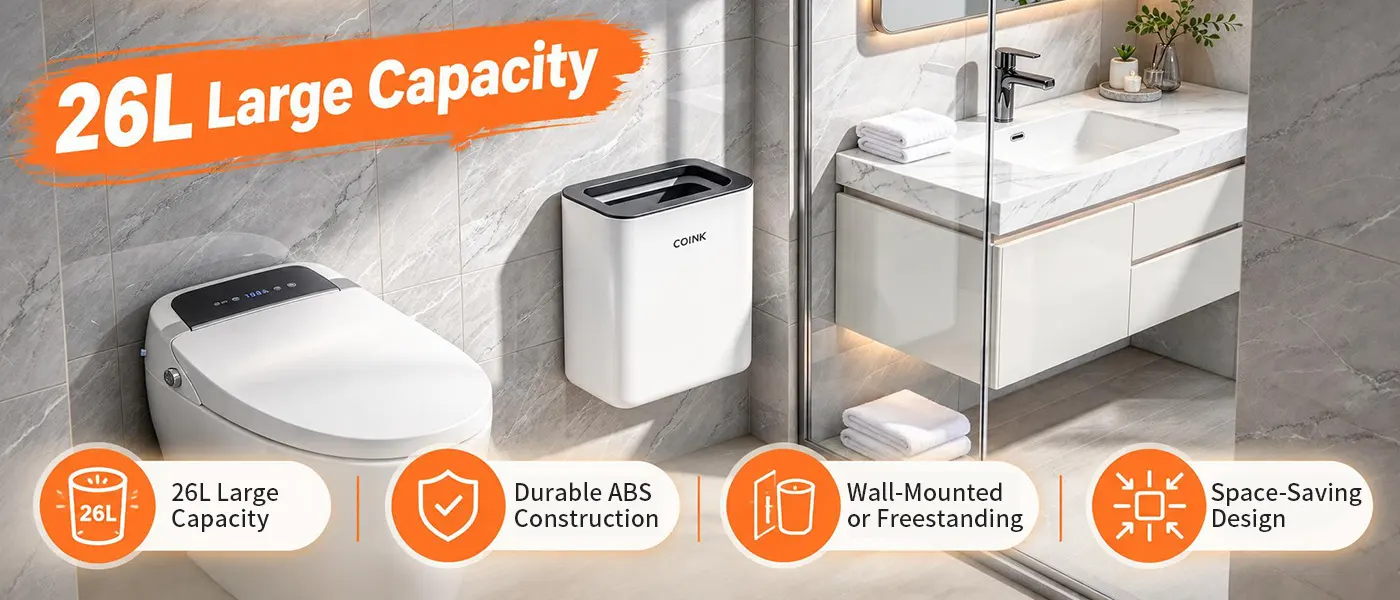
For spaces where freeing up floor area is a priority, a wall-mounted waste bin offers another option. CDWK’s CD-7468 Wall-Mounted Waste Bin has a 26L capacity and an ABS exterior, with both wall-mounted and freestanding placement options. Designed for commercial spaces such as hotels, offices, and restaurants, it offers a convenient waste disposal solution while helping maximize available space.
Installation Flexibility and Ease of Access
A hanging garbage can is usually convenient to access during food preparation because it can be positioned near the work area. Some models use hooks or brackets, while others require different mounting arrangements. Buyers should check cabinet-door thickness, clearance, and the manufacturer’s compatibility requirements before choosing a model.
A freestanding under-sink bin generally requires little setup beyond placing it in the cabinet. Pull-out models may offer easier access but need sufficient clearance and compatible cabinet dimensions. Therefore, the better option depends on whether users prioritize quick access or concealed storage.
Waste Capacity and Suitability for Daily Use
Capacity affects how often a trash can needs emptying. Smaller hanging bins can work well for vegetable peels, coffee grounds, and other waste generated during meal preparation. However, a compact container may fill quickly in a busy household.
Under-sink trash cans are available in different capacities, including larger models that can accommodate more daily waste. For example, a household generating substantial kitchen waste may prefer a bin with a capacity of 10–15 liters or more, if the cabinet can accommodate it. This is a practical selection example rather than a universal capacity recommendation.
Cleaning Convenience and Odor Control
Hanging Garbage Cans are convenient to remove and clean, particularly when their interiors are made of smooth plastic. However, food scraps may be left in plain sight, and the open top does not do much to keep odors contained. The right trash bags and regular emptying can help keep the bin clean and sanitary.
An under-sink trash can conceals waste behind a cabinet door, reducing visual clutter. A lidded model can also help contain odors, although it cannot eliminate them. Because enclosed spaces may retain moisture and smells, users should clean the container regularly and allow it to dry thoroughly before replacing the liner.
The following table summarizes the main differences between the two options.
| Comparison factor | Hanging Garbage Can | Under-Sink Trash Can |
| Space usage | Keeps the floor clear but may occupy nearby door or workspace | Uses cabinet space while keeping the bin out of sight |
| Accessibility | Convenient during food preparation | Requires opening the cabinet; pull-out models improve access |
| Capacity | Often suited to smaller amounts of waste, depending on the model | Available in a wide range of sizes |
| Cleaning | Usually easy to remove and wipe clean | Easy to clean when removable, but cabinet access may be restricted |
| Odor control | Depends on the lid, liner, and cleaning frequency | Concealed storage and a lid may help contain odors |
| Best suited for | Compact kitchens and quick disposal of food scraps | Households prioritizing concealed storage and a tidy appearance |
4. Conclusion
A hanging garbage can and an under-sink trash can serve different needs. A Hanging Garbage Can keeps waste within easy reach, frees up floor space, and works well for quick disposal during food preparation, but its capacity may be limited, and the container remains more visible. An under-sink trash can conceals waste and keeps the kitchen tidy while offering a wider range of capacities; however, it takes up cabinet space and may be less convenient to access. The right choice depends on your kitchen layout, daily waste volume, and storage priorities.
If you are looking for practical waste-management solutions for residential or commercial spaces, CDWK offers options to explore. Contact us if you have questions about choosing a suitable waste bin for your needs.