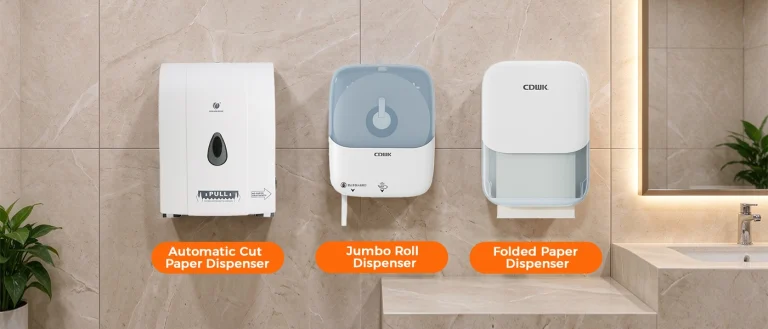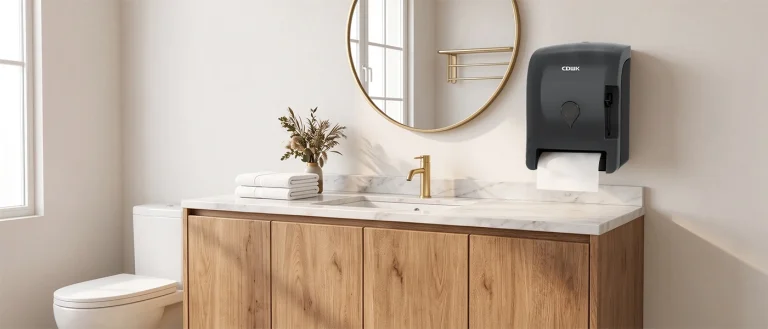

A well-selected dispenser for soap sustains reliable hand-washing hygiene across hotel restrooms, office towers, restaurant kitchens, university campuses and public service facilities. As facility managers balance sanitization standards, custodian daily workload and long-term operational spending, purpose-built commercial-grade dispenser for soap units have become essential hardware for high-footfall indoor premises. Thoughtfully engineered units deliver consistent soap output, reduce liquid waste, and lower germ cross-transmission risks compared to basic household pump-style soap containers.
Today’s commercial-grade dispenser for soap portfolio covers diverse activation modes, installation formats, shell materials and reservoir capacities. Product offerings span compact desktop variants for small staff pantries up to heavy-duty wall-mounted sensor-operated units for crowded public washrooms. Grasping these core functional differences enables procurement teams to match hardware to visitor traffic volume, cleaning workflows and overall project budgets.
1. Core Competencies of Modern Commercial dispenser for soap
What differentiates a high-performance commercial dispenser for soap from low-cost basic alternatives?
A dependable dispenser for soap is far more than a simple storage vessel paired with a pump assembly. Premium units integrate fine-tuned infrared sensing modules, specialized aeration pump structures, reinforced housing frames and low-power circuit layouts. These core components work in tandem to maintain steady soap or foam output, even through thousands of repeated triggering cycles within heavily-used commercial buildings.
In busy commercial environments such as hotel lobbies, campus restrooms and shopping-center washrooms, a single dispenser for soap may be activated hundreds of times each day. Under heavy-load operating conditions, anti-clog capability, leak-proof sealing and easy-to-wipe smooth surfaces turn into critical evaluation benchmarks for purchasing teams.
A trustworthy commercial dispenser for soap generally delivers these core functional strengths:
- Responsive infrared sensing with anti-false-trigger algorithms for stable touch-free soap release
- Well-calibrated aeration pump assembly generating even, creamy foam texture for foam-based models
- Anti-drip and leak-resistant sealing construction to prevent liquid overflow and wall staining
- Low-power circuit architecture extending battery or USB-recharge working cycles
- Tool-free top-opening refill mechanism to accelerate daily custodian maintenance work
- Transparent liquid-level viewing window for straightforward real-time soap stock monitoring
These practical features support property management teams to lift public-hygiene benchmarks while stabilizing cleaning-supply budgets, perfectly matching real-world demands from facility procurement specialists.
2. Main dispenser for soap Product Lines for Diverse Scenarios
Wall–Hung and Floor–Fixed Touch–Free dispenser for soap for Commercial Public Restrooms
Wall-mounted sensor-driven dispenser for soap units represent the mainstream hardware selection for shared public washroom spaces. Hands-free activation removes direct hand-to-surface contact risk. Many hardware options visually coordinate with matching paper-towel dispensers and waste receptacles, forming a unified washroom hygiene hardware ecosystem. Sealed large-capacity reservoirs cut down frequent refill tasks for cleaning crews in high-visitor-volume venues.
Space–Saving Table–Top dispenser for soap for Guest Suites and Moderate–Use Zones
Compact countertop-style dispenser for soap fit boutique hotel guest suites, office pantries, staff break rooms and small restaurant back-of-house zones. No drilling installation is required; these space-efficient devices can be quickly placed or relocated when interior layouts get adjusted. Both battery-powered and USB-chargeable configurations are available for flexible power management, performing reliably for low-and-medium-traffic sites where wall drilling is restricted or impractical. Multiple shell-colour choices allow seamless integration with existing interior decor schemes.
Reinforced Heavy–Duty dispenser for soap for Education and Light–Healthcare Premises
Schools, community clinics and senior-care facilities set strict standards for hardware sturdiness and sanitation safety. Reinforced heavy-duty dispenser for soap adopt impact-resistant outer casing materials, enlarged soap reservoir volumes and anti-block enhanced pump assemblies. Robust mechanical construction stands up to frequent, rough user operations from large-size visitor groups, minimizing clogging, component damage and premature equipment failure.
Many private-label brands and global import distributors source complete washroom hardware packages from seasoned original manufacturers. Alongside dispenser for soap selections, one-stop procurement can include paper-towel dispensers, hand dryers and waste bins, letting buyers source coordinated restroom fixtures from a single supply partner. Factories support flexible custom requirements: shell colour adjustment, surface logo imprinting, single-dose soap-output tuning and customized outer-packaging for private-label project needs.
3. Key Factors When Selecting Commercial dispenser for soap
Procurement teams need to look past per-unit pricing and simulate real-site operating scenarios before finalizing purchase orders.
Work–Site Application Requirements
Different premises hold distinct priority requirements. Upscale boutique-hotel sites value minimalist appearance and quiet dispensing operation. Hospitality venues focus on stable hardware performance with minimal maintenance intervention. Schools prioritize impact-proof casing to endure frequent rough handling. Office-building facility operators pay close attention to soap-saving performance and low long-term running costs. Matching dispenser for soap specifications to on-site conditions maximizes long-term investment returns.
Aeration Pump Assembly and Anti–Clog Performance
The specialized pump unit serves as the functional heart of every foam-type dispenser for soap. Well-optimized internal mixing structures produce soft, uniform foam without liquid dripping. Inferior-quality pump components easily accumulate soap residue, suffer nozzle blockages or deliver inconsistent output quality, which increases maintenance labour burdens for cleaning teams. Hardware designs fitted with quick-detachable pump modules greatly simplify on-site cleaning and component replacement workflows.
Casing Material and Mechanical Durability
High-grade ABS plastic sees wide adoption among mid-range commercial dispenser for soap products, striking a balance between light weight, impact resistance and competitive project-level costs. Brushed stainless-steel housings are preferred for premium hotels and high-end public venues, delivering scratch-resistant texture and elevated visual presentation. Material selection must take venue humidity levels, frequency of disinfectant exposure and risks of physical impact on-site into full consideration.
Customization Potential for Distributors and Brand Partners
For importers and private-label operators, OEM / ODM feasibility often acts as a decisive purchasing factor. Experienced hardware suppliers can adjust shell appearance, branding marking printing, dispensing-dose parameters and even sensor-response firmware logic for sensor-operated dispenser for soap models. This empowers brand partners to build differentiated product portfolios without heavy-cost independent hardware research-and-development investment.
4. Emerging Industry Trends for Commercial–Grade dispenser for soap
Smart electronic functions and sustainable material design are reshaping next-generation dispenser for soap hardware, supporting facility supervisors to optimize hygiene-equipment workflows and shrink overall environmental footprint.
Key forward-looking industry directions include:
- Intelligent soap-level tracking with remote low-stock alert notifications for connected commercial units
- Tuned sensor sleep cycles to further lower power consumption for battery-powered dispenser for soap
- Optimized touch-free response performance aligned with updated international public-hygiene specifications
- Broader adoption of recycled and bio-based polymer raw materials for dispenser housings and refill cartridges
- System-compatible hardware capable of linking with building facility-management digital platforms
As global public-hygiene awareness keeps increasing, high-quality dispenser for soap solutions will achieve wider-scale adoption, ranging from compact private washrooms all the way through large-scale public-service buildings.

Conclusion
Commercial dispenser for soap units vary in activation mechanics, aeration-pump reliability, casing robustness, reservoir capacity and optional intelligent features. Certain models are purpose-engineered for non-stop heavy-duty commercial operation; other variants prioritize compact visual aesthetics for low-traffic environments. Rich product diversity enables purchasers to pick suitable hardware according to real-world-site constraints rather than relying purely on brand reputation.
As sanitization standards keep advancing, touch-free dispensing mechanics, energy-saving electronic design and maintainable modular construction will exert growing influence within the washroom-hardware sector. When procuring dispenser for soap for commercial projects, buyers should comprehensively evaluate application scenarios, dispensing stability, material durability and custom-order support capacity, and cooperate with trusted supply sources that can grow alongside ongoing business requirements.