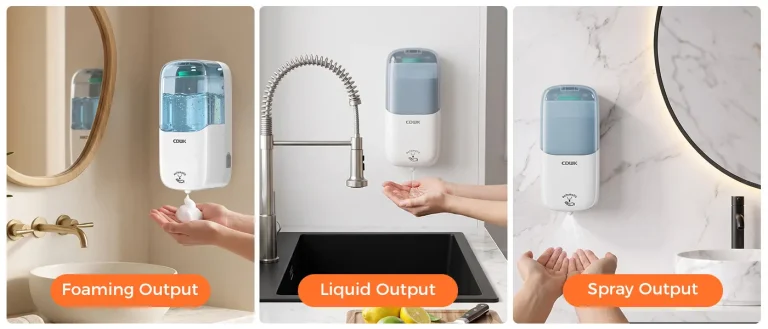

An Automatic Foaming Hand Soap Dispenser improves handwashing convenience by releasing foam without physical contact. However, issues such as sensor failure, clogged nozzles, inconsistent dispensing, and battery drainage can affect its performance. Understanding these common problems and their causes helps users troubleshoot the device, maintain proper operation, and avoid unnecessary replacement.
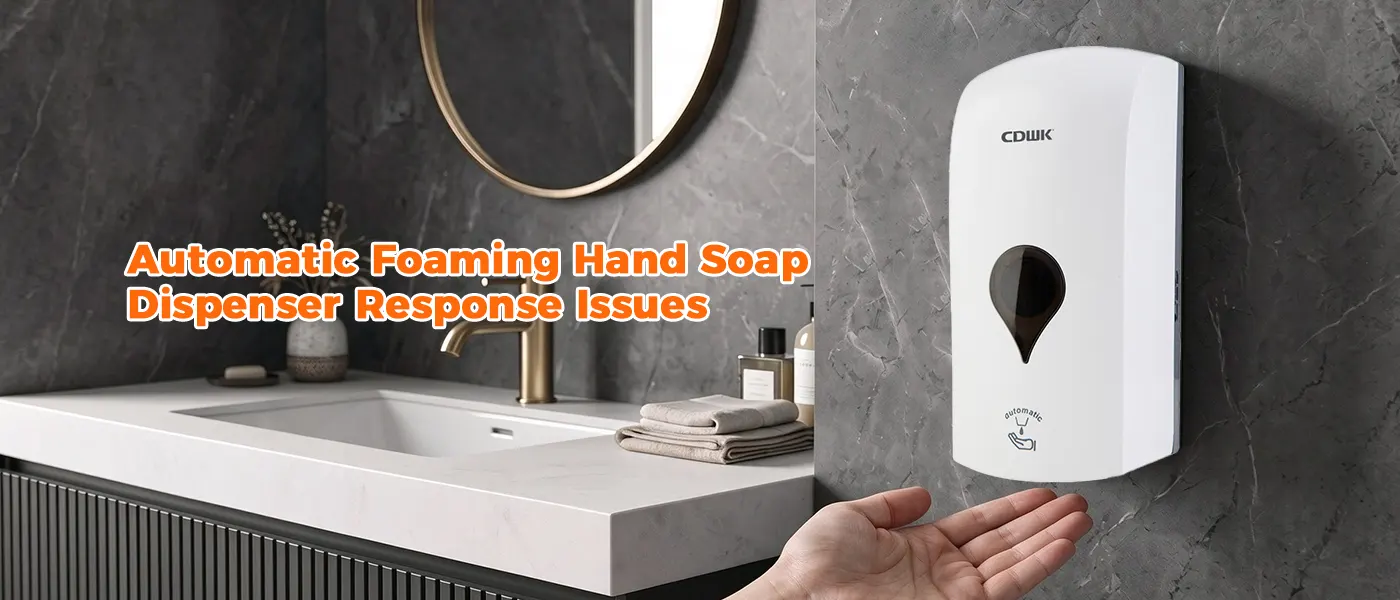
1. Why Does an Automatic Foaming Hand Soap Dispenser Not Respond?
An Automatic Foaming Hand Soap Dispenser that fails to activate may have a power supply issue, a sensor obstruction, or an internal electrical problem. Checking these factors in sequence can help narrow down the cause.
Common Causes
Several issues can prevent the device from responding:
- Low battery power: Insufficient voltage may prevent the motor or control board from operating correctly.
- Dirty sensor: Soap splashes, dust, or water droplets can interfere with infrared detection.
- Incorrect sensor position: A hand placed outside the detection area may not trigger the dispenser.
- Loose electrical connections: Poor contact between the battery terminals and the internal circuit can interrupt power.
- Control board failure: A damaged electronic component may prevent the device from processing sensor signals.
How to Fix It
- Check the Battery Supply: Replace depleted batteries with the type recommended by the manufacturer. Make sure they are installed in the correct direction and that the terminals are properly connected.
- Clean the Sensor: Keep the sensor window free of dust and residue by wiping it with a soft, dry cloth. Next, position your hand in front of the sensor at the recommended distance to see if it activates.
- Inspect the Electrical Connections: Check accessible battery contacts for corrosion or loose connections. If the dispenser still fails to respond, the sensor, motor, or control board may be damaged and require professional inspection.
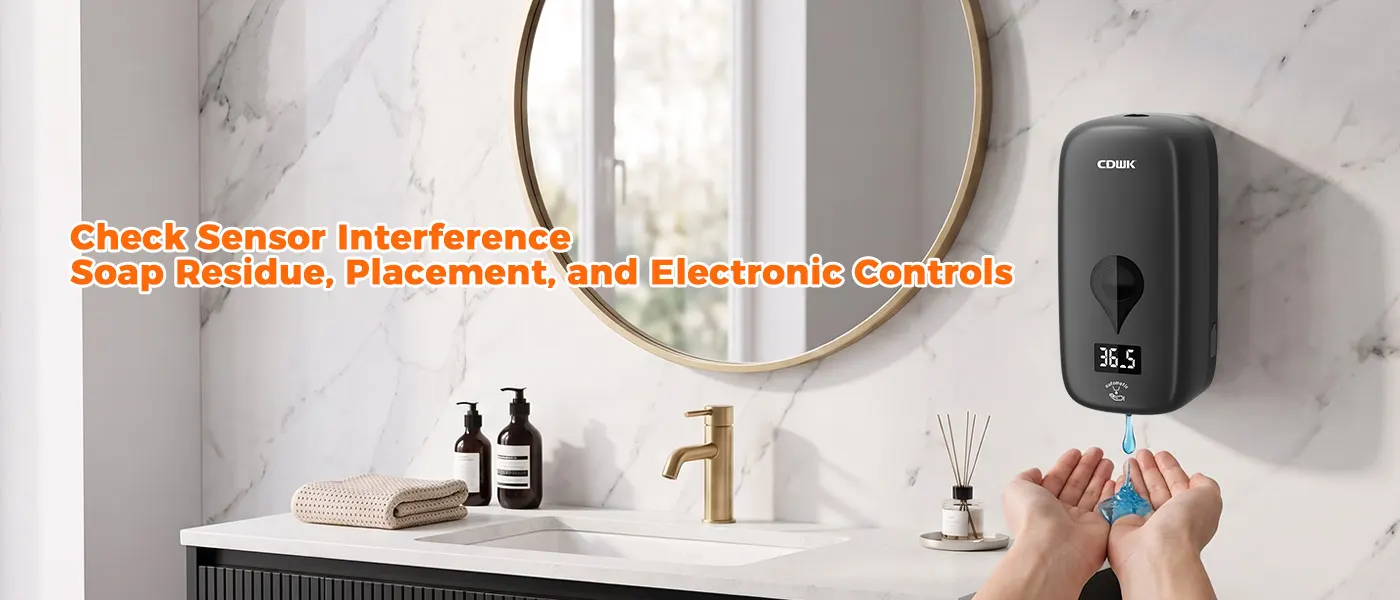
2. Why Does an Automatic Foaming Hand Soap Dispenser Dispense Slowly or Inconsistently?
Slow dispensing, weak foam, or irregular output usually indicates a problem with the soap supply or foam-generation system. These symptoms should be checked separately because they may have different causes.
Common Causes
The most frequent reasons include:
- Clogged nozzle: Dried soap can accumulate around the foam outlet and restrict flow.
- Unsuitable soap viscosity: Soap that is too thick may not move smoothly through the pump.
- Air trapped in the pump: Air pockets can interrupt the movement of the soap solution.
- Low soap level: An insufficient supply may cause the pump to draw air instead of liquid.
- Damaged tubing or pump: Cracks, loose connections, or worn components can reduce dispensing performance.
How to Fix It
- Check the Soap Supply: Refill the reservoir if the soap level is low. Use foaming hand soap that meets the manufacturer’s requirements, and follow the recommended dilution ratio if necessary.
- Clean the Nozzle and Internal Parts: If soap residue blocks the outlet, remove the nozzle if the design permits and rinse it with warm water. Clean the reservoir and accessible tubing to remove any buildup. Reassemble the components once they are clean and dry.
- Inspect the Pump and Tubing: Test the Automatic Foaming Hand Soap Dispenser several times after cleaning. If foam output remains weak or irregular, check for damaged tubing, loose connections, or a worn pump. Replace faulty parts if necessary.
3. Why Does an Automatic Foaming Hand Soap Dispenser Dispense Soap Unexpectedly?
Unexpected dispensing can waste soap, create unnecessary mess, and increase cleaning requirements. This problem is often related to sensor interference or an electronic control issue.
Common Causes
- Environmental interference: Strong reflections, direct sunlight, or nearby moving objects may affect certain infrared sensors.
- Soap residue around the sensor: Deposits can interfere with the sensor’s ability to detect objects accurately.
- Unstable placement: Movement or vibration may affect sensor operation on some models.
- Electronic malfunction: A faulty control board may send incorrect activation signals.
How to Fix It
Clean the sensor area and remove objects positioned directly beneath or close to the detection zone. If possible, move the dispenser away from reflective surfaces or direct sunlight.
Check whether the Automatic Foaming Hand Soap Dispenser has an adjustable dispensing setting or sensor sensitivity function. Reset it according to the product manual if unexpected activation continues. If the dispenser repeatedly releases soap when no hand is present, stop using it temporarily and arrange an inspection of the sensor and control circuit.
4. Why Does an Automatic Foaming Hand Soap Dispenser Stop Working or Drain Batteries Quickly?
An Automatic Foaming Hand Soap Dispenser that frequently shuts down or consumes batteries faster than expected may have an electrical issue or an inefficient operating cycle. Identifying the source can help prevent repeated battery replacement.
Common Causes
Possible causes include:
- Incorrect battery type: Batteries that do not meet the manufacturer’s requirements may provide insufficient or unstable power.
- Continuous sensor activation: An obstructed or overly sensitive sensor may trigger repeated dispensing cycles.
- Motor resistance: A clogged pump may require additional effort to operate.
- Battery contact corrosion: Corroded terminals can increase electrical resistance.
- Internal circuit problems: A damaged control board may consume power even when the dispenser is idle.
How to Fix It
Install the recommended batteries and inspect the terminals for dirt, corrosion, or loose connections. Clear any objects blocking the sensor’s detection area. Also, clean the nozzle and pump components to prevent dispensing resistance.
If battery life remains unusually short, compare actual usage with the manufacturer’s stated battery performance, if available. Frequent activation, battery quality, and environmental conditions can all affect operating time. Continued power loss may require technical inspection rather than repeated battery replacement.
5. How to Maintain an Automatic Foaming Hand Soap Dispenser
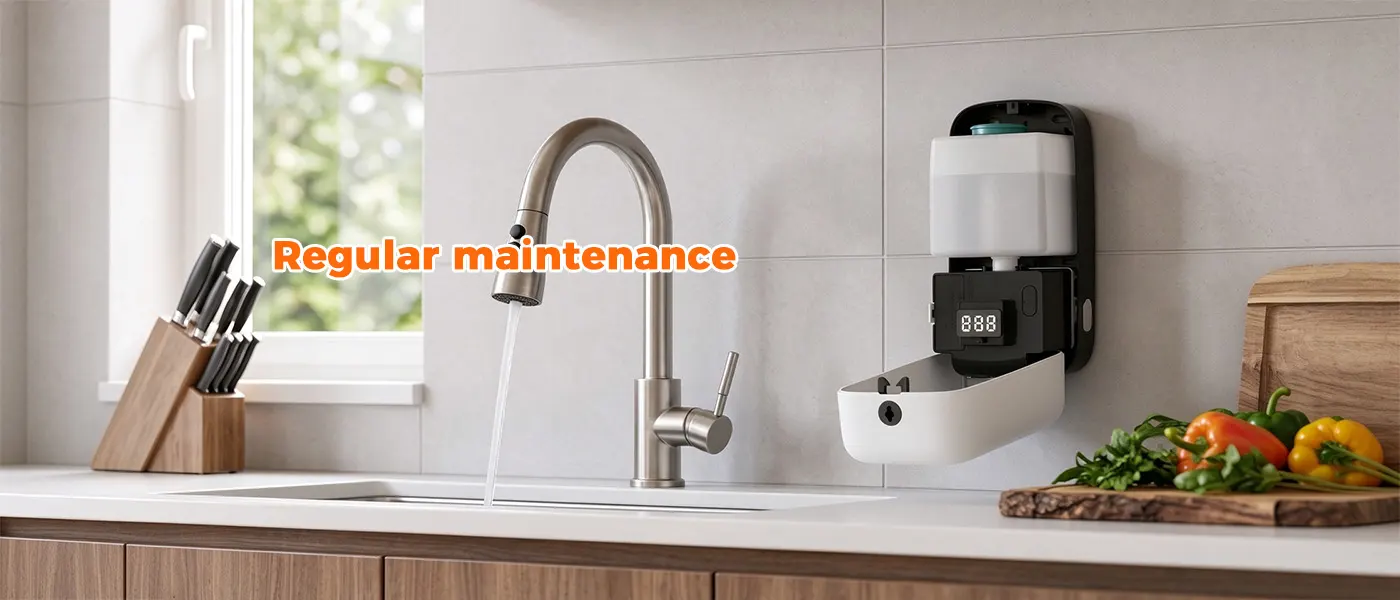
Regular maintenance helps prevent blockages, sensor interference, and premature component wear. A simple cleaning routine can also support consistent foam quality.
Clean the Nozzle and Foam Outlet Regularly
Inspect the outlet every one to two weeks, depending on usage. Remove visible soap deposits with a soft cloth. If the nozzle is removable, rinse it with warm water and allow it to dry before reinstalling it. Always follow the manufacturer’s cleaning instructions.
Use Compatible Foaming Hand Soap
Choose soap formulated for automatic foaming dispensers. Its viscosity and formulation should be suitable for the pump and mixing mechanism. Follow the recommended dilution ratio when using concentrated products, and avoid adding thick or particulate-containing liquids that may cause blockages.
Prevent Soap Residue from Building Up
Clean the reservoir periodically, particularly when changing soap formulations or noticing changes in foam quality. Wipe away spills around the refill opening and dispensing outlet. Avoid mixing different soap types without checking their compatibility, as residue or formulation differences may affect dispensing performance.
6. Conclusion
An Automatic Foaming Hand Soap Dispenser may experience issues such as sensor failure, inconsistent foam output, unexpected dispensing, or battery drainage. Most of these problems can be addressed by checking the power supply, cleaning the sensor and nozzle, and inspecting the pump and internal connections.
Regular maintenance also helps prevent residue buildup and keeps the dispenser working properly. When selecting a replacement, consider product reliability and compatibility with your preferred soap. For further assistance with dispenser issues or product specifications, feel free to contact CDWK.