
Choosing a bathroom tissue dispenser involves more than appearance. Material, capacity, dispensing performance, and moisture resistance all affect its usability. The right Tissue Paper Dispenser for Bathroom use should provide easy access, protect paper from moisture, reduce waste, and suit the available space.
1. Why Does Choosing the Right Tissue Paper Dispenser for Bathroom Use Matter?
The right dispenser contributes to a cleaner and more organized bathroom. It also affects paper consumption, replenishment schedules, and the daily experience of users. These considerations become especially important in facilities with frequent visitor traffic.
Improving Bathroom Hygiene and Cleanliness
Bathrooms are regularly exposed to moisture, water splashes, and contact with different users. Keeping tissue inside a covered dispenser helps reduce direct exposure to these conditions and prevents unused paper from being placed on potentially wet surfaces.
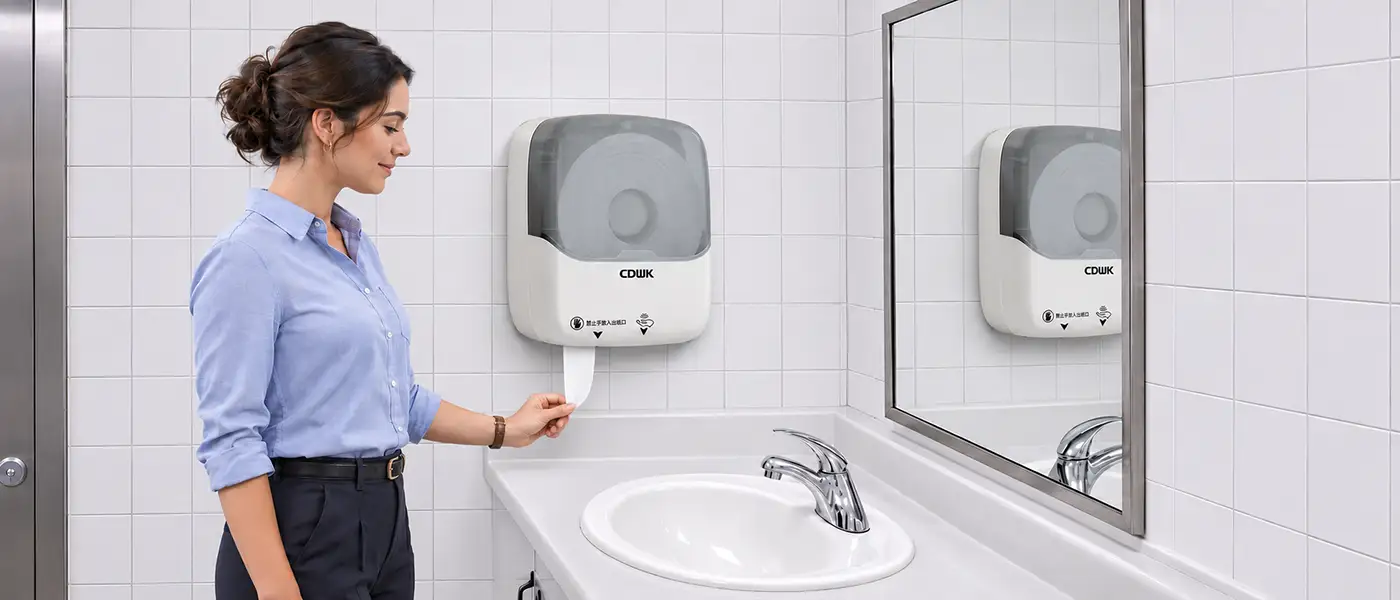
For shared facilities, an enclosed design can also limit unnecessary handling of the remaining paper supply. A Tissue Paper Dispenser for Bathroom environments should therefore have a protective housing and an opening that allows users to retrieve tissue without touching the entire contents.
Reducing Paper Waste and Refill Frequency
Paper consumption depends partly on how a dispenser releases tissue. An oversized opening or poorly designed outlet may allow several sheets to come out at once, increasing waste. Controlled dispensing makes it easier to take an appropriate amount.
Storage capacity also affects maintenance. For example, a dispenser holding 300 folded sheets requires fewer refills than one holding 150 sheets under the same usage conditions. Actual requirements depend on visitor numbers and average consumption.
Enhancing Convenience in Daily Use
A practical unit should be easy to operate for children, adults, and older users. The opening should provide sufficient clearance for retrieving paper, while the housing should remain accessible to cleaning staff.
In commercial restrooms, placing the dispenser within convenient reach can also reduce user frustration and prevent tissue from being pulled out improperly. These details make a noticeable difference in everyday use.
2. Key Features to Look for in a Tissue Paper Dispenser for Bathroom
When comparing different models, buyers should evaluate both construction quality and operating performance. A Tissue Paper Dispenser for Bathroom installations should match the room’s humidity, expected traffic, paper format, and available space.
1. Material Durability and Water Resistance
The housing material affects impact resistance, corrosion performance, appearance, and maintenance requirements. Common options include stainless steel and ABS plastic.
| Material | Key Characteristics | Suitable Applications |
| Stainless steel | Rigid construction and good corrosion resistance, depending on grade | Hotels and commercial restrooms |
| ABS plastic | Lightweight, impact-resistant, and available in different finishes | Homes, offices, and public facilities |
| Other engineered plastics | Flexible designs and relatively easy cleaning | General bathroom environments |
For humid bathrooms, check the material grade, surface finish, and quality of connecting components. Stainless steel is not automatically corrosion-proof, so the specific grade and protective treatment matter. A durable Tissue Paper Dispenser for Bathroom use should withstand routine handling and regular cleaning without developing cracks or surface deterioration.
2. Dispenser Capacity and Paper Compatibility
Capacity should correspond to daily consumption and the time available for maintenance. Small household bathrooms may only require compact models, while high-traffic facilities generally benefit from larger compartments. Paper compatibility is equally important. Before purchasing, confirm:
- Paper format: Whether the unit supports folded tissues, interfolded paper, center-pull rolls, or standard rolls.
- Paper dimensions: Check sheet width, roll diameter, and overall thickness.
- Loading capacity: Confirm the maximum quantity the compartment can accommodate.
- Refill availability: Make sure compatible paper products are easy to source.
3. Easy Paper Loading and Controlled Dispensing
A good dispenser should allow easy paper replacement and smooth dispensing. An accessible refill compartment and a properly designed outlet help prevent paper jams and reduce waste. Automatic cutting mechanisms can also make paper distribution more efficient.
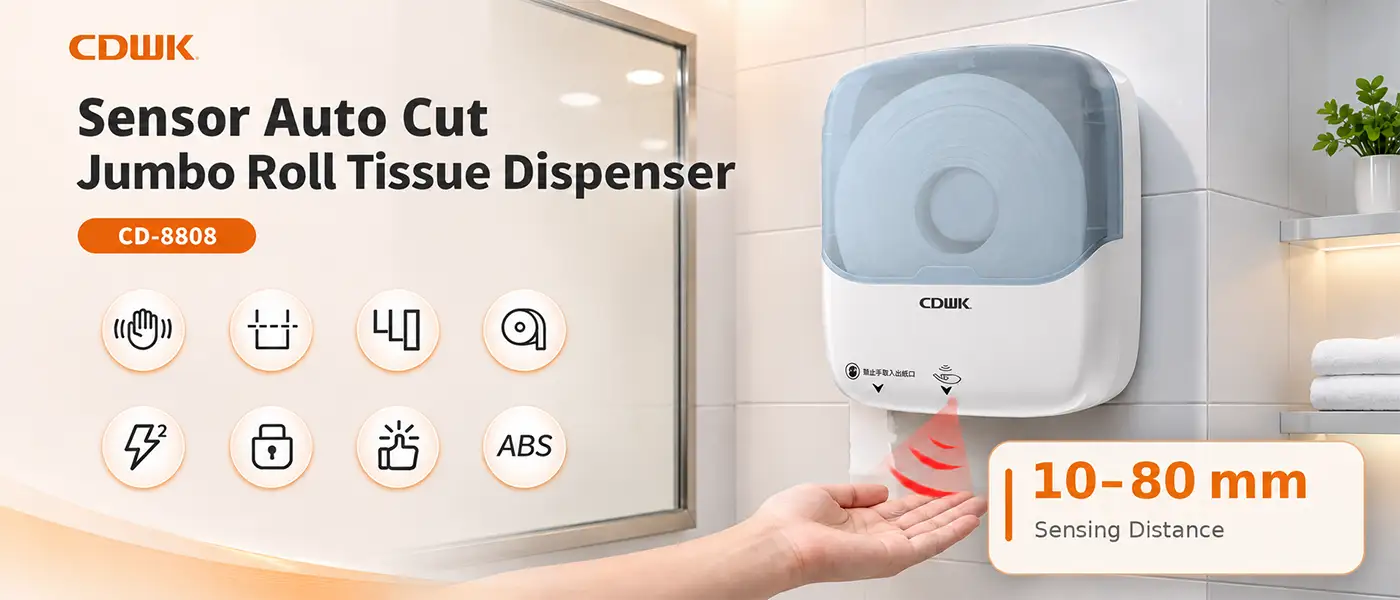
However, manual dispensers may release too much paper, especially in busy restrooms. CDWK’s CD-8808 Auto Cut Paper Towel Dispenser is a practical alternative. It uses infrared sensing and automatic cutting to provide paper without direct contact while controlling paper output. This makes it suitable for hotels, offices, and public restrooms.
4. Locking Mechanisms and Refill Security
In public and commercial bathrooms, unauthorized access can lead to paper waste or damage to internal components. A locking mechanism helps keep the housing closed and protects stored supplies.
Key-operated locks are commonly used in commercial models. Buyers should check the lock’s durability, ease of operation, and compatibility with the maintenance routine. The cover should also close securely without requiring excessive force.
5. Moisture Protection and Ventilation Design
High humidity can weaken paper fibers and affect tissue quality. A protective cover helps reduce direct exposure to water splashes, particularly when the dispenser is installed near a sink.
However, the housing should also be designed to avoid unnecessary moisture accumulation. Depending on the product structure, suitable ventilation may help maintain internal conditions. When selecting a Tissue Paper Dispenser for Bathroom installation, consider the distance from showers, sinks, and other water sources.
6. Ease of Cleaning and Maintenance
A dispenser with smooth surfaces and accessible components is generally easier to maintain. Avoid designs with excessive narrow gaps where dust, soap residue, and moisture can collect. A basic maintenance routine can include:
- Wiping the exterior with a soft cloth and a compatible cleaning solution.
- Removing paper fragments around the dispensing outlet.
- Checking hinges, locks, and mounting screws for looseness.
- Refilling the compartment before supplies run out.
Regular inspection helps identify mechanical problems before they interfere with normal operation.
7. Compact Design and Space Efficiency
The dispenser’s dimensions should suit the available wall or countertop space. Wall-mounted models can free up valuable surface area in smaller bathrooms, while countertop units may be more suitable where wall installation is not practical.
Before installation, measure the mounting area and check the clearance needed to open the cover. Also consider nearby doors, sinks, mirrors, and other fixtures. A compact Tissue Paper Dispenser for Bathroom spaces should remain accessible without obstructing movement or daily activities.
3. Conclusion
Selecting a suitable bathroom dispenser requires balancing durability, capacity, paper compatibility, dispensing performance, and installation requirements. The best option is not necessarily the largest or most expensive model, but one that matches the bathroom’s actual usage conditions and maintenance needs.
For buyers comparing different configurations, CDWK can provide further information to help identify suitable dispenser options. If you have questions about product specifications, installation requirements, or available designs, feel free to contact us for assistance.