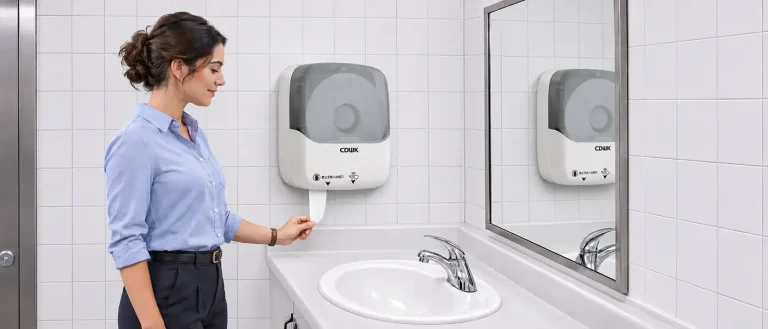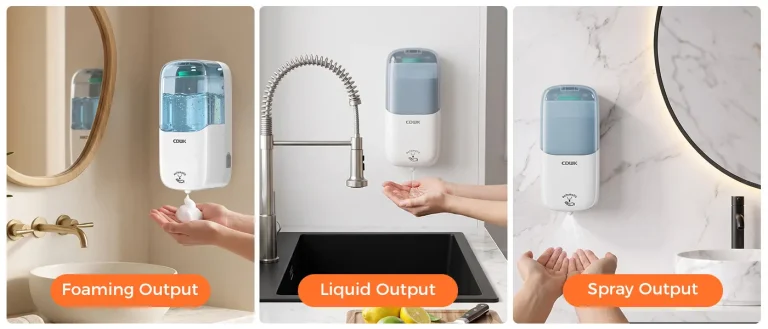

A well-planned restroom needs reliable Commercial Toilet Supplies to maintain hygiene, accommodate daily traffic, and simplify cleaning. Offices, hotels, schools, and healthcare facilities can use a detailed supply list to estimate quantities, control costs, and ensure essential items—from paper products and dispensers to cleaning equipment and feminine hygiene products—remain available.
1. Why Is a Commercial Toilet Supplies List Important?
Improve Restroom Hygiene and User Experience
Restroom cleanliness influences how visitors perceive a business. Empty dispensers, overflowing bins, unpleasant odors, and dirty surfaces can create a negative impression. Essential Commercial Toilet Supplies help maintain hygiene and improve user comfort, from readily available toilet paper and soap to accessible waste bins and functioning dispensers.
Facilities should schedule restroom inspections according to daily traffic. Busy restrooms may require checks every one to two hours, while smaller offices may need fewer inspections. Regular checks help staff replenish supplies, address cleanliness issues, and maintain a consistently pleasant restroom environment.
Prevent Stockouts and Control Purchasing Costs
Inventory planning helps prevent emergency purchases and excessive storage. Without a clear list of Commercial Toilet Supplies, facilities may overstock slow-moving products while running short of frequently used items. To improve purchasing efficiency:
- Track weekly consumption for high-use products.
- Set minimum stock levels for essential supplies.
- Compare unit costs, refill capacity, and product compatibility.
- Review inventory monthly and adjust orders for seasonal demand.
For example, if a facility uses 14 paper towel packs per week, keeping a two-week reserve means maintaining approximately 28 packs in stock. Actual quantities should reflect delivery lead times, available storage, and changes in restroom traffic. Tracking consumption and setting reorder points can help businesses manage Commercial Toilet Supplies more efficiently while reducing waste and emergency purchases.
2. What Essential Commercial Toilet Supplies Should You Include?
The right product mix depends on restroom size, user volume, accessibility needs, and cleaning procedures. The following table provides a practical starting point for building a Commercial Toilet Supplies inventory.
| Supply Category | Essential Items | Main Purpose |
| Paper products | Toilet paper, paper towels | Support daily hygiene |
| Hand hygiene | Liquid soap, hand sanitizer | Promote hand cleanliness |
| Dispensers | Soap and paper towel dispensers | Control product access and usage |
| Waste management | Waste bins, bin liners | Support sanitary waste disposal |
| Cleaning | Toilet brushes, disinfectants, microfiber cloths | Maintain restroom cleanliness |
| Odor control | Air fresheners, odor-control products | Manage unpleasant smells |
| Personal hygiene | Disposable toilet seat covers, feminine hygiene products | Enhance convenience and accessibility |
| Hand drying | Commercial hand dryers | Offer an option to paper towels |
1. Toilet Paper and Paper Towels
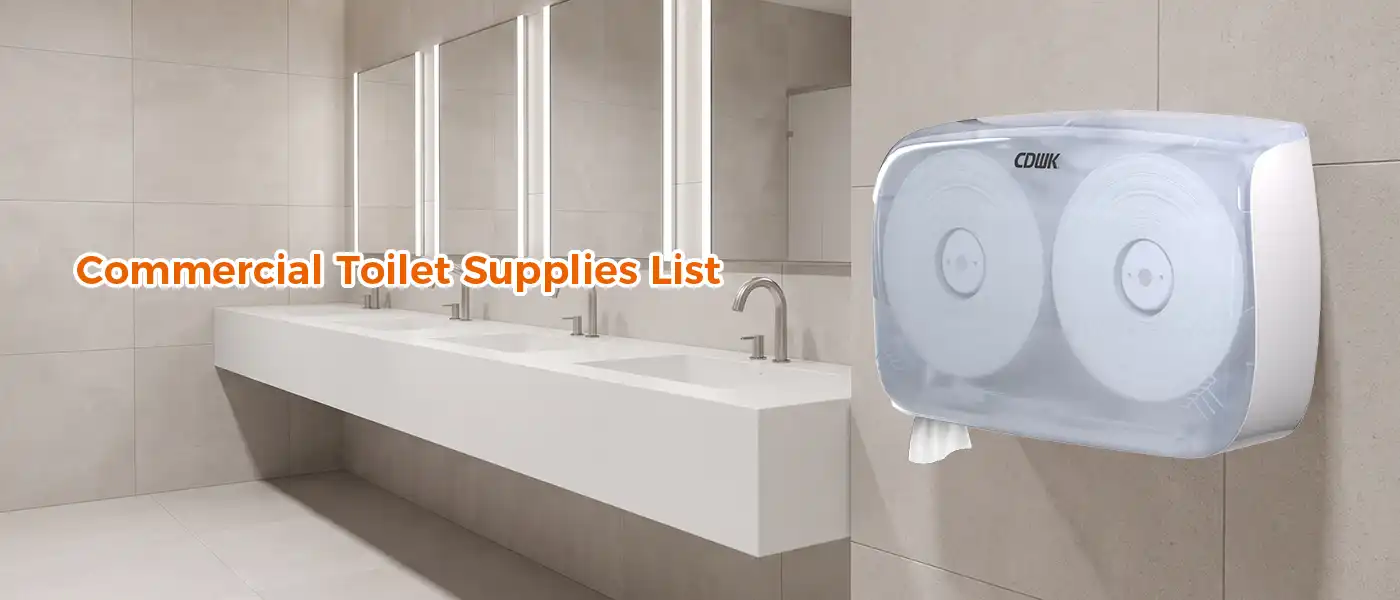
Toilet paper is a basic requirement in commercial restrooms, and choosing the right roll size and dispenser type helps maintain a reliable supply. When selecting Commercial Toilet Supplies such as paper dispensers, consider roll capacity, dispenser compatibility, and daily usage. High-capacity rolls can reduce refill frequency, making them suitable for facilities with heavy restroom traffic.
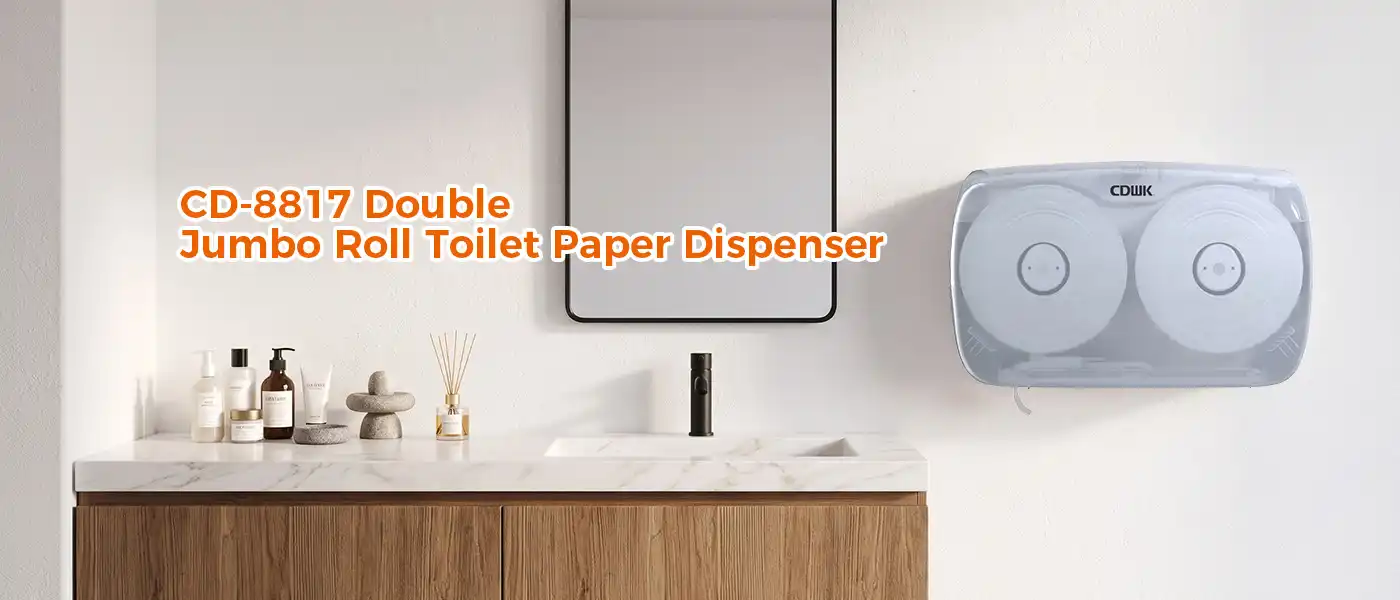
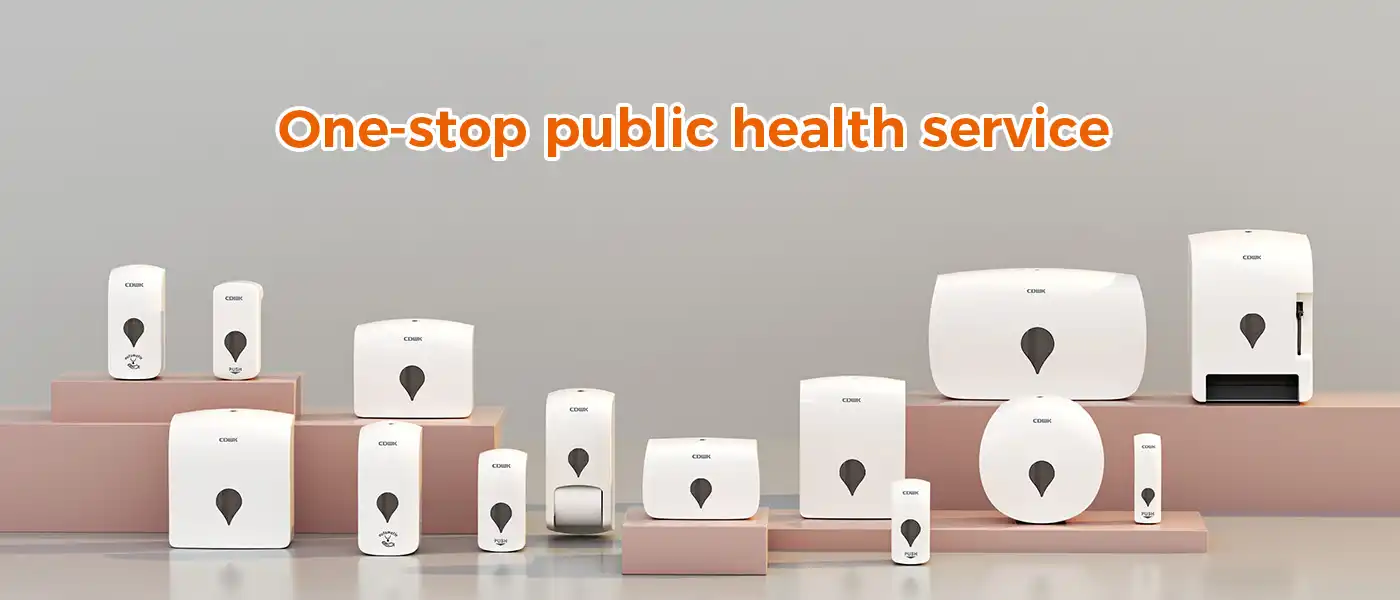
For high-traffic restrooms where frequent refilling creates extra work for cleaning staff, the CDWK Double Jumbo Roll Toilet Paper Dispenser CD-8817 is a good choice. It holds two jumbo rolls and features a transparent cover that makes it easy to check paper levels. Its compact design helps save space while keeping toilet paper accessible, making it suitable for offices, hotels, and public restrooms.
2. Hand Soap and Hand Sanitizer
Hand soap is essential wherever handwashing facilities are available. Liquid soap is widely used because it can be supplied through refillable or cartridge-based dispensers. When comparing products, consider skin compatibility, fragrance preferences, refill availability, and the cost per use.
Hand sanitizer can supplement handwashing in appropriate locations, particularly near entrances or shared work areas. However, it should not replace access to soap and water. Facilities should also ensure that sanitizer placement does not obstruct access or create avoidable spill and maintenance problems.
3. Soap Dispensers and Paper Towel Dispensers
Dispensers help keep supplies organized, reduce mess, and make replenishment more predictable. Options include manual, touch-free, wall-mounted, and countertop models. Touch-free units may reduce contact with shared surfaces, but they require suitable power or battery maintenance.
Before purchasing, verify mounting dimensions, refill compatibility, and expected usage. For example, a dispenser holding 1,000 mL of soap may need fewer refills than a 500 mL unit under similar conditions. Actual refill intervals depend on the number of users and the amount dispensed per use.
4. Toilet Brushes, Waste Bins, and Bin Liners
Toilet brushes support routine cleaning around toilet bowls, while appropriately sized waste bins collect paper towels and other permitted waste. Select bins according to restroom traffic, available floor space, and cleaning procedures. Lidded or hands-free bins may be useful where reducing direct contact is a priority.
Bin liners should fit the container without slipping or tearing easily. Check the bin’s capacity in liters and choose liners that provide enough allowance for secure fitting. Cleaning tools should be stored separately from consumable products to help prevent cross-contamination.
5. Restroom Cleaning Supplies and Air Fresheners
A complete inventory of Commercial Toilet Supplies should include products for cleaning sinks, toilets, floors, mirrors, and frequently touched surfaces. Common items include surface cleaners, suitable disinfectants, microfiber cloths, gloves, and toilet cleaning solutions.
Match cleaning agents to the surface material and observe all usage instructions. Staff should follow the stated contact time for disinfectants rather than wiping them away immediately. Never mix cleaning chemicals, particularly bleach with ammonia-based products, because dangerous gases may form.
Air fresheners and odor-control products can help manage unpleasant smells, but they do not replace cleaning or adequate ventilation. Persistent odors should prompt staff to inspect drains, waste bins, toilets, and other potential sources.
6. Disposable Toilet Seat Covers
Disposable toilet seat covers provide a temporary barrier between users and toilet seats. They may be particularly useful in public restrooms, office buildings, transport facilities, and hospitality venues where visitors value additional convenience.
When selecting covers, check their dimensions, dispenser compatibility, and disposal instructions. Stock quantities should reflect restroom traffic rather than a fixed assumption about daily use. Facilities should also ensure that disposal arrangements are clear and that users do not place unsuitable materials into toilets.
7. Commercial Hand Dryers
Commercial hand dryers offer an alternative to disposable paper towels. Available models vary in drying time, noise level, airflow, energy consumption, and installation requirements. High-traffic facilities may prioritize rapid drying and durable construction, while quieter models can be more suitable for offices or hospitality environments.
Compare the purchase price with estimated operating and maintenance costs. Check electrical requirements, mounting height, cleaning access, and accessibility before installation. Some facilities may choose to provide both hand dryers and paper towels to accommodate different user preferences and operational needs.
8. Feminine Hygiene Products
Feminine hygiene provisions help make restrooms more inclusive and convenient. Depending on the facility, the inventory may include sanitary pads, tampons, product dispensers, disposal bags, and dedicated sanitary waste bins.
Place products and disposal facilities where users can access them discreetly. Select bins that are easy to clean and establish a regular emptying schedule to prevent overflow and odors. Schools, workplaces, shopping centers, and hospitality venues should review user needs and local requirements when deciding which products to provide.
Conclusion
A practical Commercial Toilet Supplies list should cover paper products, hand hygiene, dispensers, waste management, cleaning materials, odor control, hand drying, and personal hygiene needs. The final selection should reflect restroom traffic, available storage, maintenance capacity, and the preferences of the people using the facility.
Review consumption records regularly, set clear replenishment thresholds, and choose products that work with existing equipment. If you have questions about selecting restroom supplies or planning purchases for your facility, contact CDWK for further assistance in identifying options suited to your operational needs.