
During the onset of summer, it does not take long before flies, moths, and mosquitoes start to create chaos at both indoor and outdoor events. Although many people use insecticides or sticky tape, there is another way of doing away with these pests without resorting to chemical sprays or messy products. Knowledge of the working principle will show why one of the most common ways of dealing with these flying creatures is the reliance on UV Bug Zappers.
Unlike standard pest control tools that emit harsh smells, modern sticky-type UV Bug Zappers combine light physics with clean physical capture. They offer a practical, safe, and continuous solution for homes, restaurants, food production plants, and commercial environments.
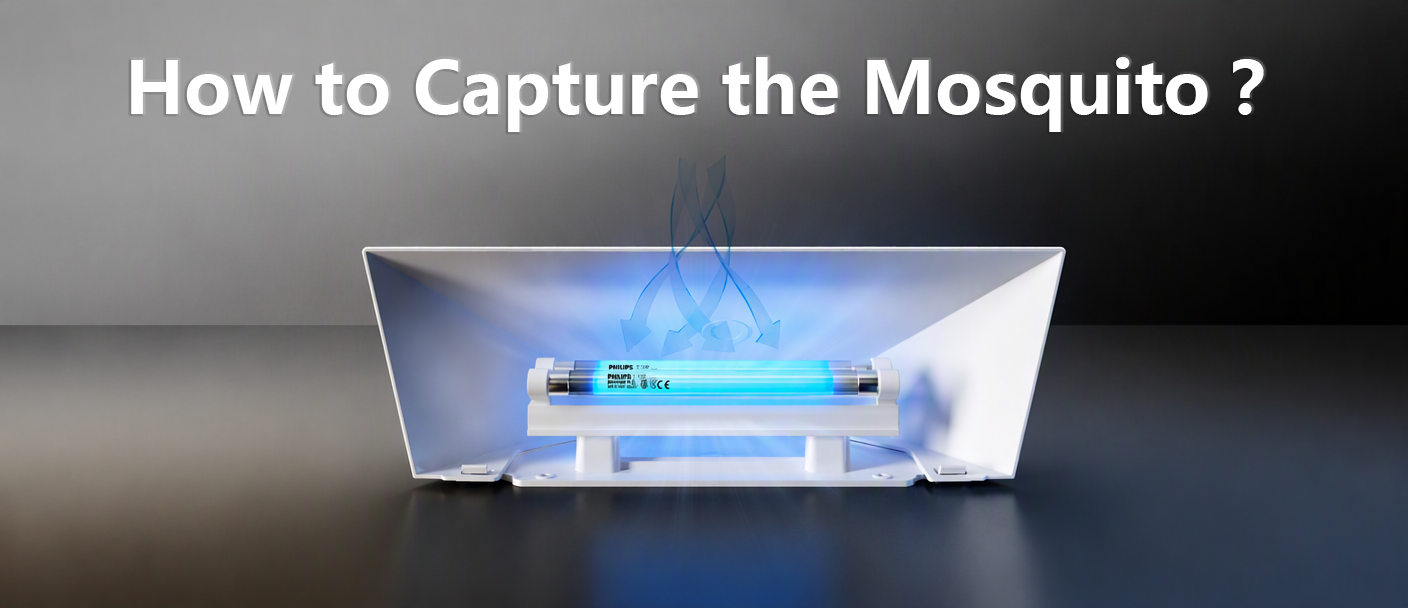
1. Insects Attracted Using UV Bug Zappers: Ultraviolet Light
One of the basic methods of attraction that are applied by UV Bug Zappers is based on the principle of phototaxis, which is an innate, automatic behavioral reaction of organisms to a light source. Nocturnal insects use natural light sources such as the Moon and stars to navigate. Since these light sources are rather far from insects, they radiate light rays in parallel directions, and this allows insects to fly at the same angle in relation to their eyes.
However, when insects come to the artificial light source that produces ultraviolet rays, they fail to orient through visual navigation since the position of the bulb is rather close and the angle of light rays changes quickly when insects approach the light source. To keep the constant relative angle of incoming light into their eyes, insects move spirally approaching the light source.
Spectral Sensitivity and Wavelength Precision
It should be stressed that artificial light sources attract insects with varying effectiveness. Visual pigments in the compound eyes of insects react extremely sensitively to short-wavelength light in the ultraviolet (UV) spectrum
- Optimum Wavelength Range: Insects have maximum biological responses to wavelengths in the UV spectrum ranging between 300 nm and 400 nm.
- Optimum Wavelength Sensitivity: The majority of UV Bug Zappers use lamps that give a peak wavelength of about 365 nm; hence, they respond precisely to the visual sensitivity of flies, moths, gnats, and fruit flies.
Illumination Power and Area Coverage
Indoor units designed for wall mounting typically run on an efficient power input, such as 11 Watts, providing an effective coverage area ranging from 50 to 80 square meters (approx. 500–850 sq ft). Larger commercial units may feature higher wattage for expanded spaces.
For instance, the CDWK Wall-Mounted UV Light CD-11 serves as a typical example of this technology. In the optimal location on the wall at a height ranging from 1.8 to 2.5 meters above the ground level, it emits 365 nm of light while hiding all the insects trapped in the sticky board of the device. Similarly, hanging UV Bug Zappers illuminate the big halls, whereas the standing ones provide mobile protection to the outside covered areas.
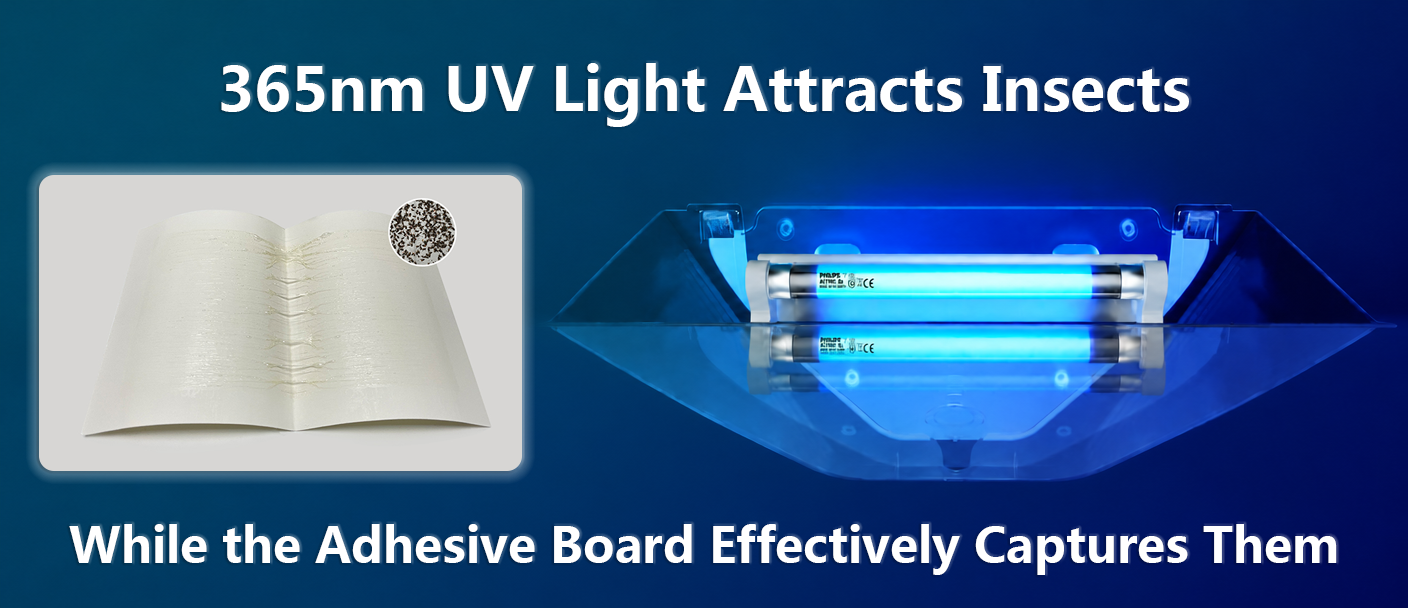
2. Physical Trapping: The Ways by Which UV Bug Zappers Catch Insects in a Clean Manner
Although the 365 nm light has proven to be effective in attracting moths, beetles, and flies, the physical process of catching insects should not generate any noise or any form of air pollution. Unlike open high-voltage grids, which cause noisy sounds and secondary pollution, the modern indoor UV Bug Zappers utilize sticky boards.
How Sticky Boards Function
As soon as insects come close to the lamp of the device, the physical trapping process begins:
- Silent & Spark-Free Process: The traditional zapper grids produce very loud sounds due to popping noises and insect fragments, which may scatter into the environment. On the other hand, sticky-type UV Bug Zapper traps insects silently using adhesive paper.
- Hidden Trapping System Design: The interior structural design guarantees that trapped insects are trapped securely in the lower tray. It keeps dead insects out of sight, which maintains hygiene in restaurants, kitchen areas, and production facilities.
- Odor-free Function: As the whole trapping process involves no chemicals but physical adhesion, these UV Bug Zappers release no smoke, odor, or residues.
3. Usage Requirements and Maintenance of UV Bug Zappers
In order to ensure high efficiency and long lifespan of UV Bug Zappers, the right placement and maintenance are required. Below is information on how these devices should be used properly.
Considerations for Ideal Placement
- Height of Installation: Wall-mounted UV Bug Zappers function effectively when mounted at a height between 1.8 and 2.5 meters above the floor level.
- Avoid Airflow: The unit must not be placed in the path of any air currents, like air conditioning vents, open windows, and cooling fans. Any breeze may affect the flight path of the insects towards the 365 nm light.
- Ambient Light Control: These appliances perform well in dark indoor settings. The lower the level of competing light, the better the visibility of the UV glow for flying bugs.
Maintenance and Components
- Replacement of Adhesive Board: The sticky board inside the unit needs regular checking and should be changed every 7-10 days. If the board is full of flies or dirt, it has to be replaced immediately.
- Cleaning of UV Tube: Dust build-up on the fluorescent tube may lead to a decrease in UV emission. The lamp should be cleaned occasionally with a dry cloth when unplugged from the power outlet.
- Handling of Bulb: The UV bulb should be replaced when the main power is disconnected. Make sure the tube has been cooled down completely.
4. Conclusion
Thus, the efficiency of contemporary UV Bug Zappers lies in the combination of three basic principles – entomological phototaxis, optics, and clean mechanical capture. The use of a specialized 365 nm ultraviolet light with adhesive glue traps ensures the effectiveness of the equipment. They kill pests silently and without using noise, harmful chemicals, or garbage.
If you have any questions about selecting, installing, or using UV Bug Zappers, feel free to contact CDWK!