
Choosing a motion sensor soap dispenser is not simply a matter of selecting the most advanced-looking model. The right unit should match the installation space, user traffic, soap type, dispensing requirements, and maintenance routine. A dispenser with a long sensor range may not be suitable for a compact restroom, while a large-capacity model can be unnecessary where daily usage is low. For commercial facilities, these details directly affect refill frequency, operating costs, and user experience.
What Should You Consider When Choosing a Motion Sensor Soap Dispenser?
1. Dispenser Type and Installation
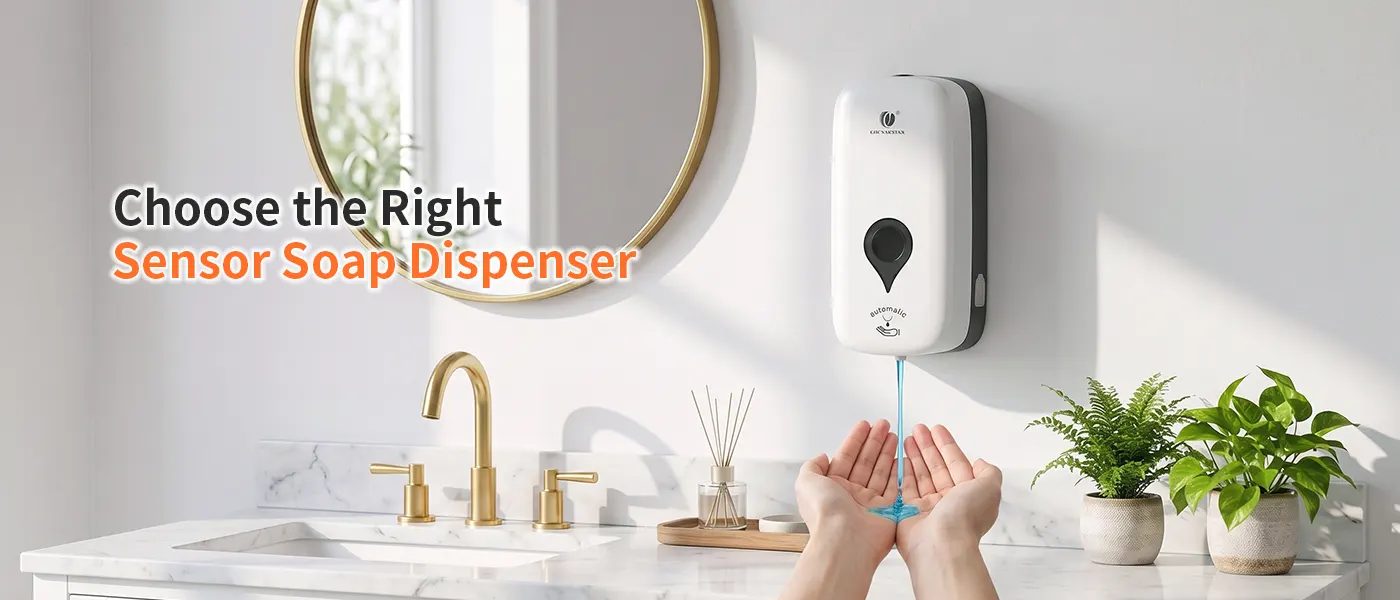
Start by deciding where the dispenser will be installed. Wall-mounted models save counter space and are often suitable for commercial restrooms, healthcare facilities, and public areas. Countertop units are easier to relocate and can work well in offices, homes, or temporary facilities. Check wall space, mounting height, power access, and clearance around the dispensing outlet before purchasing a motion sensor soap dispenser.
2. Sensor Detection Range
The sensor should detect a user’s hands reliably without activating when someone simply walks past. Many models provide a detection distance of around 5–10 cm, although the actual range depends on the sensor design. Consider the position of the basin, surrounding surfaces, and expected hand position. A motion sensor soap dispenser with reliable sensor calibration can reduce false activation and missed dispensing.
3. Soap Capacity
Capacity affects how often the dispenser needs to be refilled. Smaller units may suit low-traffic areas, while larger models are better for busy commercial facilities. When choosing a motion sensor soap dispenser, consider daily usage and desired refill frequency. For high-traffic facilities that need fewer refills, a large-capacity motion sensor soap dispenser can be a practical choice. The CDWK CD-5088 has a 1000 mL capacity, a visual window for checking the soap level, and a lockable design for easier management.
- 1000 mL capacity: Reduces refill frequency.
- Visual window: Makes the soap level easy to check.
- Lockable design: Helps with dispenser management.
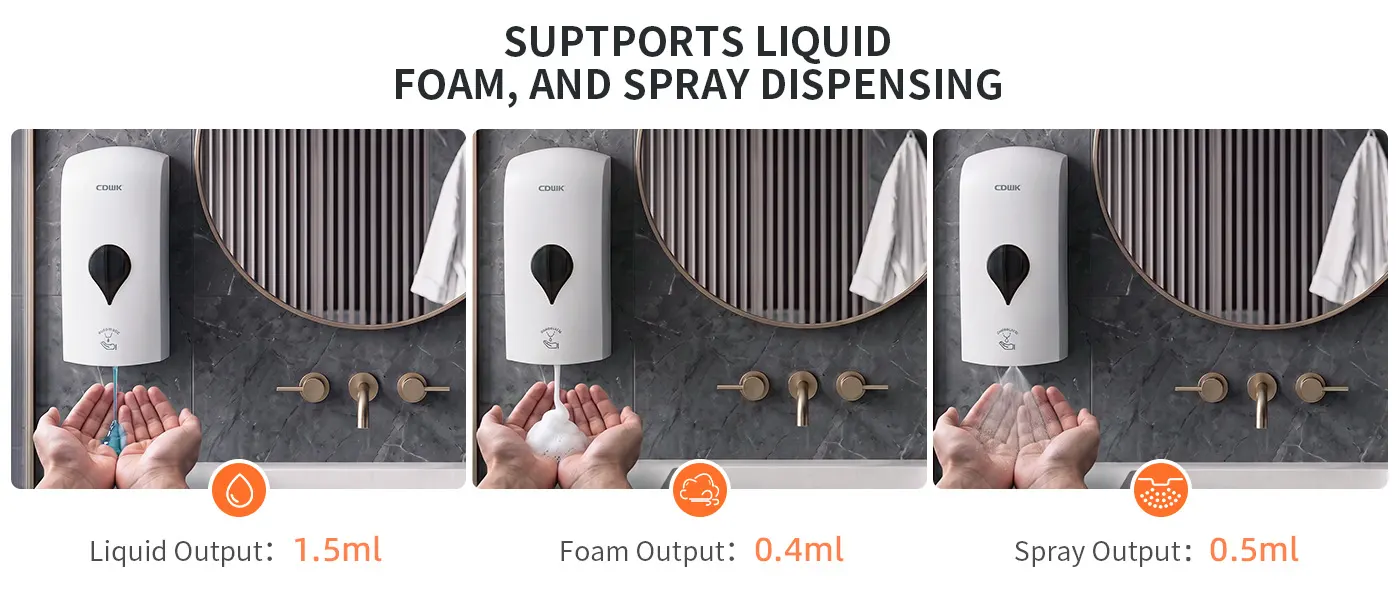
- Multiple options: Supports liquid, foam, and spray dispensing.
- ABS housing: Suitable for frequent use.
4. Dispensing Volume
The amount of soap released per activation affects both hygiene and consumption. A typical setting may range from approximately 0.5–1.5 mL per dose, depending on the dispenser. If too little soap is delivered, users may activate the unit repeatedly; too much increases waste. Look for a motion sensor soap dispenser with a dispensing volume suited to the soap viscosity and intended application.
5. Sensor Response Time
Response time affects how natural the dispenser feels to use. If the sensor reacts too slowly, users may move their hands away before soap is released. If it is overly sensitive, the unit may activate unintentionally. During evaluation, test several hand positions and repeated activations instead of relying only on the stated sensor specification. Consistent response is particularly important in high-traffic facilities.
6. Material and Build Quality
Construction affects durability, cleaning, and long-term appearance. Stainless steel is often suitable for demanding commercial environments, while quality ABS can provide a lighter and more economical option. Pay attention to the dispenser body, sensor window, pump mechanism, and liquid container. A well-built motion sensor soap dispenser should also have surfaces that are easy to wipe and maintain.
7. Soap Compatibility
Not every dispenser works equally well with every soap. Liquid soap, foam soap, and products with different viscosities may require different pump systems. Before purchasing, confirm the recommended soap type and viscosity range. This is particularly important for facilities using private-label or specialty formulations. Matching the soap to the pump helps maintain stable dispensing and reduces clogging.
8. Power Supply and Battery Life
Power requirements should match the installation environment. Battery-powered units are easier to install where no electrical connection is available, while wired or rechargeable models can reduce routine battery replacement. Battery life depends on activation frequency, sensor design, and battery capacity. For example, a busy restroom may require more frequent battery checks than a low-use office. Consider both operating convenience and long-term maintenance when evaluating a motion sensor soap dispenser.
How Can You Choose the Right Motion Sensor Soap Dispenser?
1. Match Capacity to Usage
Estimate the number of users and daily activations before selecting a model. For example, if a dispenser releases 1 mL per activation and receives 200 activations per day, daily soap consumption would be approximately 200 mL. A 1,000 mL reservoir could theoretically provide about five days of capacity before allowing for refill margins and actual operating conditions. This calculation helps match a motion sensor soap dispenser to real usage rather than choosing capacity based only on appearance.
2. Check Installation Requirements
Confirm the mounting method, available space, sensor position, power source, and refill access. The outlet should be positioned comfortably above the basin, while the sensor should have a clear detection area. In commercial installations, also consider whether cleaning staff can access the reservoir and battery compartment without removing the entire unit.
3. Consider Maintenance Needs
Look for a dispenser that is easy to refill, clean, and maintain for everyday use. A model with an accessible soap container, simple pump structure, and easy-to-check battery compartment can reduce maintenance time. For commercial facilities, choosing a motion sensor soap dispenser that is easy to service can help keep the unit operating consistently.
4. Balance Features and Cost
A higher price does not automatically mean better performance. Compare the features that affect daily operation, such as sensor reliability, dispensing control, capacity, construction, power system, and maintenance requirements. A motion sensor soap dispenser for a busy commercial restroom may justify greater durability and capacity, while a small office may benefit more from simple installation and low maintenance.

Conclusion
Choosing the right motion sensor soap dispenser requires more than comparing appearance or purchase price. Sensor performance, installation type, capacity, dispensing volume, material, soap compatibility, and power supply all influence whether a model suits a particular environment. By matching these factors with actual usage conditions, buyers can improve hygiene, control soap consumption, and reduce unnecessary maintenance. If you have any questions about selecting the right solution for your facility, feel free to contact CDWK for further assistance.