
When choosing a commercial dispenser, buyers often focus on capacity, appearance, price, and functionality. However, one factor that is sometimes overlooked is material quality.
The material used in a commercial dispenser can directly affect its durability, appearance, resistance to impact, ease of maintenance, and overall service life. For high-traffic environments such as hotels, hospitals, restaurants, airports, schools, and shopping malls, choosing the right dispenser material is especially important.
A dispenser may look similar to another model on the outside, but differences in material can have a significant impact on its long-term performance.
So, what factors should buyers consider when choosing the right material for a commercial dispenser?
1. Durability in Daily Use
Commercial dispensers are used much more frequently than dispensers in residential environments. They may be opened, pressed, refilled, cleaned, and operated hundreds of times every day.
This is why dispenser durability should be one of the first factors to consider.
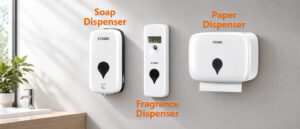
A high-quality plastic such as ABS can provide a good balance between strength, weight, and cost. It is commonly used for commercial soap dispensers, paper towel dispensers, toilet paper dispensers, and other restroom equipment.
If the material is too brittle or has poor mechanical strength, repeated use may eventually cause cracks, broken covers, or damaged mounting points.
For commercial applications, material selection should therefore be based not only on the initial price but also on how the dispenser will perform after months or years of daily use.
2. Impact Resistance Matters
Commercial restrooms can be busy environments. Commercial dispensers may be accidentally hit by cleaning equipment, luggage, carts, or other objects.
This makes impact resistance another important consideration.
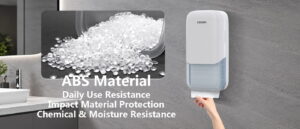
ABS is widely used in commercial dispensers because it offers relatively good impact resistance while remaining lightweight. Compared with some lower-grade plastics, quality ABS can better withstand everyday knocks and handling.
For facilities with particularly heavy traffic, buyers should also pay attention to the thickness and construction of the dispenser, rather than evaluating material type alone.
A strong material combined with a well-designed structure can help reduce the risk of damage during everyday operation.
3. Resistance to Moisture and Cleaning Chemicals
Restroom dispensers are frequently exposed to water, soap, disinfectants, and cleaning chemicals.
Over time, repeated exposure to unsuitable chemicals can affect the surface of some plastics. The dispenser may become discolored, cloudy, brittle, or less attractive.
Therefore, commercial dispenser materials should be selected according to the environment in which the product will be installed.
For example, dispensers used in hospitals and healthcare facilities may require frequent cleaning and disinfection. In these applications, resistance to commonly used cleaning agents can be particularly important.
Before purchasing, buyers should check the manufacturer’s recommendations for cleaning products and maintenance procedures.
4. Appearance and Surface Quality
Material quality does not only affect performance—it also affects how a dispenser looks.
Commercial restrooms are increasingly designed to provide a clean and professional experience. A dispenser with a poor-quality surface, uneven color, or easily scratched finish can make the entire restroom look less well maintained.
High-quality ABS and PC materials can provide a smooth and consistent appearance when properly processed.
For branded products, material quality can also influence the final appearance of logos, colors, and surface finishes.
5. How to Choose the Right Material for a Commercial Dispenser
There is no single material that is best for every commercial dispenser. The right choice depends on the application, installation environment, durability requirements, design, and target budget.
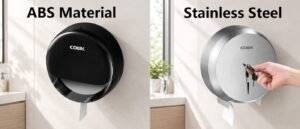
ABS (Acrylonitrile Butadiene Styrene) is widely used in commercial dispensers because it offers a good balance of strength, impact resistance, appearance, and cost. It is suitable for many soap dispensers, paper towel dispensers, toilet paper dispensers, and other restroom products.
PP (Polypropylene) is lightweight and offers good resistance to moisture and many chemicals. It can be a practical choice for dispensers used in environments where weight, cost, and chemical resistance are important considerations.
Stainless steel offers a different set of advantages. It provides a strong, durable, and premium appearance and is often selected for hotels, restaurants, airports, hospitals, and other commercial spaces where both durability and aesthetics are important.
However, a metal dispenser is not automatically better than a plastic dispenser. The best material depends on where and how the dispenser will be used. For example, plastic can offer advantages in terms of weight, design flexibility, and cost, while stainless steel may be preferred when a premium appearance and robust construction are priorities.
Therefore, buyers should consider material performance, installation environment, expected usage, maintenance requirements, and total cost together rather than choosing a dispenser based on material alone.
6. Material Quality Can Affect Maintenance
Maintenance is an important part of the total cost of ownership of a commercial dispenser.
A dispenser that is difficult to clean, easily scratched, or frequently damaged may require more maintenance and replacement parts.
By contrast, a well-designed dispenser made from suitable materials can be easier to clean and maintain.
For facility managers, this can reduce the amount of time staff spend dealing with dispenser problems.
For distributors, reliable products can also mean fewer customer complaints and after-sales issues.
This is why evaluating commercial dispenser quality should go beyond the appearance of a sample. Buyers should also consider the material, structure, components, and expected operating environment.
Conclusion
Material quality plays an important role in the performance of commercial dispensers. It can influence durability, impact resistance, appearance, cleaning requirements, maintenance, and service life.
ABS, PP, ABS+PC, and stainless steel are all widely used materials, but the best choice depends on the specific application and product design.
For high-traffic environments, the goal should not simply be to find the cheapest dispenser. Instead, buyers should look for the right combination of material quality, structural design, functionality, and long-term reliability.
A well-selected dispenser can provide more consistent performance, reduce maintenance requirements, and deliver better value throughout its service life.