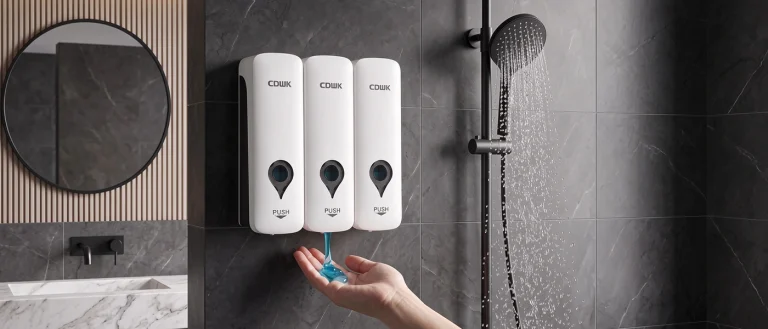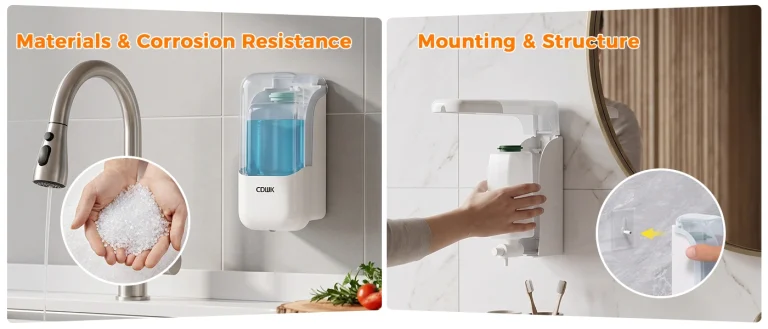

Hotels, offices, and shopping malls handle different types and volumes of waste every day. A hotel needs bins that complement its interior design, while an office prioritizes convenient disposal and a shopping mall must accommodate heavy foot traffic. Custom Trash Cans allow businesses to adjust product dimensions, materials, colors, and functions to match these requirements. Understanding the available options helps facility managers, distributors, and commercial buyers select practical waste collection solutions while maintaining a consistent appearance across their properties.
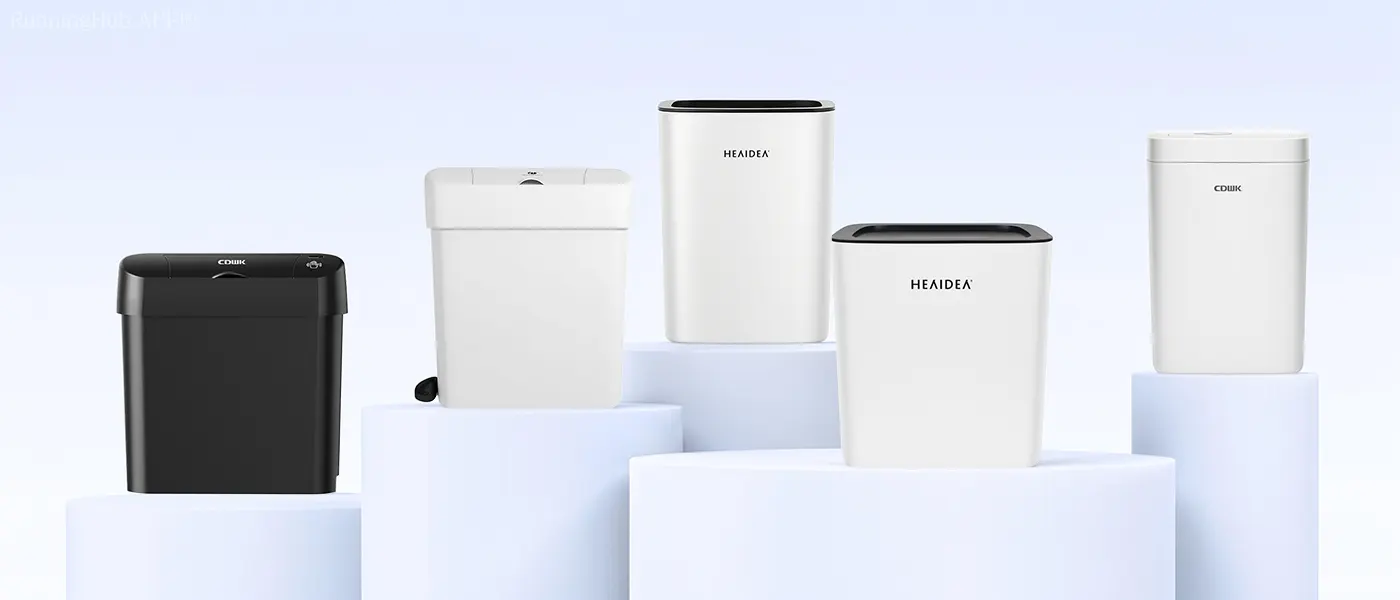
1. Why Choose Custom Trash Cans for Hotels, Offices, and Malls?
Matching Trash Can Designs with Commercial Interior Styles
Waste bins are visible elements of commercial interiors. Their finishes, shapes, and colors can influence how well they fit into the surrounding environment. Hotels may prefer brushed stainless steel or decorative finishes, while modern offices often use simple geometric designs.
With Custom Trash Cans, buyers can specify exterior finishes, body shapes, and colors that complement existing furniture, wall finishes, and architectural styles. This approach creates a more coordinated appearance across reception areas, corridors, and shared facilities.
Customizing Sizes and Capacities for Different Locations
Different locations generate different amounts of waste. A small guest room does not require the same capacity as a shopping mall food court. Custom dimensions help businesses make better use of available floor space without sacrificing collection capacity.
For example, buyers can consider these approximate planning ranges:
- Hotel guest rooms:5–12 liters.
- Office desks and meeting rooms:8–20 liters.
- Hotel restaurants and shared office areas: 30–60 liters.
- Shopping mall public areas: 50–100 liters or more.
These are illustrative ranges rather than fixed standards. Actual capacity should depend on visitor numbers, waste volume, and collection frequency.
Adding Brand Logos and Custom Colors for Brand Recognition
Branding is another reason businesses choose customized waste bins. A printed logo, engraved name, or consistent color scheme can help reinforce corporate identity across multiple locations. For hotel groups and retail chains, using the same design throughout different branches creates visual consistency. Buyers should confirm logo dimensions, printing methods, color references, and surface compatibility before approving production samples.
2. What Types of Custom Trash Cans Suit Different Commercial Spaces?
Custom Trash Cans for Hotel Lobbies, Guest Rooms, and Restaurants
Hotels need different waste collection solutions across their facilities. Guest rooms generally benefit from compact bins that fit beside desks or bathroom counters. Lobby areas require larger units with finishes that match the hotel’s interior design.
Restaurants and breakfast areas generate more food packaging and disposable materials. Covered openings, removable inner buckets, and easy-clean surfaces can simplify daily maintenance. For high-end hotels, customized finishes and discreet openings can also help maintain an uncluttered appearance.
Custom Trash Cans for Office Desks, Meeting Rooms, and Shared Areas
Office waste commonly includes paper, packaging, disposable cups, and general refuse. Individual workstations usually require compact bins, while shared spaces need greater capacity.
Businesses can select open-top designs for quick disposal in common areas or pedal-operated models where hands-free operation is preferred. In meeting rooms, slim rectangular units can fit beside cabinets or conference tables without occupying excessive floor space.
Custom Trash Cans for Shopping Mall Corridors, Food Courts, and Public Areas
Shopping malls experience changing waste volumes throughout the day. Corridors need accessible bins that do not obstruct pedestrian movement, while food courts must handle packaging, beverage containers, and leftover food.
Larger units with multiple compartments can support waste separation. For example, a three-compartment design can provide separate openings for general waste, recyclable packaging, and beverage containers. Clear labels help visitors identify the correct disposal section.
3. How to Choose the Right Materials for Custom Trash Cans?
Stainless Steel for Modern Interiors and Corrosion Resistance
Stainless steel is commonly selected for commercial bins because of its clean appearance, durability, and resistance to corrosion. Brushed finishes can reduce the visibility of minor fingerprints compared with highly polished surfaces.
It is suitable for hotel lobbies, office reception areas, and other locations where appearance matters. Buyers should compare steel grades, sheet thickness, surface treatments, and edge finishing before placing bulk orders.
Plastic for Lightweight Handling and Easy Maintenance
Plastic bins are lightweight, easy to move, and available in various colors. These properties make them useful for hotel guest rooms, office workstations, and locations where staff frequently empty or reposition containers. Different plastics offer different levels of impact resistance and temperature tolerance. Buyers should confirm the selected material grade and wall thickness according to the intended application.
Carbon Steel for Durable Commercial Waste Collection
Carbon steel provides a rigid structure and supports different shapes, sizes, and surface treatments. Powder coating can add a protective finish while allowing buyers to specify colors that match commercial interiors. However, exposed carbon steel can be vulnerable to corrosion when its protective coating is damaged. For outdoor or humid environments, buyers should consider coating quality and maintenance requirements.
Comparing Material Durability, Appearance, and Maintenance Costs
| Material | Main Advantages | Considerations | Suitable Applications |
| Stainless steel | Corrosion resistance and modern appearance | Higher initial material cost | Hotels and offices |
| Plastic | Lightweight and easy to clean | Performance varies by material grade | Guest rooms and workstations |
| Carbon steel | Rigid structure and flexible finishing options | Requires effective surface protection | Commercial public areas |
The most suitable material depends on the installation environment, cleaning routine, expected service life, and purchasing budget.
4. Which Customization Options Should Buyers Consider?
Custom Colors, Shapes, and Dimensions
Buyers can specify height, width, depth, body shape, and exterior color according to installation requirements. Round bins may suit compact interior spaces, while rectangular designs can fit against walls or beside furniture. Before production, provide dimensional drawings and confirm whether measurements refer to the external body or usable internal capacity.
Logo Printing and Brand Identification
Logo customization can include screen printing, laser engraving, decals, or other suitable marking methods. The best option depends on the material, surface finish, logo complexity, and expected cleaning conditions. For large orders, approve a physical sample to check logo placement, color accuracy, and print durability before mass production.
Lid, Opening, and Foot-Pedal Designs
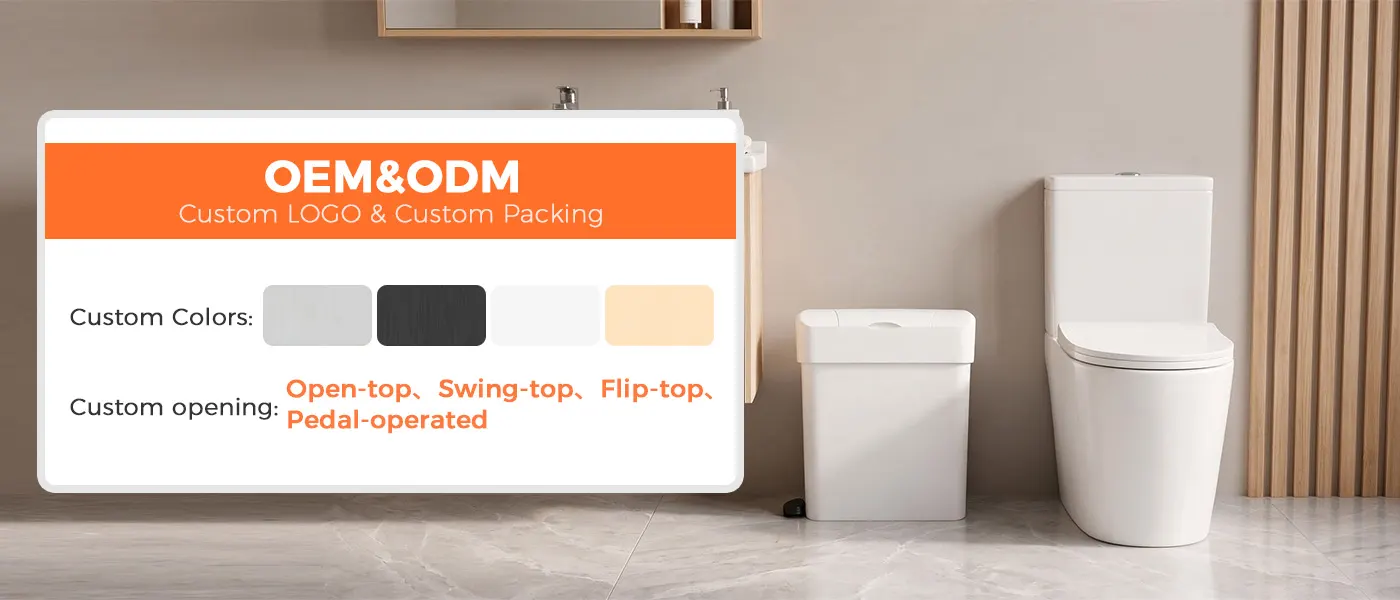
Opening mechanisms affect both convenience and hygiene. Common choices include open-top, swing-top, flip-top, and pedal-operated designs.
- Open-top: Convenient for quick disposal in offices and public spaces.
- Swing-top:Helps conceal waste in indoor environments.
- Pedal-operated: Allows hands-free opening.
- Flip-top: Provides a simple covered opening for general waste collection.
Removable Inner Buckets and Easy-Clean Structures
Removable inner buckets make waste disposal and liner replacement easier. Smooth internal surfaces, accessible corners, and detachable components can also reduce cleaning time for facility staff. For commercial properties with frequent maintenance schedules, these structural details can influence long-term operating efficiency.
Waste Sorting Labels and Multiple Compartments
Businesses implementing recycling programs can request separate compartments, color-coded openings, and printed waste identification labels. A two- or three-compartment unit can help organize recyclable materials and general waste at collection points. The compartment capacity should reflect actual waste proportions. For example, a food court may need more space for general waste and food-related packaging than an office meeting room.
Conclusion
Selecting suitable Custom Trash Cans involves more than choosing an attractive appearance. Buyers should evaluate location, waste volume, material performance, dimensions, opening mechanisms, and branding requirements. A well-planned specification can improve daily waste collection while maintaining a consistent commercial environment.
Whether you are furnishing a hotel, upgrading an office, or managing a shopping mall, CDWK can help you explore suitable materials, dimensions, finishes, and functional configurations. If you have questions about product customization or bulk orders, feel free to contact us to discuss your project requirements.