
An office restroom needs more than basic plumbing fixtures to provide a comfortable experience for employees and visitors. Paper dispensing equipment also affects daily hygiene, cleaning efficiency, and supply management. An unsuitable dispenser may cause frequent refills, unnecessary paper waste, or compatibility problems.
There are several types of office toilet paper dispensers on the market, including standard toilet roll holders, jumbo roll dispensers, folded paper dispensers, and automatic paper dispensers. Each has different storage capacities, dispensing methods, and installation requirements. The best option depends on restroom traffic, available space, paper consumption, and maintenance needs.
1. What Types of Office Toilet Paper Dispensers Are Available?
Different office toilet paper dispensers serve different purposes. Understanding their features helps buyers select equipment that matches the restroom’s actual requirements.
Standard Toilet Paper Holder
- Simple structure: Usually features an open or semi-enclosed design, making installation and roll replacement straightforward.
- Low initial cost: Suitable for small offices with relatively low restroom traffic.
- Main limitation: Exposed paper has limited protection against moisture and dust. Users may also pull out more paper than necessary.
Jumbo Roll Dispenser
- Large storage capacity: Accommodates larger commercial toilet paper rolls and reduces replacement frequency.
- Enclosed housing: Helps protect paper from dust, splashes, and direct contact.
- Suitable locations: Office buildings, shopping centers, and other high-traffic facilities.
- Selection tip: Check the maximum supported roll diameter and width before purchasing.
Folded Paper Dispenser
- Paper formats: Commonly supports C-fold, V-fold, and Z-fold paper towels.
- Hygienic dispensing: Enclosed designs protect unused paper from direct contact.
- Controlled consumption: Some models support single-sheet dispensing, helping reduce unnecessary paper use.
- Typical application: Office washbasins and shared handwashing areas.
Automatic Cut Paper Dispenser
- Controlled output: An internal cutting mechanism provides paper in predetermined lengths.
- Convenient operation: Users do not need to pull directly from the entire paper roll.
- Supply monitoring: Some models feature transparent windows for checking remaining paper.
2. Key Factors to Consider When Choosing an Office Toilet Paper Dispenser
Choosing the right office toilet paper dispenser involves more than comparing appearance and purchase prices. The following factors directly affect daily operation and long-term maintenance.
Capacity
Capacity determines how frequently staff need to replace paper rolls. The appropriate size depends on the number of daily users and the frequency of restroom visits.
Consider these points:
- Small offices: Standard-capacity dispensers are generally sufficient for limited daily use.
- Medium-sized offices: Larger enclosed units help reduce refill frequency.
- Large office buildings: High-capacity commercial dispensers are preferable when hundreds of people use the facilities daily.
- Refill convenience: Choose a design that allows staff to replace paper quickly without complicated procedures.
A viewing window is another useful feature. It allows cleaning staff to monitor paper levels and arrange refills before supplies run out.
Material
The housing material affects durability, impact resistance, and cleaning requirements.
- ABS plastic: Lightweight, impact-resistant, and suitable for everyday commercial use.
- Stainless steel: Provides a rigid structure and is often selected for facilities requiring a metal finish.
- Surface treatment: Smooth surfaces are easier to wipe clean and maintain.
- Moisture resistance: The housing should withstand the humidity commonly found in restrooms.
For busy commercial environments, pay attention to housing thickness, joints, and locking components rather than judging quality by material alone.
Installation Method
Office paper dispensers generally come in wall-mounted and countertop designs.
Wall-mounted: Saves counter space, keeps floors clear, and makes routine cleaning easier.
Countertop: Requires no wall drilling but occupies valuable surface space.
Before installing a wall-mounted office toilet paper dispenser, check the following:
- Confirm that the wall can support the equipment when fully loaded.
- Position the unit at a comfortable height for different users.
- Leave sufficient clearance for opening the cover and replacing paper rolls.
- Avoid locations exposed to direct water splashes.
Correct positioning also prevents interference with sinks, doors, and other restroom fixtures.
Paper Compatibility
Paper compatibility is essential for smooth dispensing. Differences in roll diameter, width, thickness, and core structure can cause paper jams or prevent proper installation.
Before purchasing, check:
- Maximum supported roll diameter.
- Paper width and thickness requirements.
- Compatible paper core dimensions.
- Whether the dispenser supports standard or specialized paper formats.
It is also important to distinguish toilet paper from paper towels. These products are not interchangeable in every office toilet paper dispenser, even when their roll dimensions appear similar.
Maintenance
Regular maintenance helps prevent paper jams, damaged components, and unexpected downtime. A practical inspection schedule includes:
- Daily: Wipe the housing and dispensing outlet to remove dust and fingerprints.
- Weekly: Check paper levels, mounting stability, and lock operation.
- Monthly: Inspect internal components and look for signs of wear.
- When necessary: Remove paper jams and address irregular dispensing or incomplete cutting.
For automatic models, pay particular attention to the cutting mechanism. Paper debris and worn components may affect cutting performance. Follow the manufacturer’s cleaning instructions and avoid corrosive chemicals that could damage the housing.
Design
An office toilet paper dispenser should fit the restroom’s layout while remaining convenient to use.
Important design features include:
- Compact dimensions: Prevent the unit from interfering with nearby fixtures.
- Transparent viewing window: Makes it easier to monitor paper supplies without opening the housing.
- Security lock: Reduces unauthorized access and unnecessary paper loss in public facilities.
- Color options: Black and white finishes can match different commercial restroom interiors.
- Easy-access housing: Simplifies paper replacement and routine inspection.
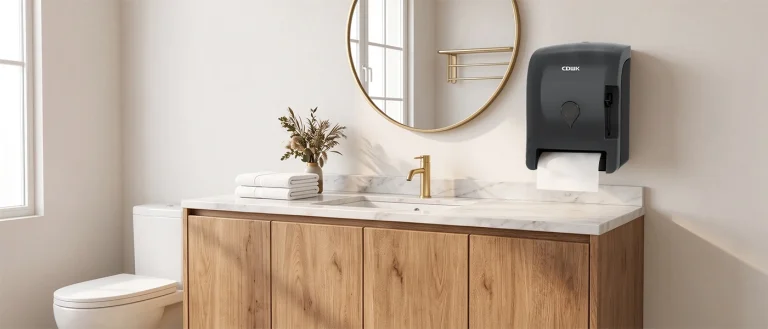
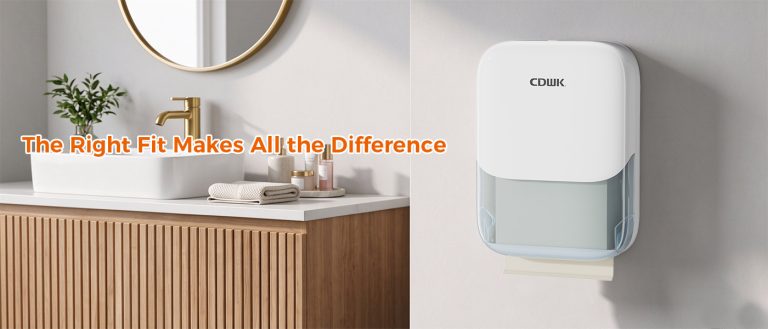
The CDWK CD-8088, for example, features an ABS housing, a multi-angle transparent viewing window, and a concealed security lock. Available in black and white, it combines practical paper management with a clean appearance suitable for commercial restrooms.
Conclusion
The best office toilet paper dispenser depends on restroom traffic, paper specifications, installation conditions, and maintenance requirements. Small offices may only need a standard holder, while busy commercial facilities can benefit from larger-capacity or automatic dispensing equipment.
Before purchasing, compare the key specifications to avoid compatibility issues and unnecessary maintenance costs. If you have any questions about selecting a suitable office toilet paper dispenser, feel free to contact CDWK for product information and assistance.