
Hand drying is an important part of restroom hygiene, but the quality of the air used during drying also deserves attention. Conventional electric dryers draw in surrounding restroom air, which may contain dust, fine particles, and microorganisms. A HEPA Hand Dryer adds an air-filtration stage before air reaches the user’s hands, creating a more controlled drying process. HEPA filters are designed to capture at least 99.97% of particles measuring 0.3 microns under standard test conditions.
For commercial facilities with frequent restroom traffic, this design can provide several practical advantages. It can support cleaner airflow, reduce dependence on disposable paper towels, and simplify daily restroom operations. However, filtration should be considered one part of overall hygiene management rather than a replacement for proper handwashing, ventilation, and equipment maintenance.
How Does a HEPA Hand Dryer Work?
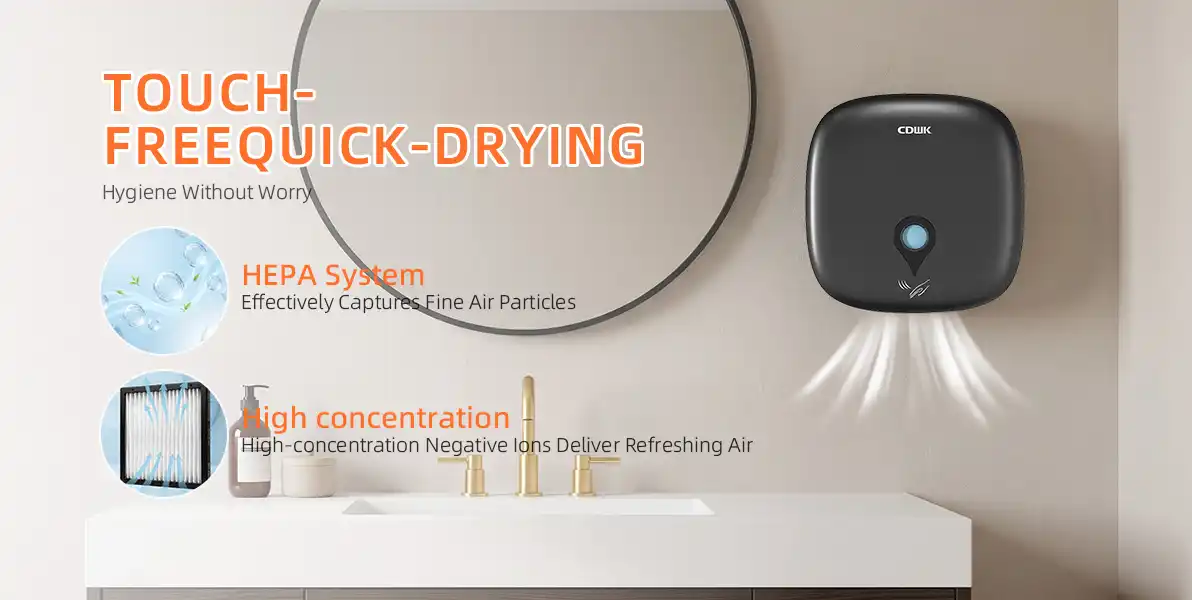
A HEPA Hand Dryer combines an electric drying system with a high-efficiency particulate filter. Instead of sending untreated restroom air directly toward wet hands, the unit first draws air through its filtration system before directing it through the drying outlet.
Filter Air Before Hand Drying
The main difference is the filtration stage. A HEPA filter uses a dense network of fibers to capture airborne particles through mechanisms including interception, impaction, and diffusion. According to the U.S. EPA, HEPA filters can theoretically remove at least 99.97% of 0.3-micron particles, which represents a particularly penetrating particle size for the filter.
This does not mean that every HEPA Hand Dryer eliminates all microorganisms from a restroom or makes the surrounding environment sterile. Its function is more specific: filtering particles from the air passing through the dryer. The filter therefore works as an additional engineering control within the hand-drying process.
Combine HEPA Filtration With Fast Airflow
Filtration alone cannot ensure efficient hand drying. A HEPA Hand Dryer also needs sufficient airflow to remove moisture quickly. High-speed airflow helps move water away from the skin and can shorten drying time, while effective filtration helps control the particles carried through the dryer. Research has found that adding HEPA filters to bathroom hand dryers reduced bacterial deposition by approximately fourfold in the tested environment.
Actual drying performance depends on motor power, air velocity, outlet design, ambient temperature, and hand position. Therefore, when evaluating a HEPA Hand Dryer, it is important to consider both airflow and filtration performance rather than focusing on the filter alone.
What Are the Main Benefits of a HEPA Hand Dryer?
A HEPA Hand Dryer can offer benefits that extend beyond basic moisture removal. These advantages are particularly relevant in busy commercial restrooms where hygiene, operating efficiency, and maintenance all influence facility management.
Improve Air Quality During Hand Drying
One benefit of a HEPA Hand Dryer is that it filters air immediately before it reaches the user’s hands, helping reduce the airborne particles delivered through the dryer. This can provide an additional hygiene measure in busy environments such as offices, restaurants, schools, healthcare facilities, and transportation facilities.
However, filtration does not clean the entire restroom. Overall air quality still depends on factors such as ventilation, cleaning, occupancy, and humidity. Effective filtration also relies on proper system design, sufficient airflow, and regular maintenance.
Support Better Restroom Hygiene
A HEPA Hand Dryer can help address a limitation of conventional dryers by filtering the air entering the unit before it reaches the user’s hands. One study found that adding HEPA filtration to bathroom hot-air dryers reduced bacterial deposition by about four times, although it did not eliminate deposition. This means filtration can help reduce particle transfer through the dryer without making the hand-drying process completely germ-free.
A filtered dryer should therefore be used as part of a broader restroom hygiene strategy. Proper handwashing, regular surface cleaning, adequate ventilation, and timely filter replacement are still important for maintaining a cleaner restroom environment.
Provide Touch-Free Hand Drying
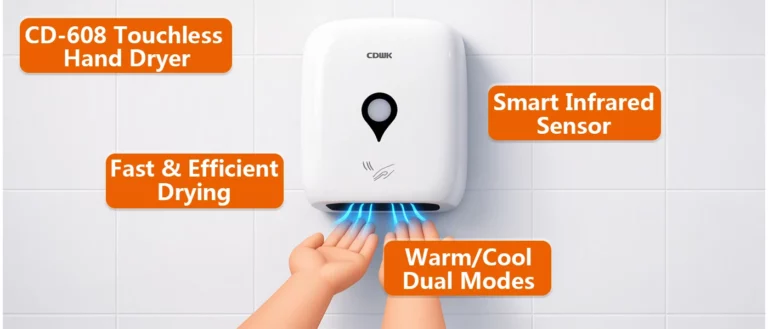
A HEPA Hand Dryer uses automatic sensing to provide touch-free hand drying, reducing contact with shared surfaces after handwashing. In busy restrooms, frequent users can create more contact points and queues around hand-drying equipment, making fast, touch-free operation especially useful.
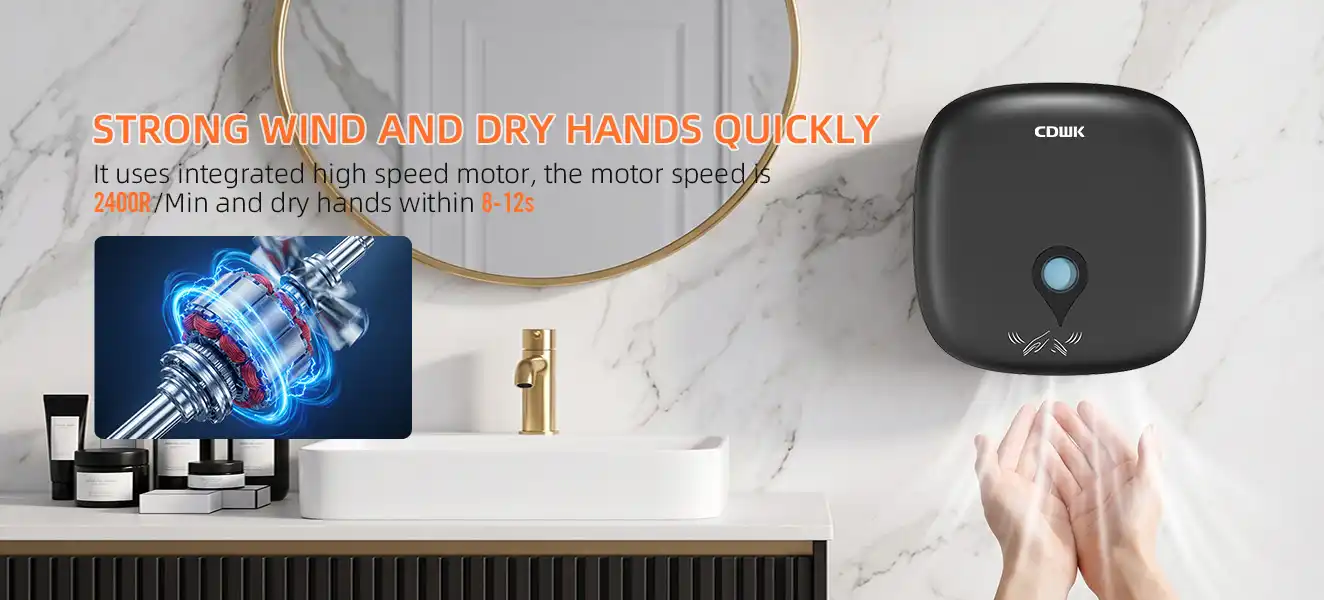
When high restroom traffic demands quick, convenient drying, CDWK’s CD-689 automatic hand dryer is a practical option. It features a 1–15 cm infrared sensor, 19 m/s airflow, and an 8–12-second drying time. Its 2,400 RPM motor supports fast drying, while cold and warm air settings provide flexibility. The unit also uses inlet filter cotton to help block hair, dust, and debris, with an IPX1-rated ABS housing for regular commercial restroom use.
 Reduce Paper Towel Waste
Replacing disposable paper towels with an electric HEPA Hand Dryer can reduce the amount of single-use drying materials required in busy restrooms. For example, if a restroom handles 500 hand-drying events per day and each user takes two paper towels, daily consumption could reach about 1,000 towels, or approximately 30,000 towels over 30 days. This makes air drying a practical option for facilities with high daily traffic.
The overall environmental and operating impact depends on factors such as electricity use, equipment lifespan, paper sourcing, and waste disposal. Therefore, facilities should consider both paper consumption and energy requirements when comparing different hand-drying methods.
Lower Long-Term Operating Costs
A HEPA Hand Dryer requires an upfront equipment investment, but its operating model differs from paper-towel systems. Instead of continuously purchasing towels, facility managers primarily need to account for electricity, cleaning, inspection, and filter replacement. A simple operating-cost assessment can consider:
| Cost factor | Paper towel system | HEPA hand dryer |
| Consumables | Continuous towel purchases | Filter replacement |
| Electricity | Minimal | Required during operation |
| Waste disposal | Regular | Significantly reduced |
| Maintenance | Dispenser and replenishment | Cleaning and equipment inspection |
| High-traffic suitability | Depends on supply capacity | Depends on airflow and usage |
The actual return on investment depends on restroom traffic, electricity prices, paper-towel costs, dryer power consumption, and maintenance requirements. A facility should therefore compare total operating costs rather than looking only at the purchase price.
Conclusion
A HEPA Hand Dryer combines touch-free drying with air filtration, helping reduce airborne particles while lowering reliance on disposable paper towels. HEPA filters can capture at least 99.97% of 0.3-micron particles under standard test conditions, making filtration a useful addition to commercial hand-drying systems.
For effective restroom hygiene, businesses should also consider proper handwashing, ventilation, cleaning, and regular filter maintenance. When selecting a HEPA Hand Dryer, factors such as airflow, sensor response, power use, and maintenance requirements are worth considering. CDWK offers hand-drying equipment for different commercial environments. If you have any questions, feel free to contact us for more information.