
A well-maintained commercial restroom is more than a matter of cleanliness. For hotels, hospitals, restaurants, schools, shopping centers, offices, and other public facilities, restroom equipment needs to work reliably throughout the day. When a dispenser stops working, runs out too quickly, or becomes difficult to maintain, it can affect both the user experience and the efficiency of facility management.
Unlike residential bathrooms, commercial restrooms often serve hundreds or even thousands of users every day. This means that small equipment problems can quickly become recurring maintenance issues. Understanding the most common problems and their causes can help facility managers choose the right equipment and reduce unnecessary maintenance.
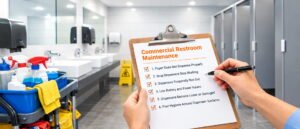
Here are seven common commercial restroom problems and practical ways to prevent them.
1. Paper Does Not Dispense Properly
Not every paper dispensing problem results in a complete jam. In some cases, several sheets may come out together, or the paper may be difficult to pull and tear.
This can be caused by the dispensing mechanism, paper quality, paper tension, or the design of the outlet. For facilities with heavy traffic, inconsistent dispensing can also increase paper consumption because users may pull more paper than necessary.
How to prevent it:
Choose a dispenser that is designed for the specific paper type and test its performance under actual operating conditions in the commercial restroom. If the facility uses different paper specifications, each paper type should be tested before being introduced on a large scale.
2. Soap Dispensers Stop Working
Automatic soap dispensers offer touch-free operation and can improve restroom hygiene, but they also contain electronic and mechanical components that require proper maintenance.
Common problems include sensor failure, blocked nozzles, weak soap flow, pump issues, or low battery power. In some situations, the problem may be caused by the soap itself. Soap with unsuitable viscosity or particles may affect the pump and nozzle over time.
How to prevent it:
Use soap that meets the dispenser’s recommended specifications. Regularly check the soap level, nozzle, sensor, and battery. Cleaning the nozzle and dispenser surface can also help maintain consistent performance in the commercial restroom.
3. Dispensers Frequently Run Out
A dispenser that requires frequent refilling can increase the workload for cleaning and maintenance teams. This can be particularly challenging in high-traffic locations such as airports, hospitals, shopping malls, and busy restaurants.
Frequent refilling may be caused by high user traffic, insufficient dispenser capacity, or uncontrolled consumption. If supplies run out unexpectedly, users may also have a poor restroom experience.
How to prevent it:
Consider the expected traffic level when selecting dispenser capacity. Facilities with high usage may benefit from larger-capacity dispensers or systems designed to control consumption. Regular usage monitoring can also help maintenance teams establish an appropriate refill schedule.
4. Low Battery and Power Issues
Battery-powered dispensers provide convenient touch-free operation, but low battery power can affect their performance. Users may experience delayed dispensing, inconsistent sensor response, or a dispenser that stops working completely.
This problem can be easy to overlook when a facility has dozens or hundreds of automatic dispensers installed across different commercial restrooms.
How to prevent it:
Establish a regular inspection schedule and replace batteries before they are completely depleted. For larger facilities, maintenance teams can keep simple records of battery replacement and inspection dates. This makes preventive maintenance easier than waiting for equipment to fail.
5. Dispensers Become Loose or Damaged
Commercial restroom equipment is exposed to much more frequent use than equipment in a residential bathroom. Poor installation, repeated impact, unsuitable mounting surfaces, or incorrect installation hardware can cause dispensers to become loose or damaged.
A dispenser that is not securely mounted may affect both appearance and functionality. In some cases, repeated movement can also place additional stress on the dispenser or mounting points.
How to prevent it:
Use suitable mounting hardware and follow the manufacturer’s installation instructions. Before installation, check whether the wall surface is suitable for the dispenser and consider the expected level of daily use. Proper installation at the beginning can prevent many problems later.
6. Poor Hygiene Around Dispenser Surfaces
A dispenser may be mechanically reliable but still create a poor impression if its surface becomes dirty. Soap residue, water splashes, dust, and frequent contact can gradually affect the appearance of restroom equipment.
For facilities that prioritize hygiene, easy-to-clean surfaces are particularly important. Complicated structures and areas that are difficult to reach can make routine cleaning more time-consuming.
How to prevent it:
Choose dispensers with practical, easy-to-clean surfaces and include them in the regular restroom cleaning routine. Regular cleaning not only improves appearance but can also help maintain the condition of sensors, nozzles, and other functional components.
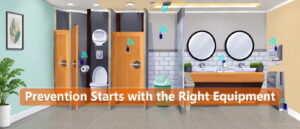
Prevention Starts with the Right Equipment
Commercial restroom maintenance is not simply about fixing problems after they occur. The right equipment, compatible consumables, proper installation, and regular maintenance can prevent many common issues before they affect users.
When selecting commercial dispensers, facility managers should look beyond the initial purchase price. Compatibility with paper or soap, dispensing performance, capacity, durability, ease of maintenance, and the expected level of traffic should all be considered.
It is also important to test products under real operating conditions. A dispenser that performs well with one type of paper or soap may not necessarily perform in the same way with another. Understanding the actual environment and consumables can help businesses make better purchasing decisions.
A reliable commercial restroom should work quietly in the background. Users should be able to get the paper or soap they need without difficulty, while facility teams should be able to maintain the equipment without excessive time or cost.
By identifying common problems early and selecting dispensers according to actual usage requirements, businesses can improve restroom reliability, reduce unnecessary maintenance, and provide a better experience for every user.