
A bathroom trash can is used frequently, so convenience, cleanliness, and odor control are important. A touchless bathroom trash can uses a sensor to open the lid automatically, reducing direct contact and making disposal easier. However, it usually costs more than a basic bin and requires batteries or another power source. Whether it is worth buying depends on the bathroom environment, usage frequency, capacity, and maintenance needs.
What Are the Benefits of a Touchless Bathroom Trash Can?
The main value of a touchless bathroom trash can is that it combines hands-free operation, covered waste storage, and easier daily disposal. Instead of touching the lid after using the toilet, washing hands, or handling bathroom products, users can activate the sensor with a simple hand movement. This can be especially useful in shared bathrooms where the same bin is used repeatedly throughout the day. The benefits are not limited to convenience; reduced contact, better waste containment, and a cleaner appearance can also improve the overall bathroom experience.
Reduce Touch and Contact
One of the most practical advantages of a touchless bathroom trash can is that users do not need to touch the lid when throwing away waste. This is useful when hands are wet after washing, when users are holding other items, or when they want to avoid touching a frequently handled surface. The sensor detects movement within its operating range and activates the lid automatically.
Sensor performance also affects everyday usability. A good system should respond quickly to normal hand movements without opening repeatedly when someone simply walks past the bin. Stable detection and smooth lid movement are therefore important when the trash can is placed in a busy area such as beside a toilet or bathroom vanity.
Improve Bathroom Hygiene
A touchless bathroom trash can can help reduce direct contact with the lid, which is particularly useful when multiple people share the same bathroom. Family bathrooms, guest bathrooms, hotel rooms, and commercial facilities can all benefit from minimizing unnecessary contact with commonly used surfaces.
However, hands-free operation is only one part of bathroom hygiene. Waste should still be removed regularly, while the lid, sensor area, inner container, and surrounding surfaces should be cleaned as needed. A covered bin can support a cleaner environment, but proper waste handling and routine cleaning remain necessary.
Provide More Convenient Disposal
Repeatedly opening a trash can may seem like a small task, but it becomes less convenient when the bin is used dozens of times a day. A touchless bathroom trash can allows users to dispose of tissues, cotton pads, packaging, and other small bathroom waste without manually lifting the lid.
This is particularly helpful for households with several family members or bathrooms that receive frequent use. Quiet and smooth lid movement is also valuable in bedrooms, guest bathrooms, and other indoor areas where sudden mechanical noise can be distracting.
Control Odors and Keep Waste Covered
Keeping bathroom waste inside a closed container can help limit exposure to unpleasant odors and keep used items out of sight. When the lid closes automatically after disposal, the waste remains covered between uses instead of staying exposed to the surrounding air.
The actual odor-control effect depends on the type of waste, how often the bag is replaced, bathroom ventilation, and how clean the container remains. For this reason, a touchless bathroom trash can should be viewed as part of a broader odor-control strategy rather than a complete solution on its own.
Create a Cleaner Bathroom Appearance
A touchless bathroom trash can can also contribute to a more organized bathroom because the lid keeps waste covered and the automatic design removes the need for a visible handle or foot pedal. This can create a cleaner appearance around areas such as the toilet, vanity, or sink.
Size is also important when choosing a model. A 5–12L capacity is suitable for many household bathrooms, while smaller bins can work well in compact spaces. The right capacity should provide enough room for daily waste without taking up unnecessary floor space or requiring excessive movement around the bathroom.
Where Is a Touchless Bathroom Trash Can Commonly Used?
Whether a touchless bathroom trash can is worth buying depends largely on how and where it will be used. The value becomes clearer in spaces where the bin is frequently accessed or shared by multiple users.
For Homes and Family Bathrooms
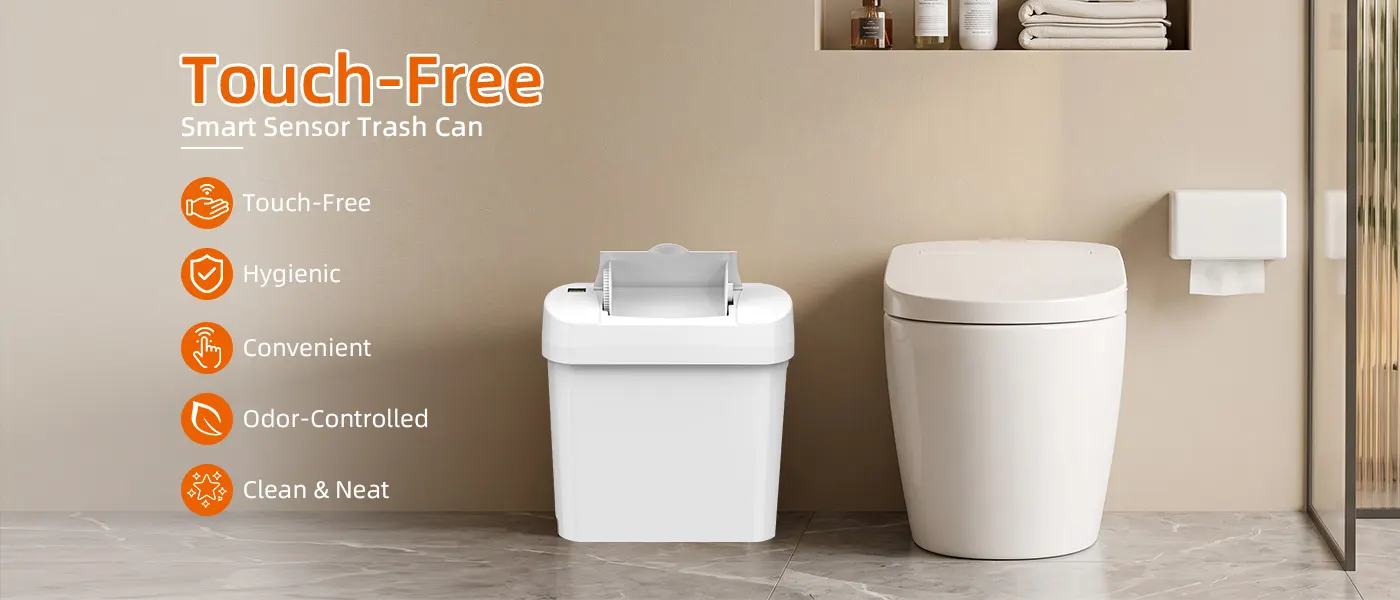
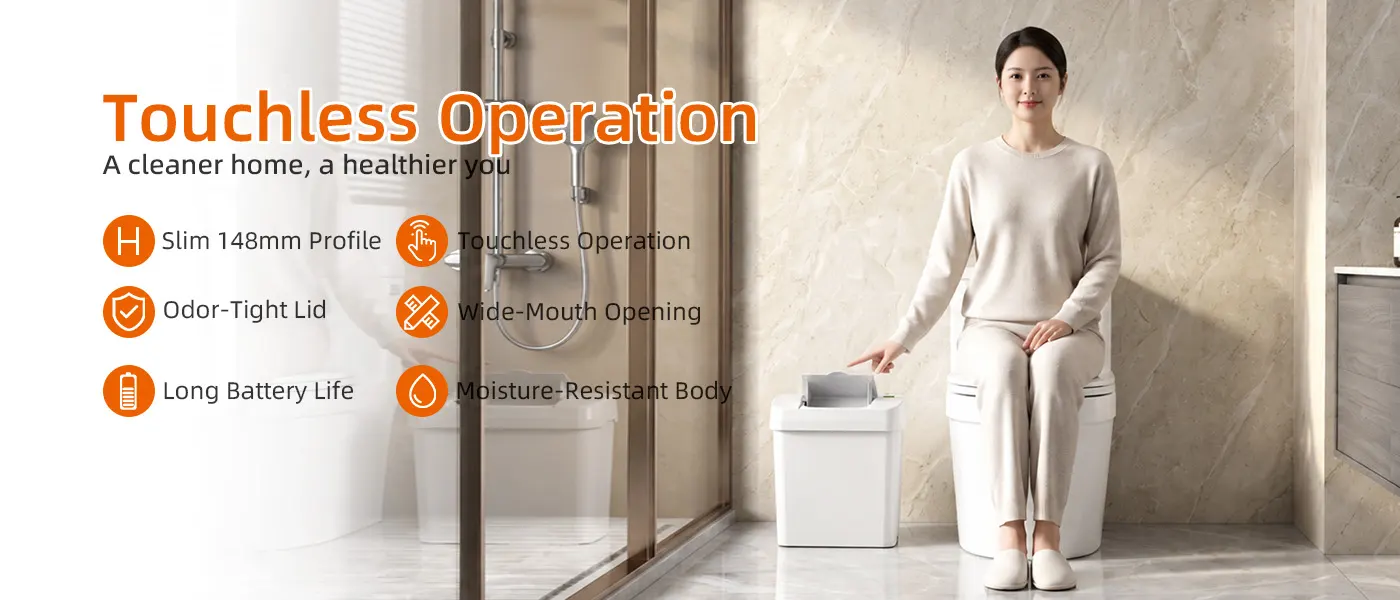
A family bathroom is used frequently throughout the day, and the trash can may need to handle tissues, packaging, cotton pads, and other small waste. Frequent contact with the lid can be inconvenient, while limited space around toilets and sinks makes a compact trash can more practical. A hands-free design can also make everyday waste disposal easier for different family members. For households with frequent bathroom use, limited floor space, and a need for convenient waste disposal, the CDWK Sensor Trash Bin CD-7002 is a good choice:
- Touchless operation: Opens with a simple wave.
- Slim 148mm profile: Fits narrow spaces.
- Wide-mouth opening: Makes waste disposal easier.
- Odor-tight lid: Helps contain unpleasant smells.
- Long battery life: 4 AA batteries support up to 3,600 uses per month.
- Moisture-resistant body: Suitable for bathroom use.
For Hotels and Hospitality Spaces
Hotels need bathroom equipment that combines convenience, appearance, and easy maintenance. A touchless bathroom trash can can provide a more modern experience for guests while keeping waste covered. For hospitality environments, construction quality and ease of cleaning are particularly important. Staff may need to empty and clean multiple units every day, so removable inner containers, smooth surfaces, and accessible components can help simplify routine maintenance.
For Offices and Commercial Bathrooms
Shared office bathrooms experience regular use throughout the working day. Automatic operation can reduce direct contact with the lid and make waste disposal more convenient for employees and visitors. Commercial users should pay attention to sensor durability, lid operating cycles, and battery replacement. A model designed for frequent use is generally more suitable than a lightweight household unit when the bathroom serves dozens or hundreds of users each day.
For High-Traffic Public Facilities
Public facilities place greater demands on waste containers because usage can be continuous. Airports, shopping centers, restaurants, and other high-traffic locations need equipment that can withstand repeated opening and closing. In these environments, a touchless bathroom trash can should be evaluated based on operating durability, capacity, cleaning requirements, and sensor reliability rather than appearance alone.
How Should You Choose a Touchless Bathroom Trash Can?
Choosing the right touchless bathroom trash can requires more than comparing prices. Capacity, sensor performance, power requirements, and maintenance all affect long-term usability.
Consider Capacity and Size
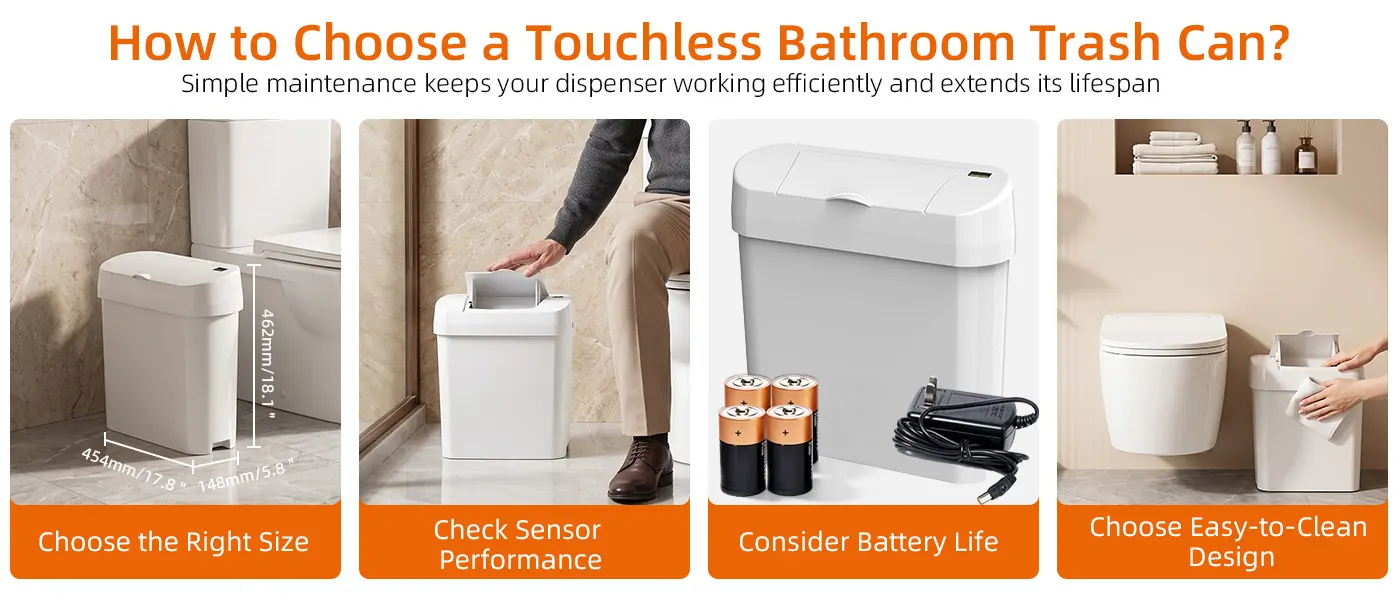
Start by estimating daily waste volume and available floor space. Common household capacities range from approximately 5 to 15 liters, while commercial applications may require larger containers. Also check the overall dimensions before installation. Leave enough space around the lid and sensor area so that users can operate the bin comfortably.
Check Sensor Performance
Sensor response is one of the most important features of an automatic bin. Look for consistent detection, quick response, and reliable lid operation. The sensor should recognize normal hand movement without opening unnecessarily when someone simply walks past the bin. A stable detection range can improve both convenience and battery efficiency.
Evaluate Power and Battery Life
Most automatic bathroom bins use batteries, although rechargeable designs are also available. Battery life depends on sensor activity, opening frequency, motor efficiency, and battery capacity. For example, a bathroom used 30–50 times per day can place significantly more demand on the mechanism than a guest bathroom used only a few times daily. Easy battery replacement or convenient charging can therefore be important for long-term use.
Look for Easy Cleaning and Maintenance
A good touchless bathroom trash can should be easy to empty, wipe, and maintain. Smooth exterior surfaces can reduce areas where dirt accumulates, while a removable inner bucket can make bag replacement easier. Users should also keep liquids away from the electronic components unless the manufacturer specifically states that those parts are water-resistant. Regular inspection of the sensor, lid mechanism, and power supply can help identify problems before they affect normal operation.
Conclusion
So, are touchless bathroom trash cans worth it? For many homes, hotels, offices, and shared bathrooms, the answer can be yes. Hands-free operation improves convenience, reduces direct contact with the lid, keeps waste covered, and can contribute to a cleaner-looking bathroom.
The best choice should be based on actual usage conditions rather than features alone. Consider capacity, dimensions, sensor performance, power requirements, durability, and cleaning needs before purchasing. If you are looking for suitable bathroom waste-management solutions or have questions about selecting the right model, you can contact CDWK at any time for further assistance.