
In a busy restaurant, small details can have a big impact on daily operations. From table layout and food presentation to cleaning routines and customer service, every element needs to work together smoothly.
A napkin dispenser may seem like a simple piece of equipment, but it is used repeatedly throughout the day. For restaurants serving hundreds of customers, choosing the right dispenser can influence convenience, maintenance, table organization, and even the overall dining experience.
So, what should restaurants consider when selecting a napkin dispenser?
Designed for the Restaurant’s Pace
Restaurant environments can become extremely busy during lunch, dinner, weekends, and special events. During these peak periods, customers need quick and convenient access to napkins without creating additional work for staff.
A well-designed napkin dispenser should allow customers to take napkins easily while keeping the remaining paper protected and organized.
For restaurant operators, this also means fewer interruptions during busy service hours. A dispenser that is easy to refill and maintain can help staff spend less time managing supplies and more time focusing on customers.
Capacity Matters More Than It Seems
The right capacity depends on the restaurant’s traffic and service model.
A small café with limited seating may not need a large-capacity napkin dispenser. In contrast, a busy fast-food restaurant, food court, cafeteria, or casual dining restaurant may require a dispenser that can hold more napkins and reduce the frequency of refilling.
This becomes particularly important during peak hours. Frequent refilling can create additional work for employees and may leave a dispenser empty if staff are unable to check it in time.
A suitable capacity allows restaurants to balance paper availability with the available space on the table or counter.
The Right Dispenser for the Right Napkin
Not all napkins are the same. Restaurants may use different paper formats, sizes, folds, and thicknesses depending on their service style and supplier.
A dispenser should therefore be compatible with the napkin format being used.
For example, a tabletop dispenser for interfold napkins may have different requirements from a dispenser designed for other folded formats. Before selecting a model, restaurant operators should consider the dimensions of their napkins and how they are expected to be dispensed.
Good compatibility helps avoid common issues such as difficult dispensing, multiple napkins being pulled out at once, or paper getting stuck inside the dispenser.

Table Space and Restaurant Layout
Restaurant tables are valuable space.
Cutlery, plates, menus, condiments, glasses, and other items may already occupy much of the available surface. A napkin dispenser therefore needs to fit naturally into the restaurant’s layout.
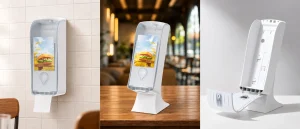
For tabletop applications, a compact and stable design can help keep the dining area organized without taking up unnecessary space.
For other environments, such as self-service areas or food courts, wall-mounted or larger-capacity solutions may be more suitable.
The best choice depends not only on the dispenser itself, but also on how the restaurant operates.
Hygiene and Easy Maintenance
In a commercial restaurant, products are handled frequently and need to be easy to clean and maintain.
A practical napkin dispenser should help protect unused napkins while allowing customers to access them conveniently. Smooth surfaces and a straightforward refill structure can also make routine cleaning easier for staff.
Durable materials are another consideration, especially for restaurants with high daily traffic. A dispenser that is designed for commercial use should be able to withstand repeated opening, refilling, and everyday customer interaction.
Function Should Work with Design
Although functionality comes first, appearance also matters.
A napkin dispenser is placed directly in front of customers, so its design becomes part of the restaurant environment. A suitable shape, color, and finish can complement the restaurant’s overall style rather than becoming a distraction.
The dispenser should also be easy to use while fitting naturally into the dining space. A clean and compact design can help keep tables organized without taking up unnecessary space. For busy restaurants, the right balance between appearance and practicality can make the dispenser a more natural part of the dining experience.
For restaurant chains and brands, customization can also help create a more consistent visual identity across different locations. Options such as colors, logos, finishes, and other appearance details can be adapted to match a brand’s style and requirements.
Conclusion
There is no single napkin dispenser that is ideal for every restaurant.The right choice depends on factors such as customer traffic, napkin format, capacity, available space, refill frequency, and maintenance requirements. Considering these details in advance can help restaurants choose a dispenser that fits their daily operations and provides a better experience for both staff and customers.
At CDWK, we have more than 23 years of experience in commercial hygiene product development and manufacturing. We offer a wide range of dispenser solutions for restaurants, hotels, offices, airports, and other commercial environments. With OEM/ODM services, we can also support customers with different paper specifications, branding needs, and application requirements.
If you are looking for a suitable napkin dispenser or have any OEM/ODM requirements, feel free to contact us. We’d be happy to discuss your needs and help you find a suitable solution.